Cambodia

Angkor Wat on Wheels

1 / 32

Some sights are worth repeating.

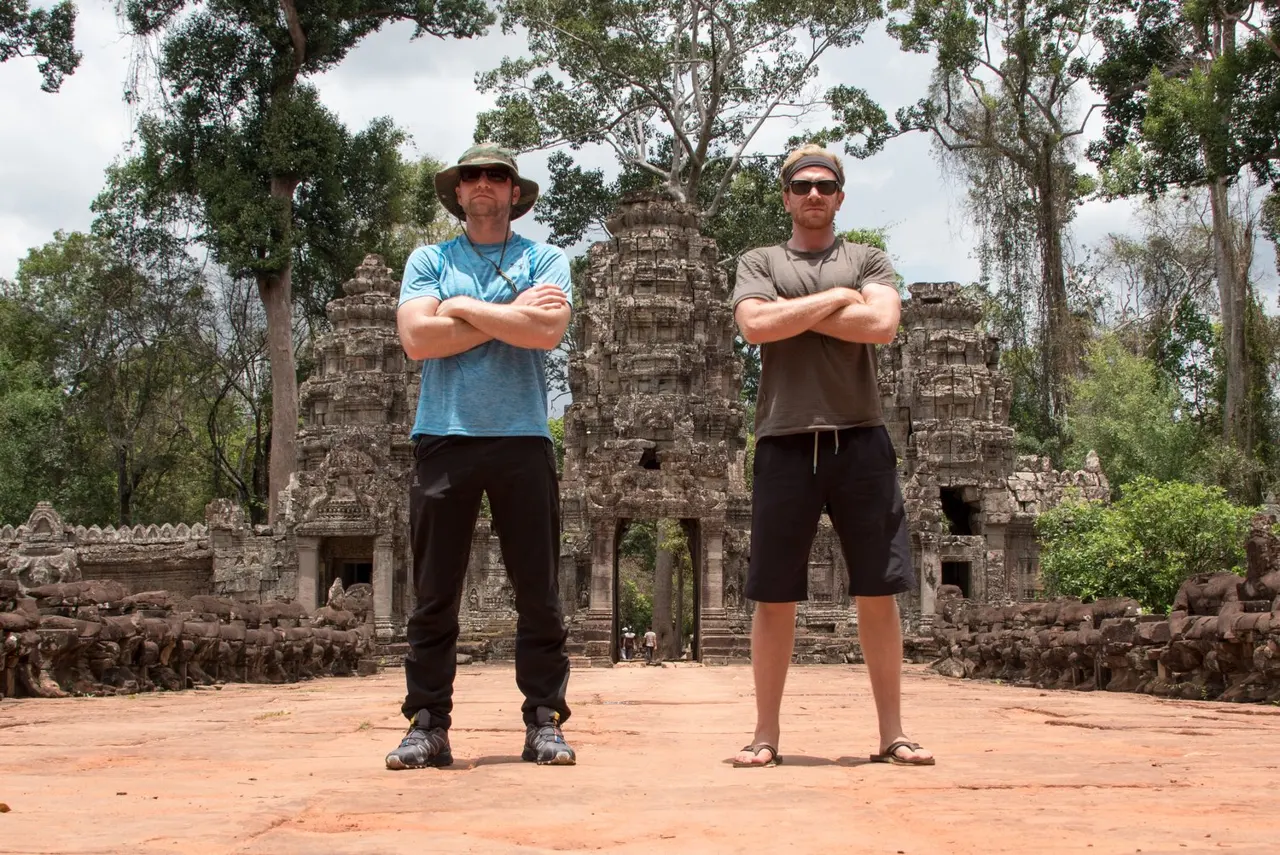
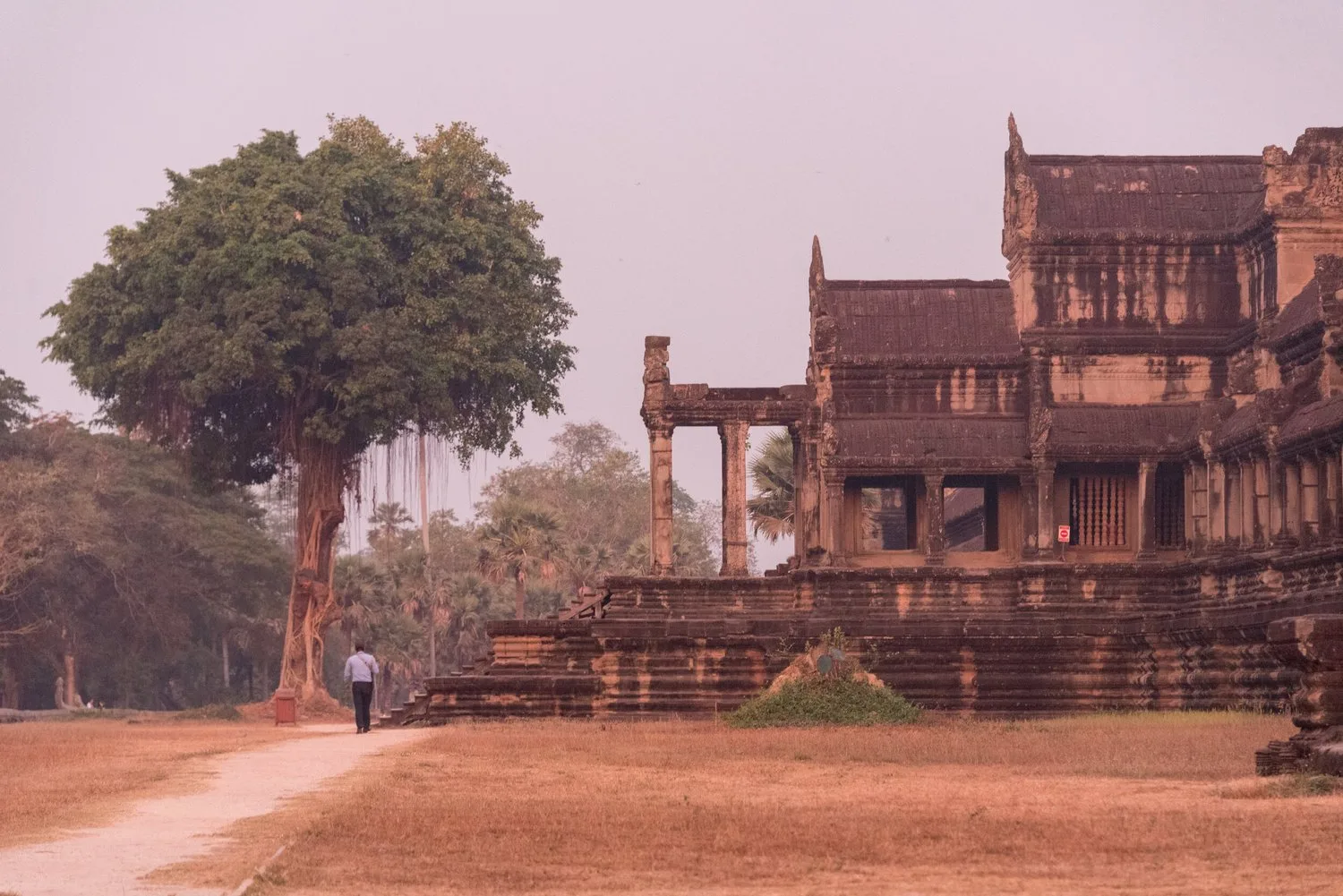
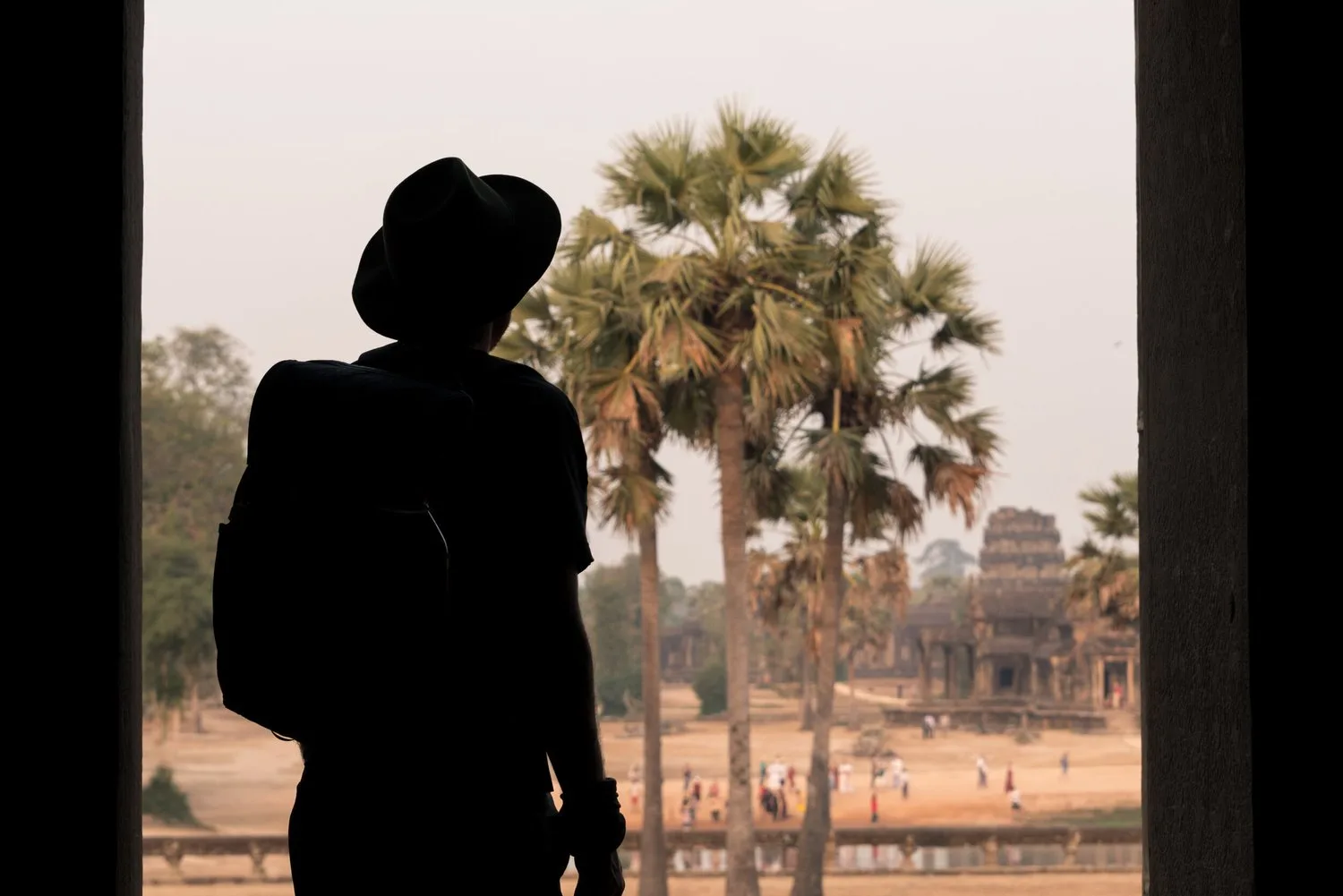
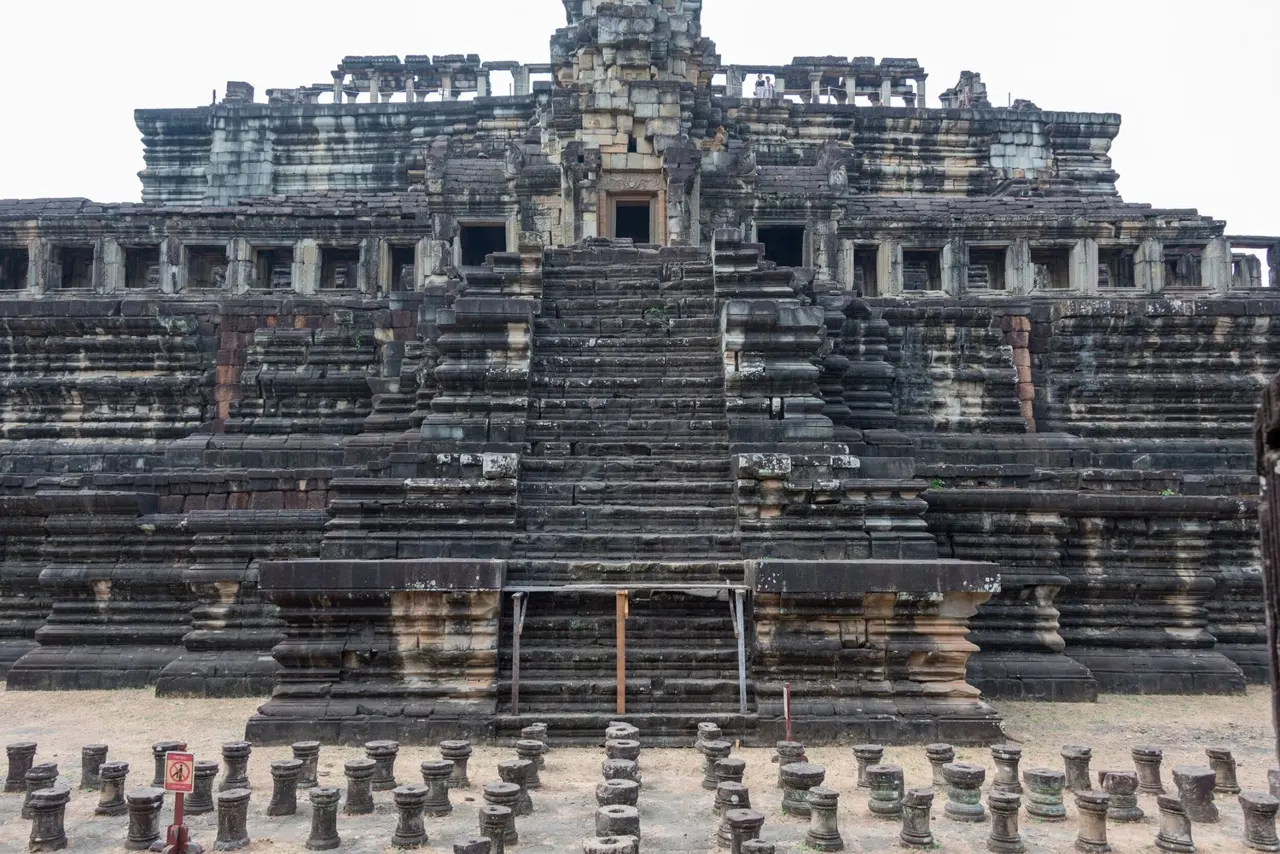
Four years removed from my last exploration of Angkor Wat, I found myself back at the staggering compound of ruined temples in Cambodia, this time trading the comfort of a tuk tuk for a questionably stable mountain bike as my mode of transportation through the maze of temple complexes and courtyards that make up the famous Angkor Wat.

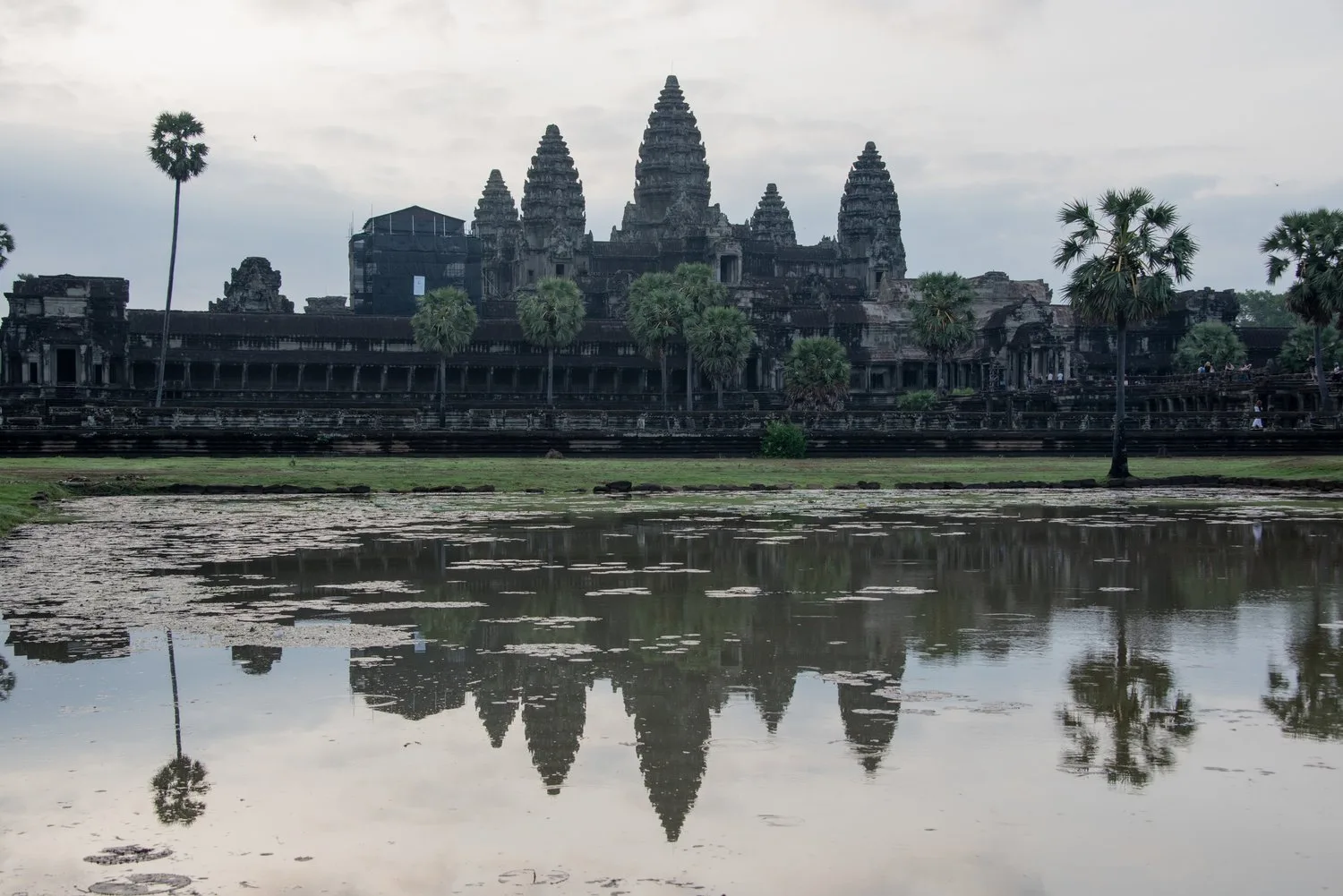
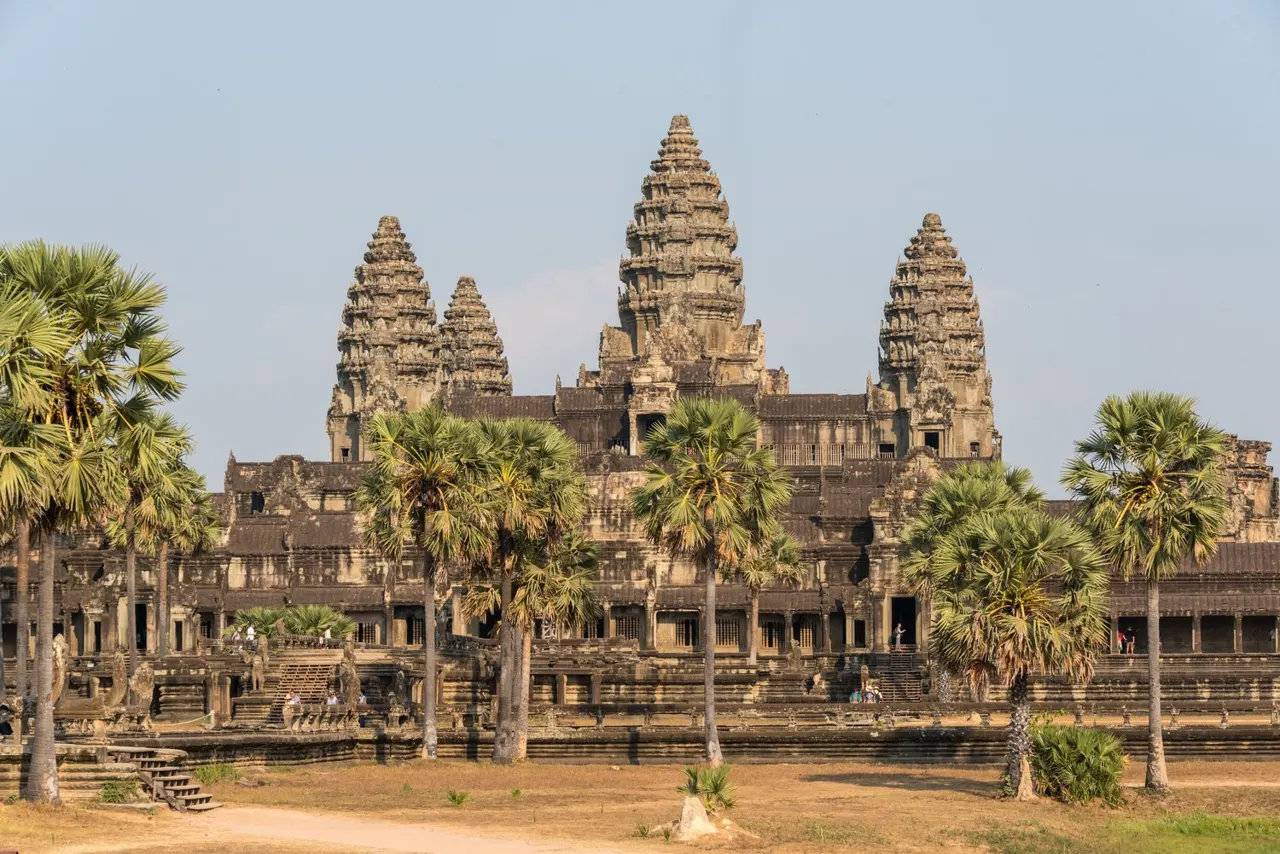
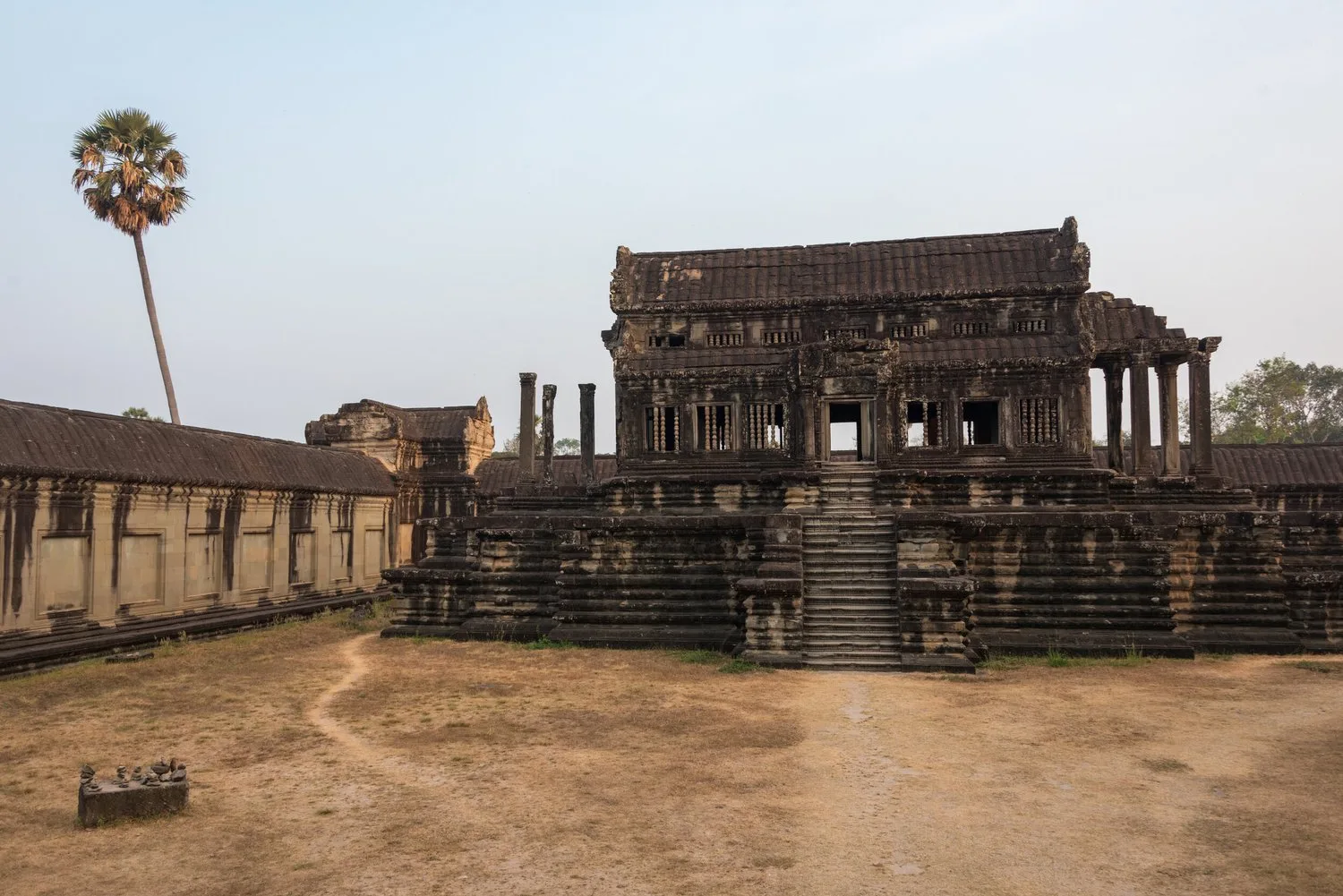
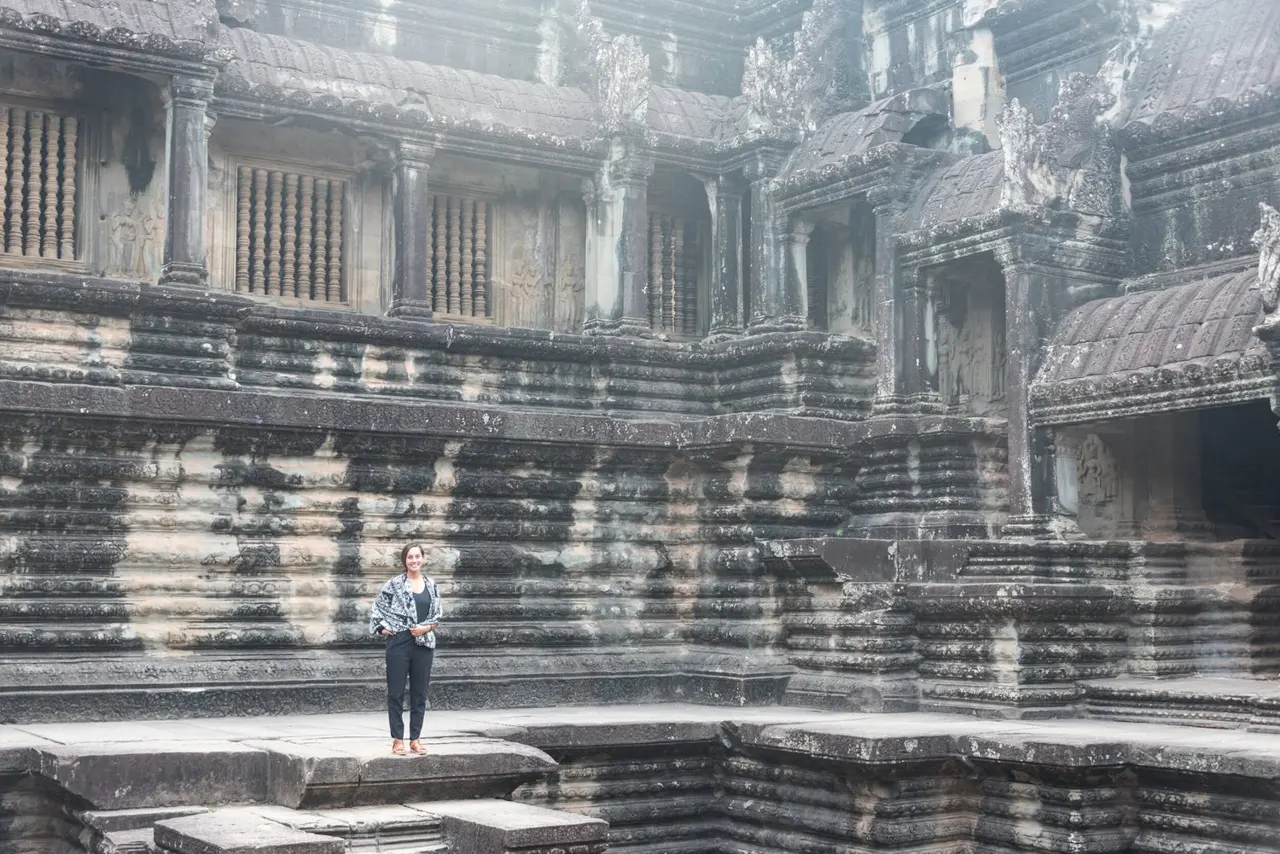
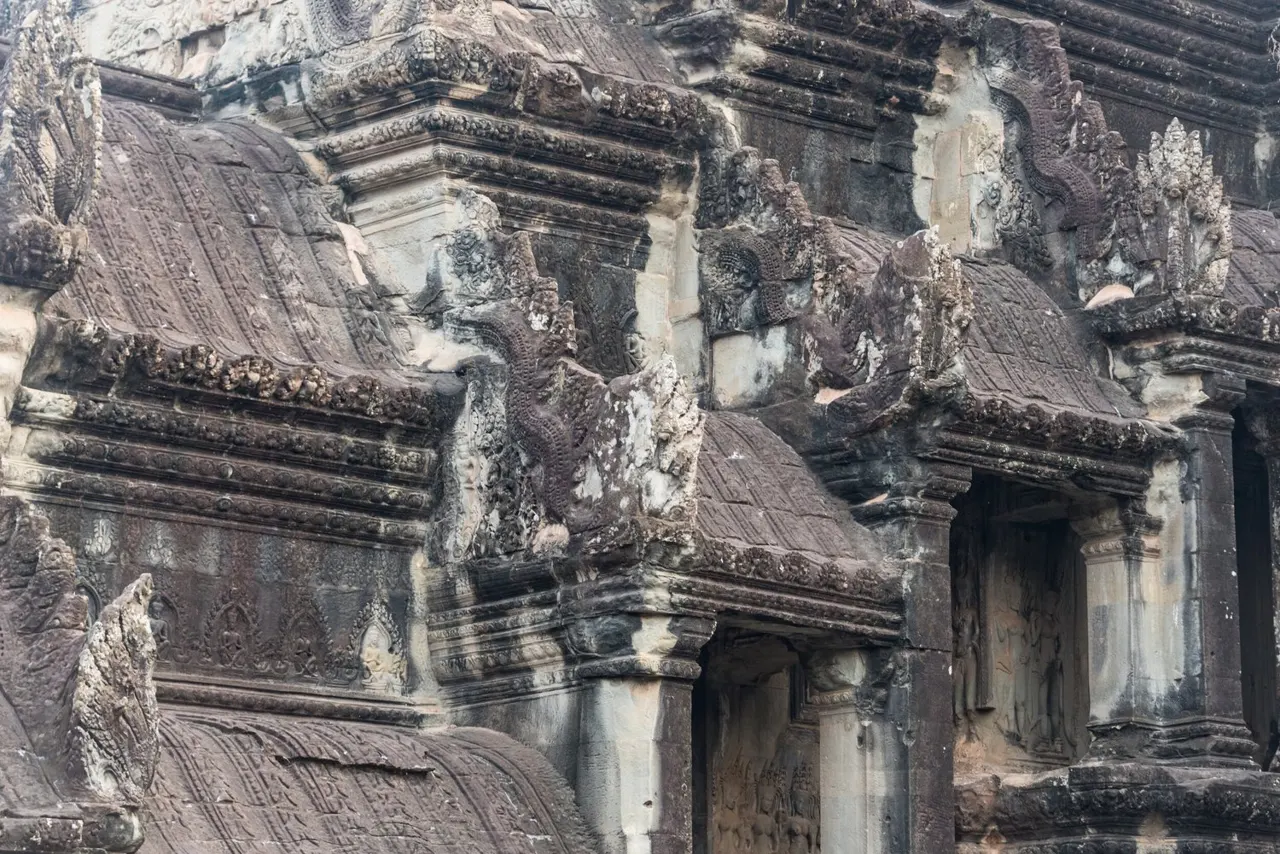
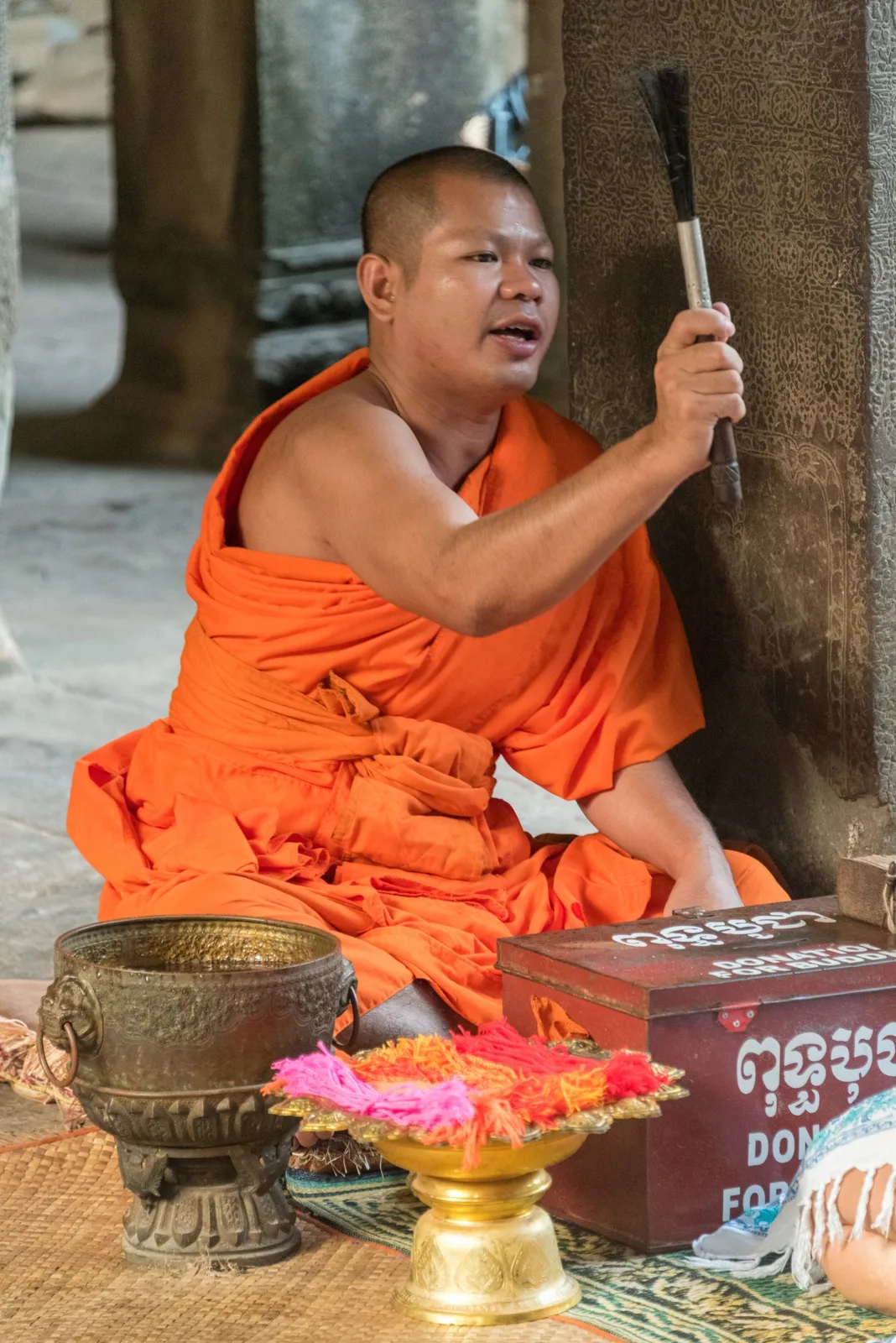
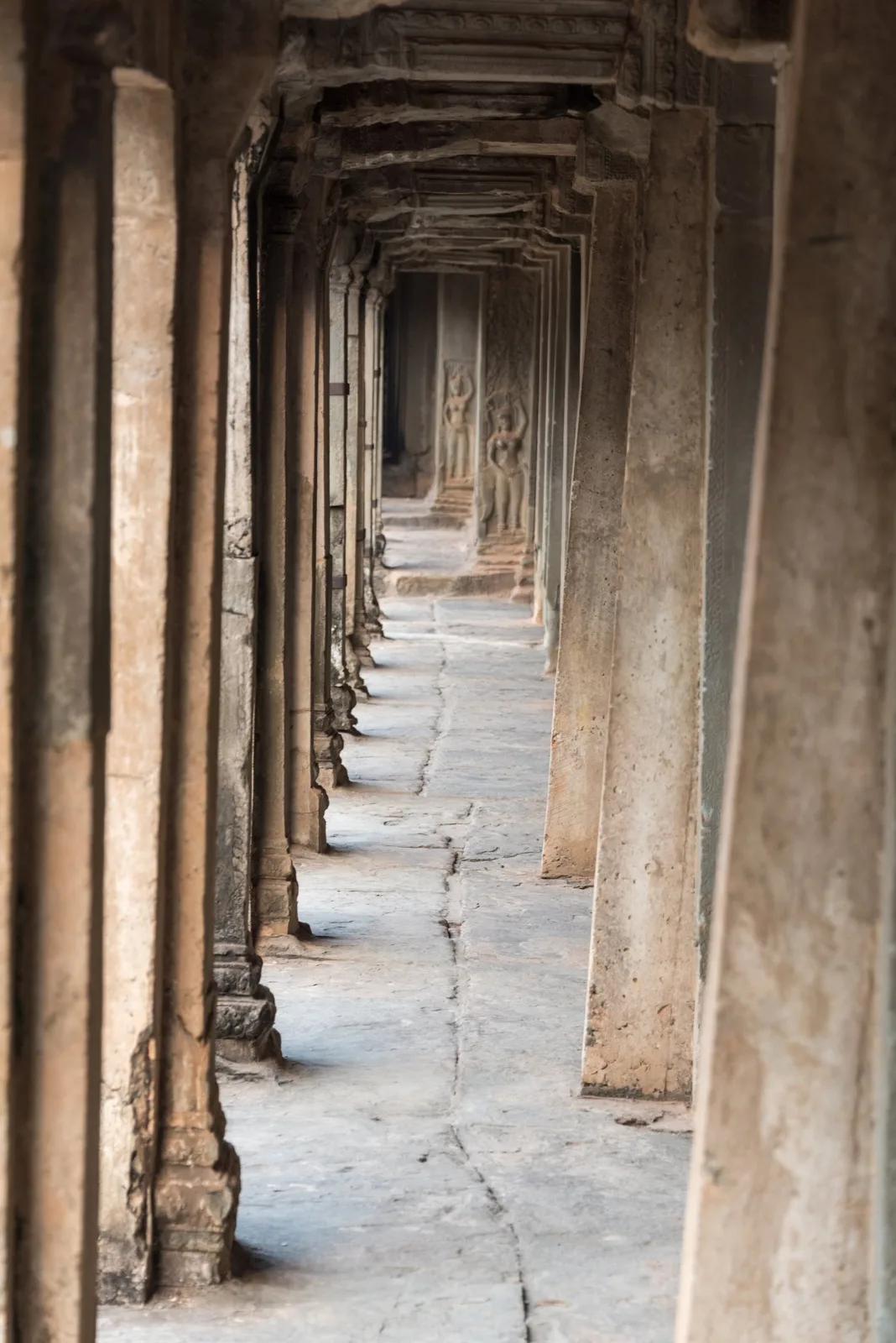
After a 5am wake up call, we hopped on our bikes, flashlight in mouth, and made our way through the dark towards the back entrance of the postcard temple from which the complex gets its name. Having shared the sunrise with the hundreds of tourists that gather in front of the temple on my previous visit, we opted this time to escape the crowds and instead went to the backside, hoping to catch a glimpse of the first morning rays on the spires, rather than see the sun rise over the temple. As is often the case with sunrises, the hour or so we spent in wait was a bit anticlimactic, as the hazy skies gradually brightened, blocking the rays of the sun. No matter, we made our way inside the temple and began the exploration through narrow passageways and immense courtyards, past monks handing out blessings and the most intricate of carvings along seemingly every wall. Windows provided views of the vast surrounds, while staircases seemed to be hidden around every corner. If so many weren’t blocked off, it would not have taken long to be completely lost in it all.

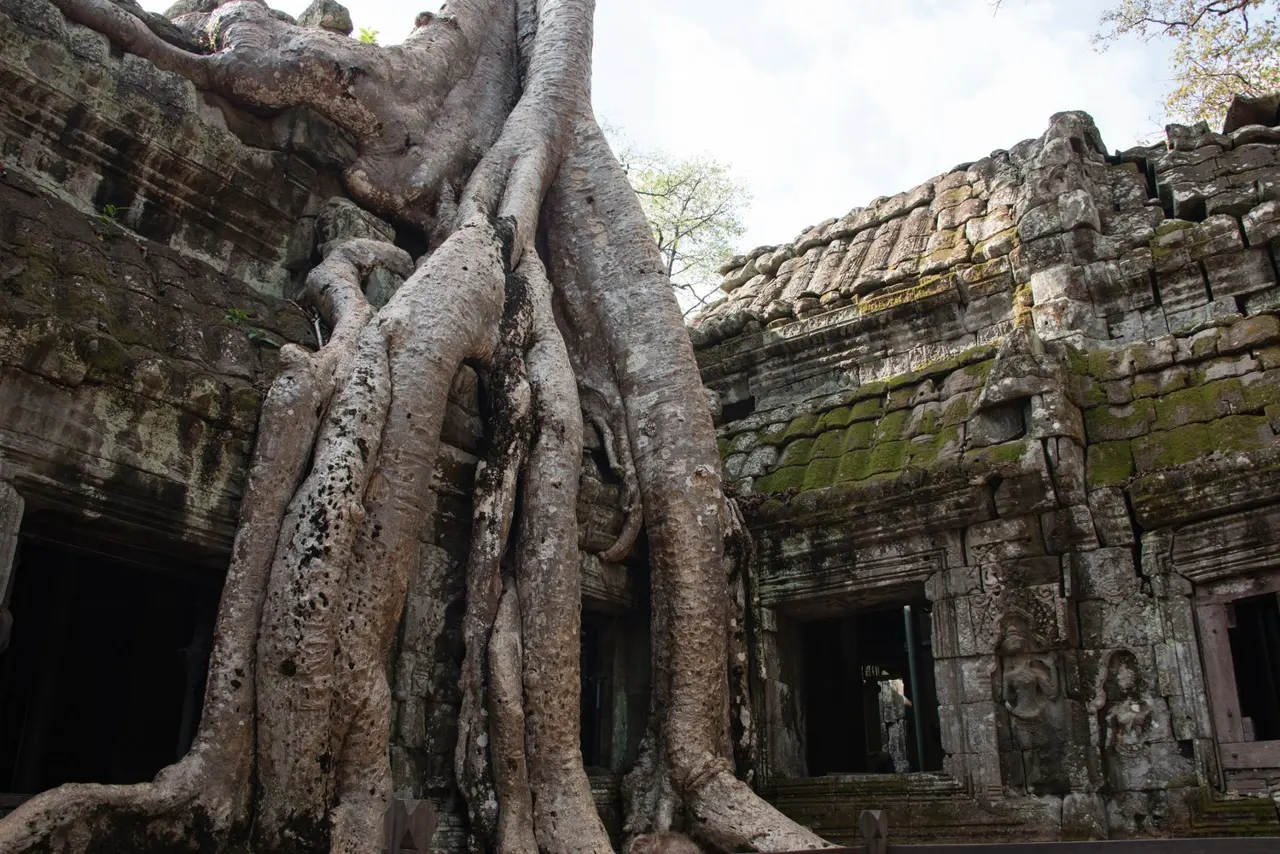
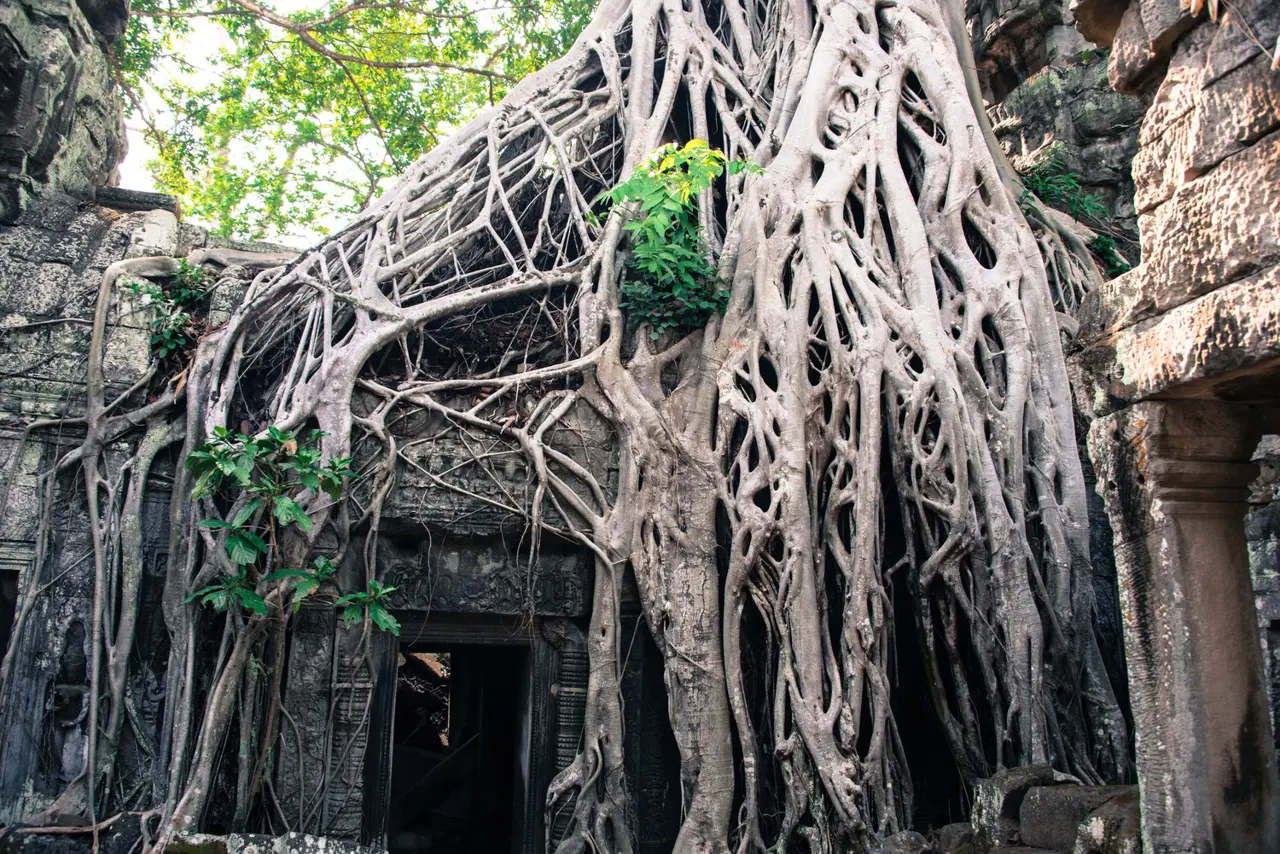
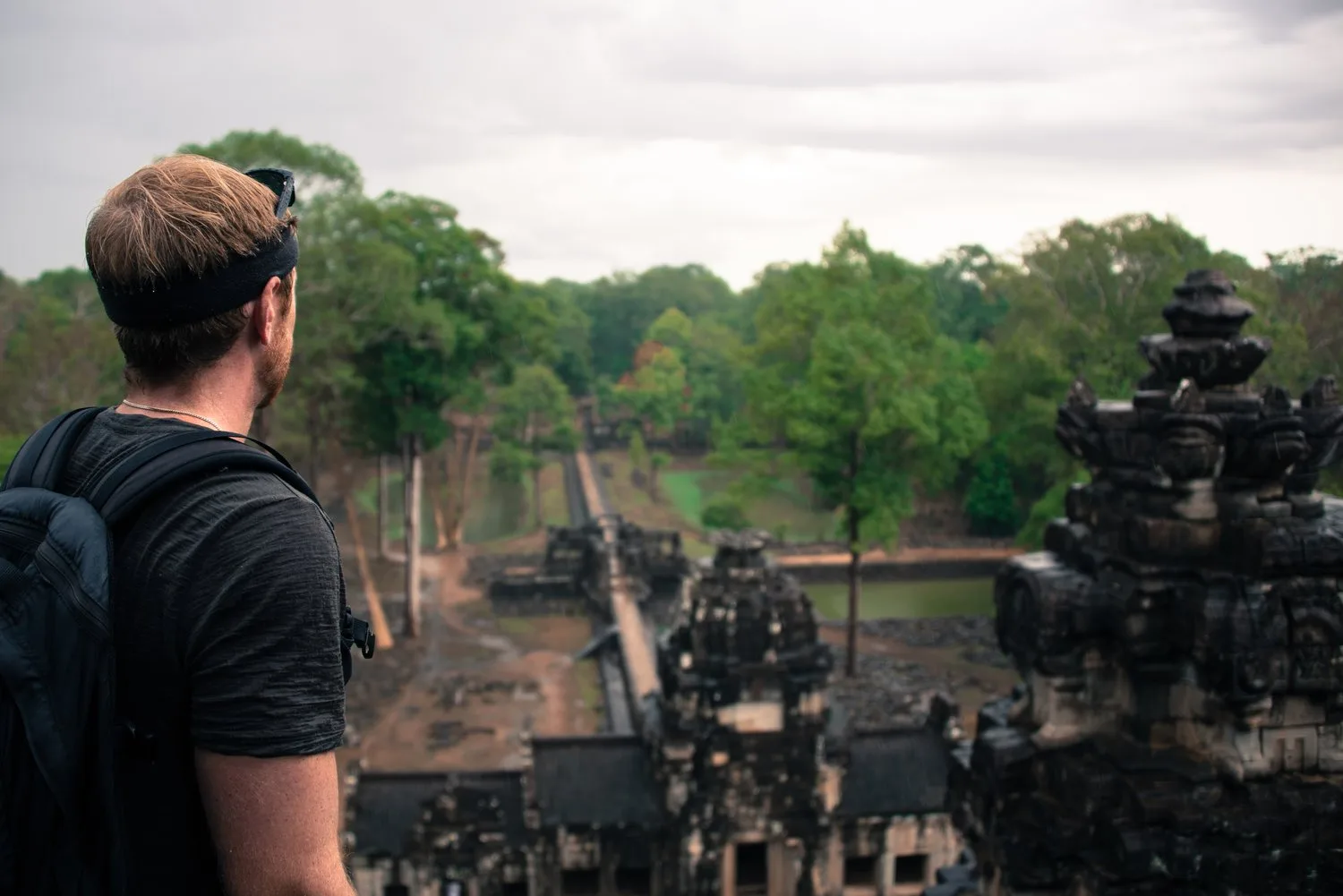
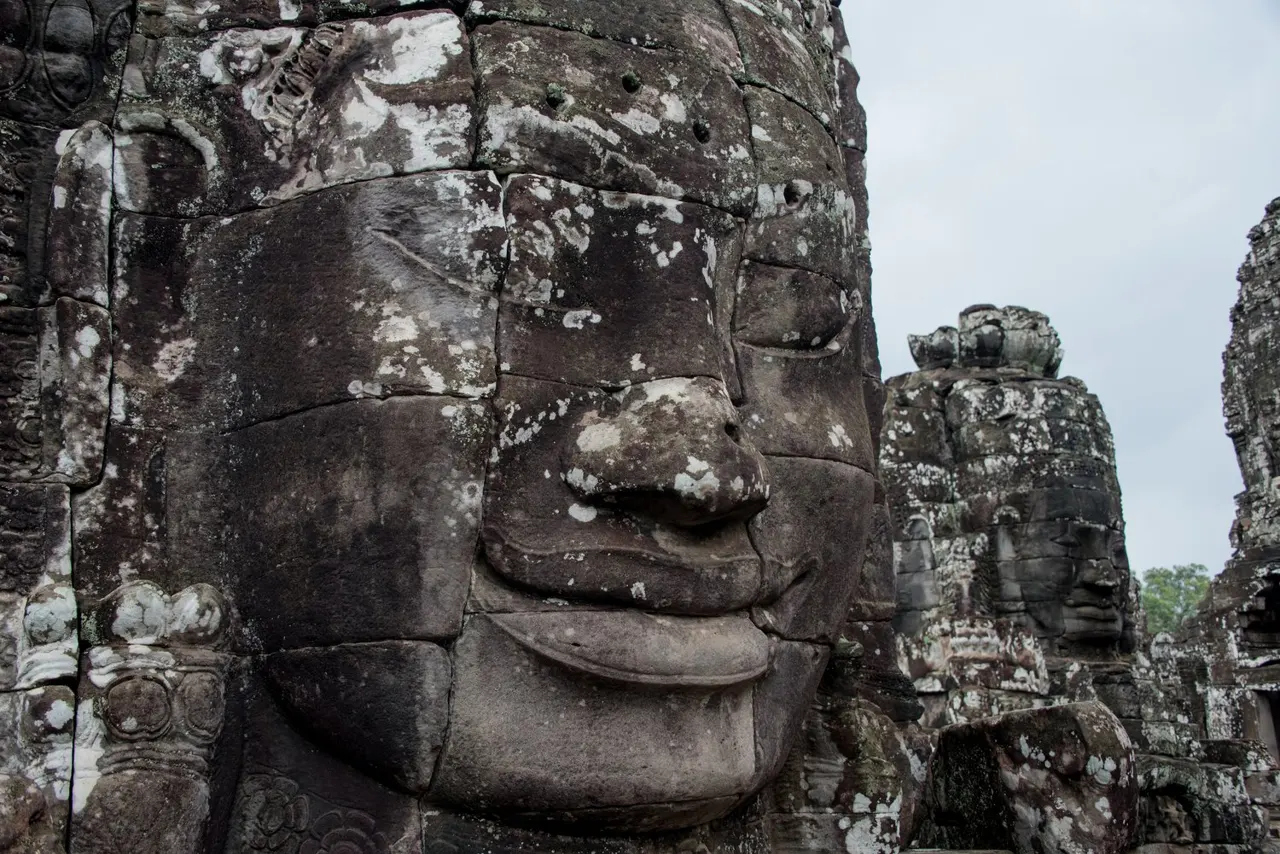
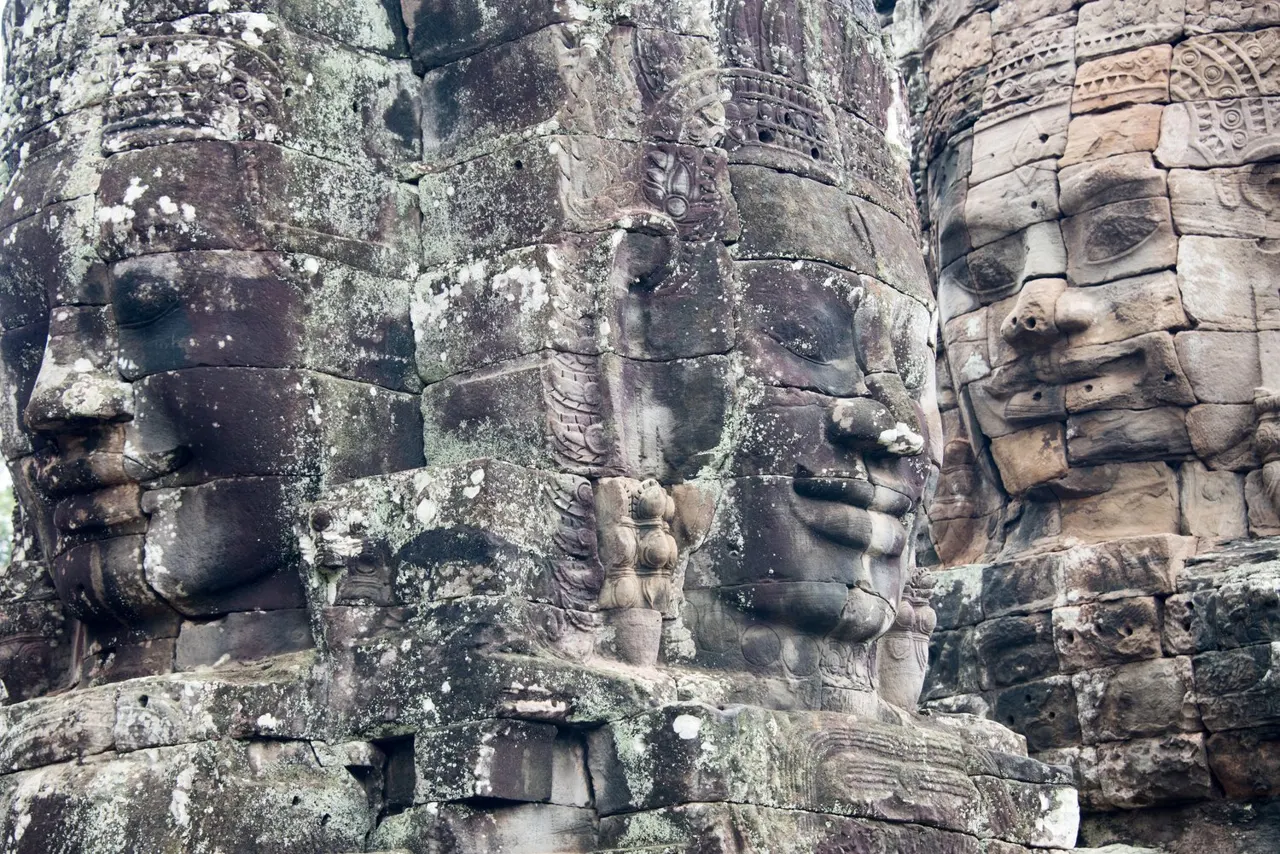
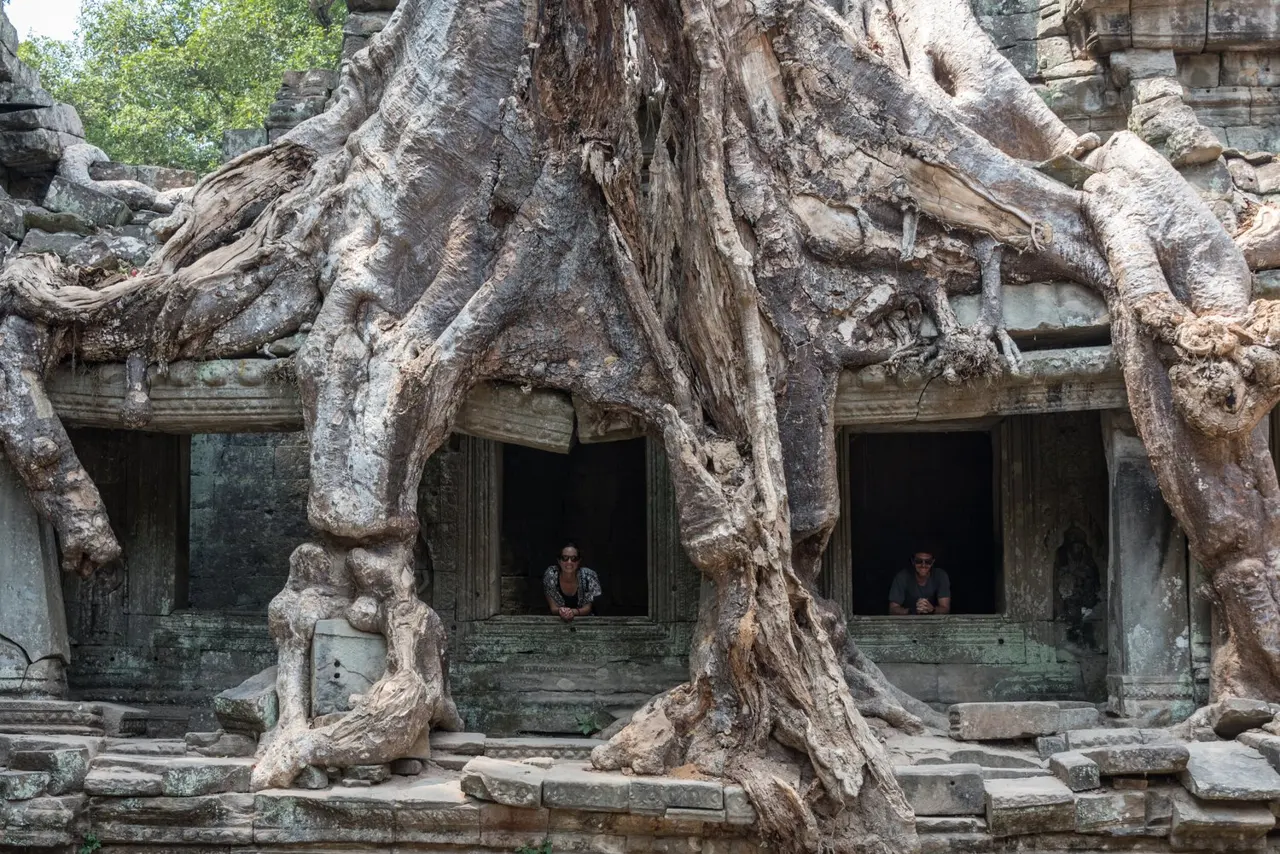
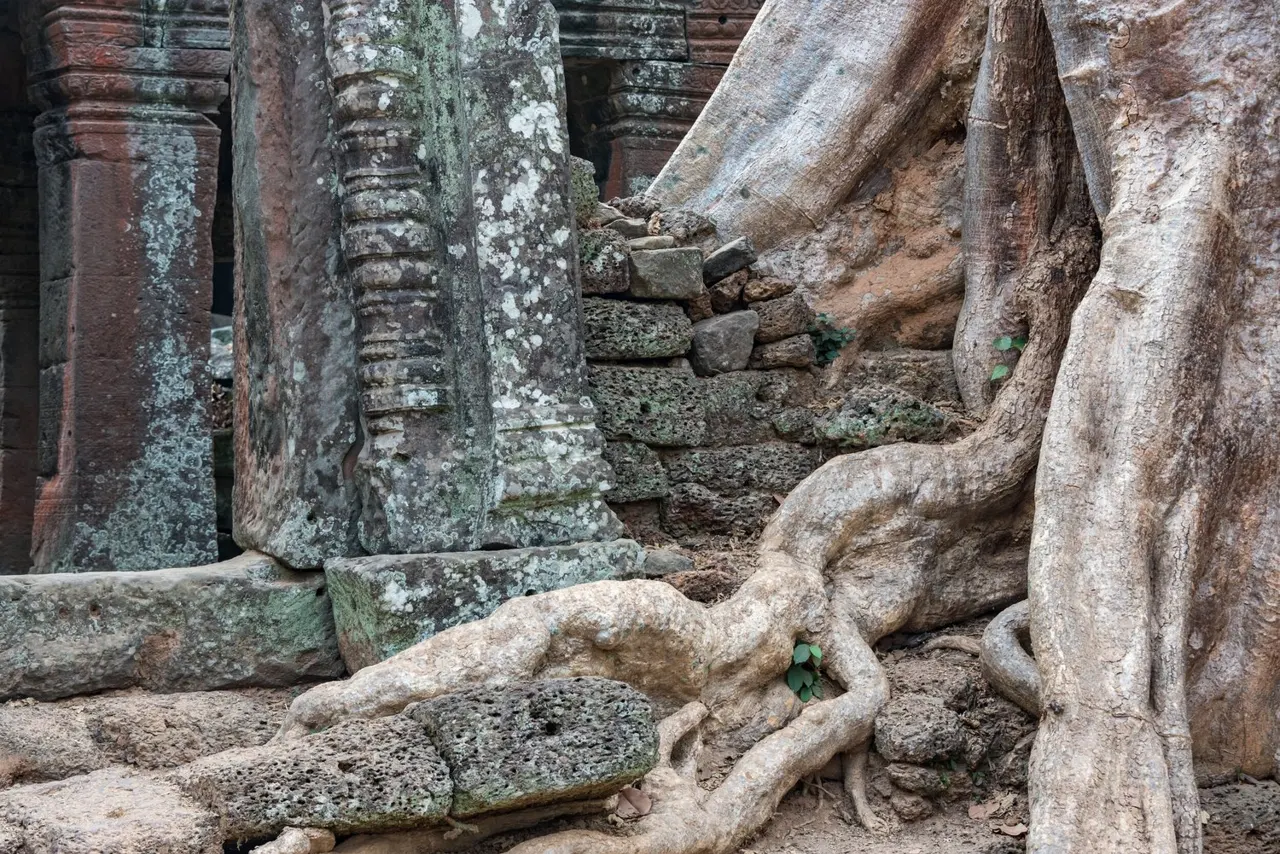
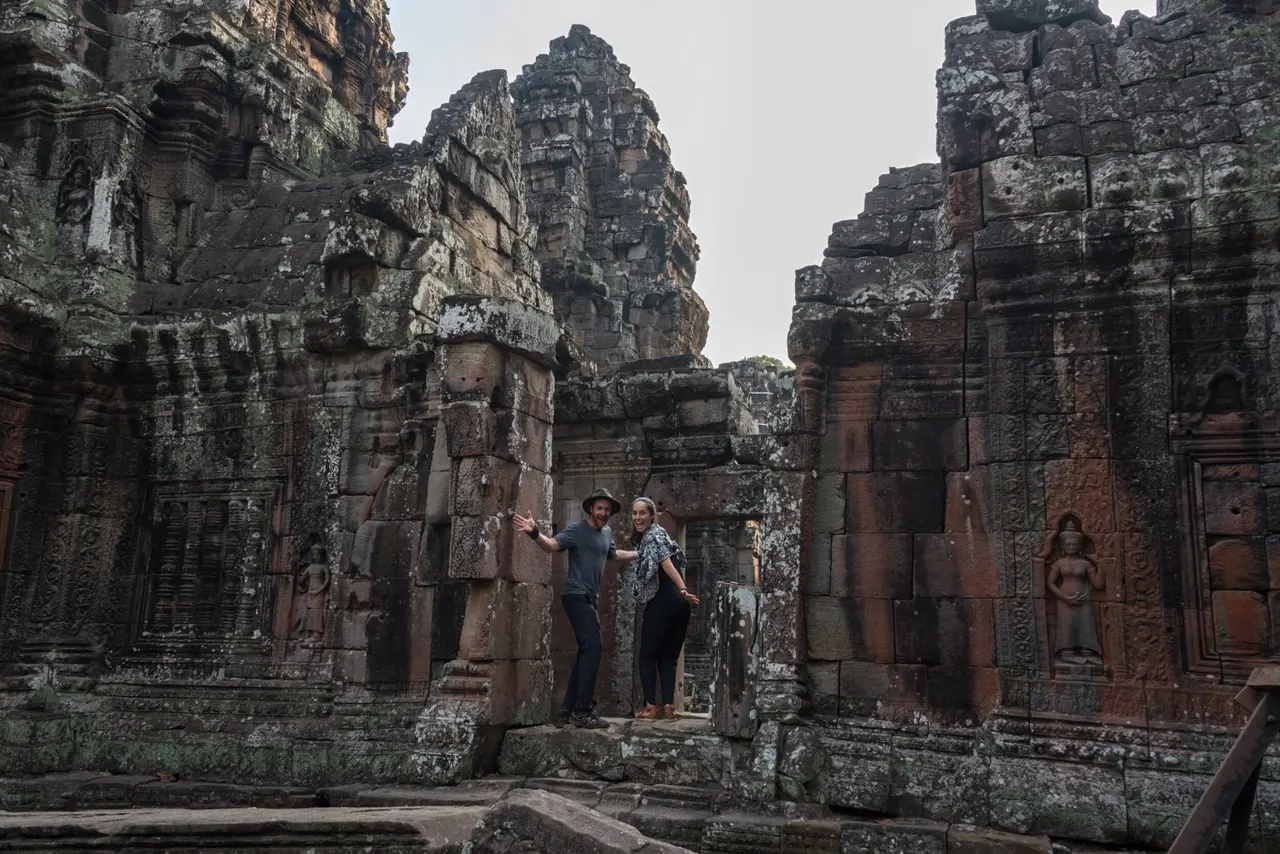
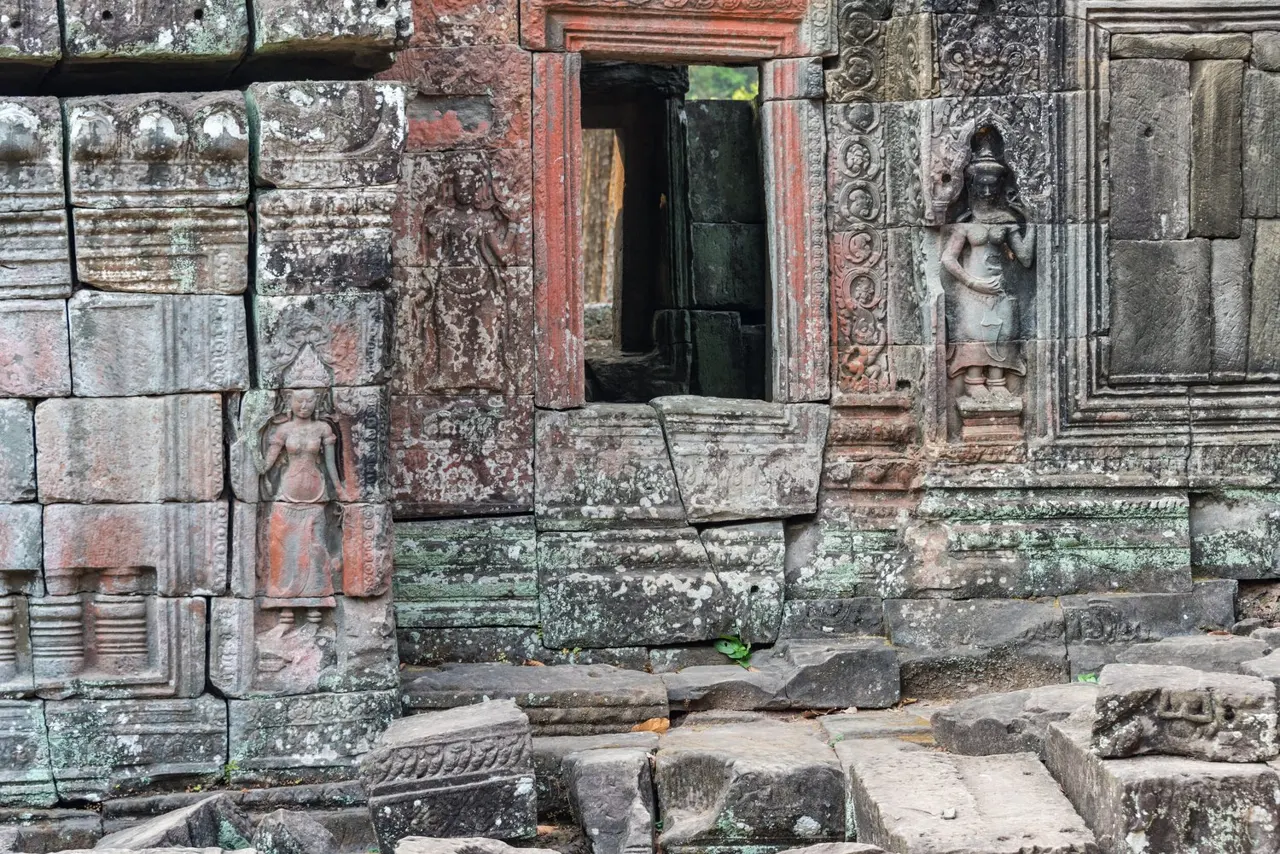
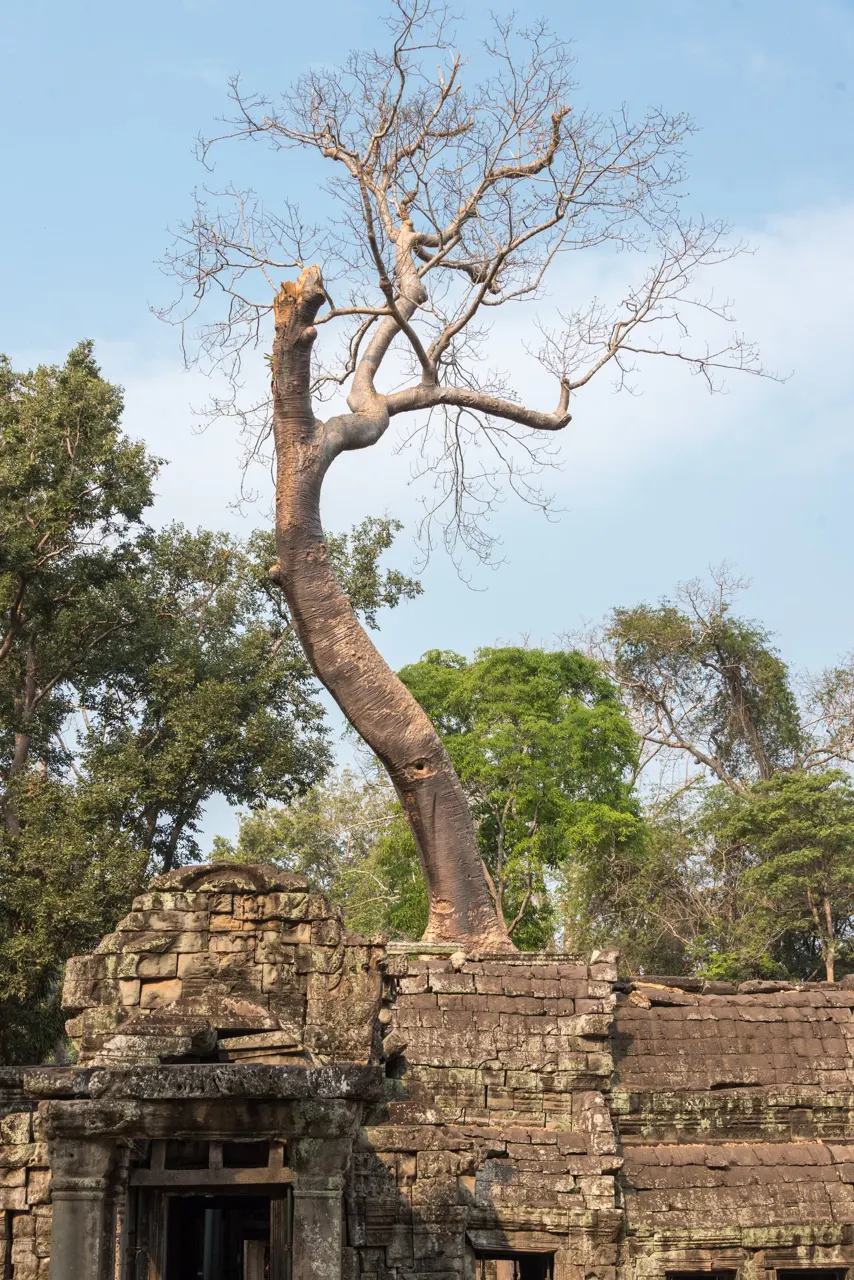
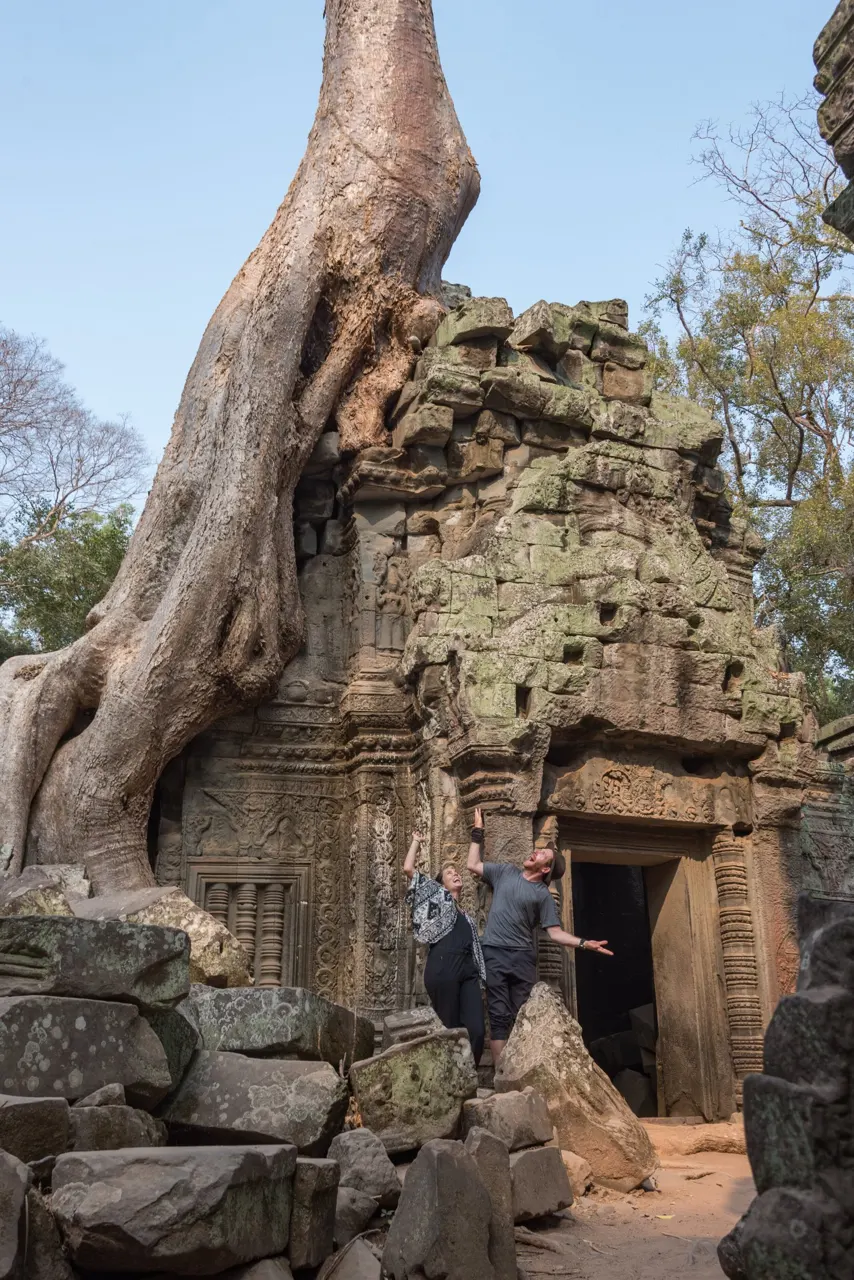
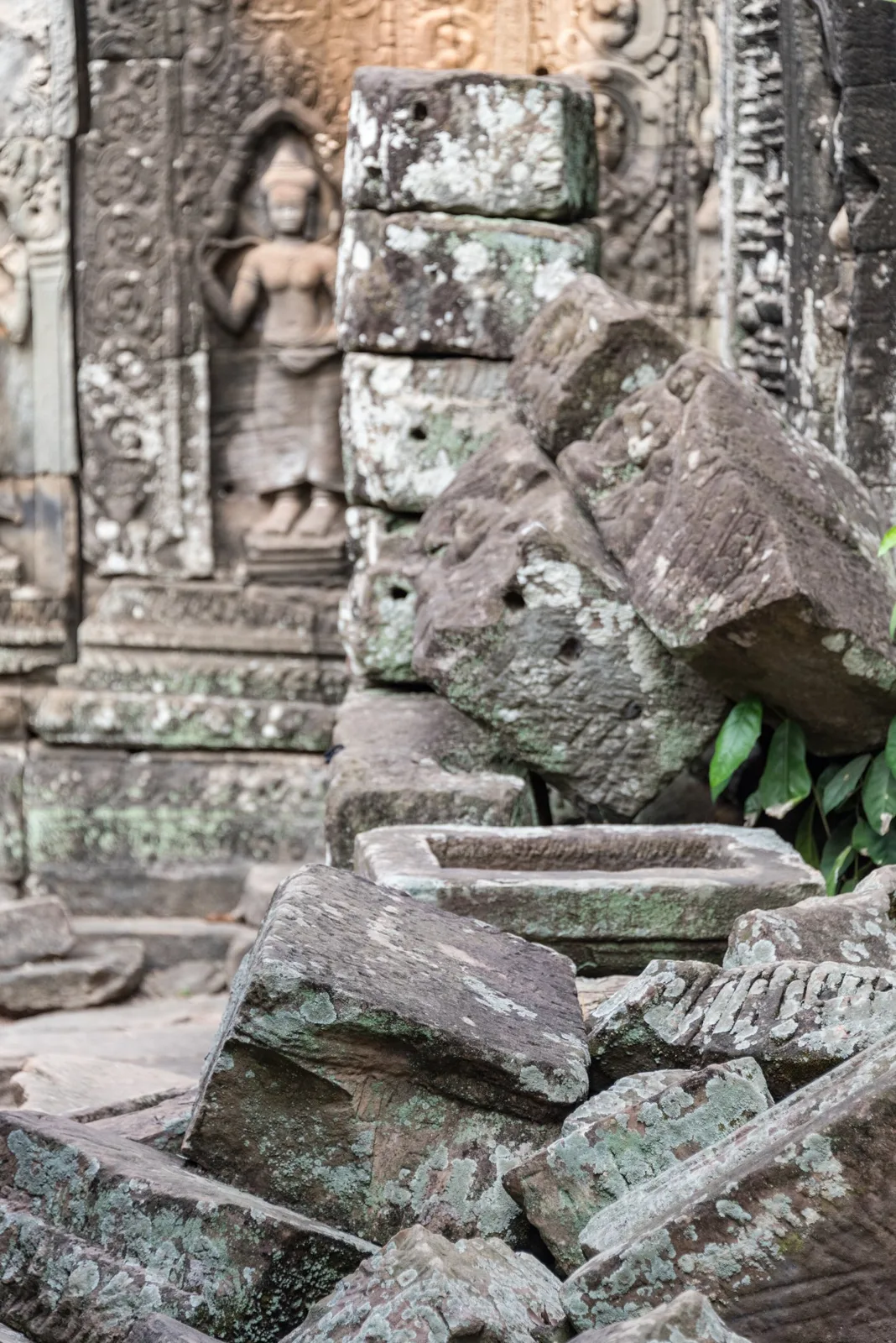
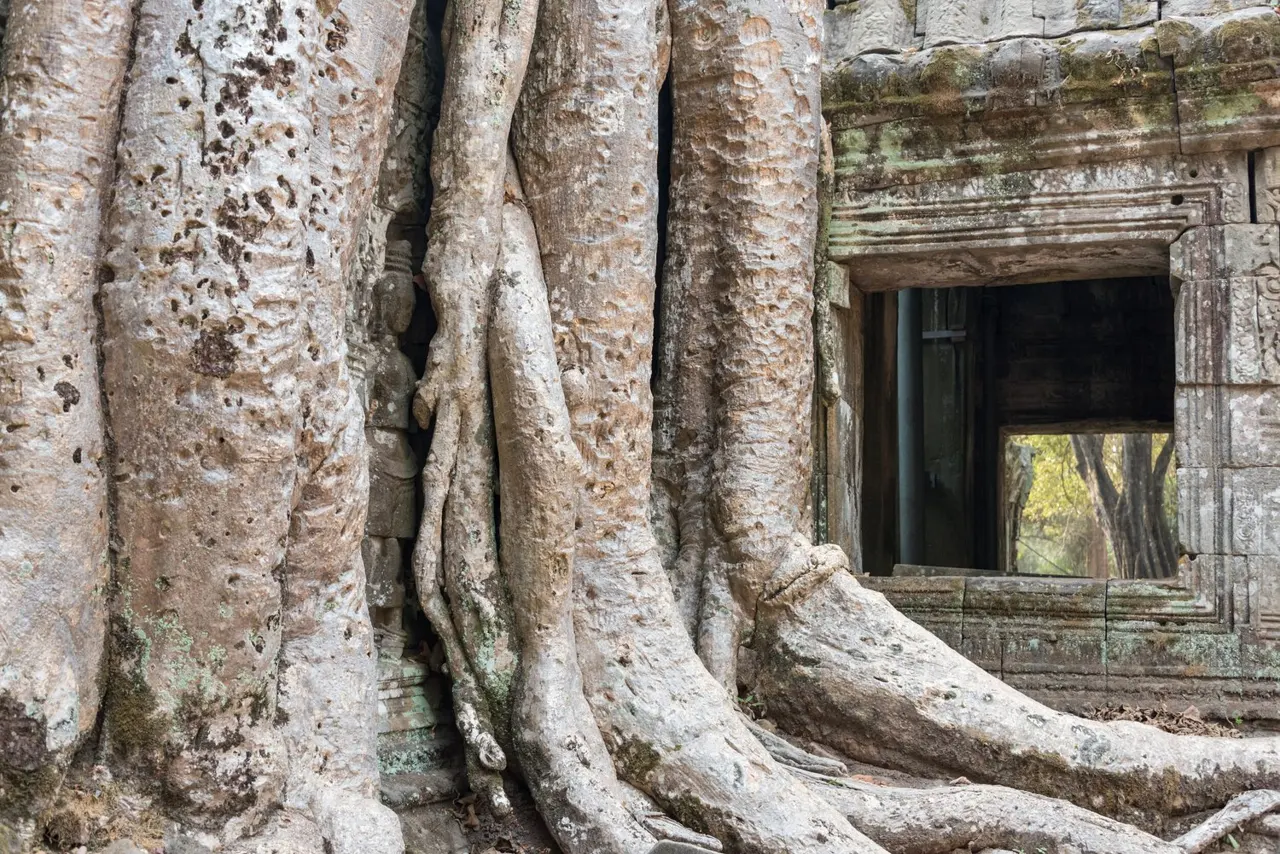
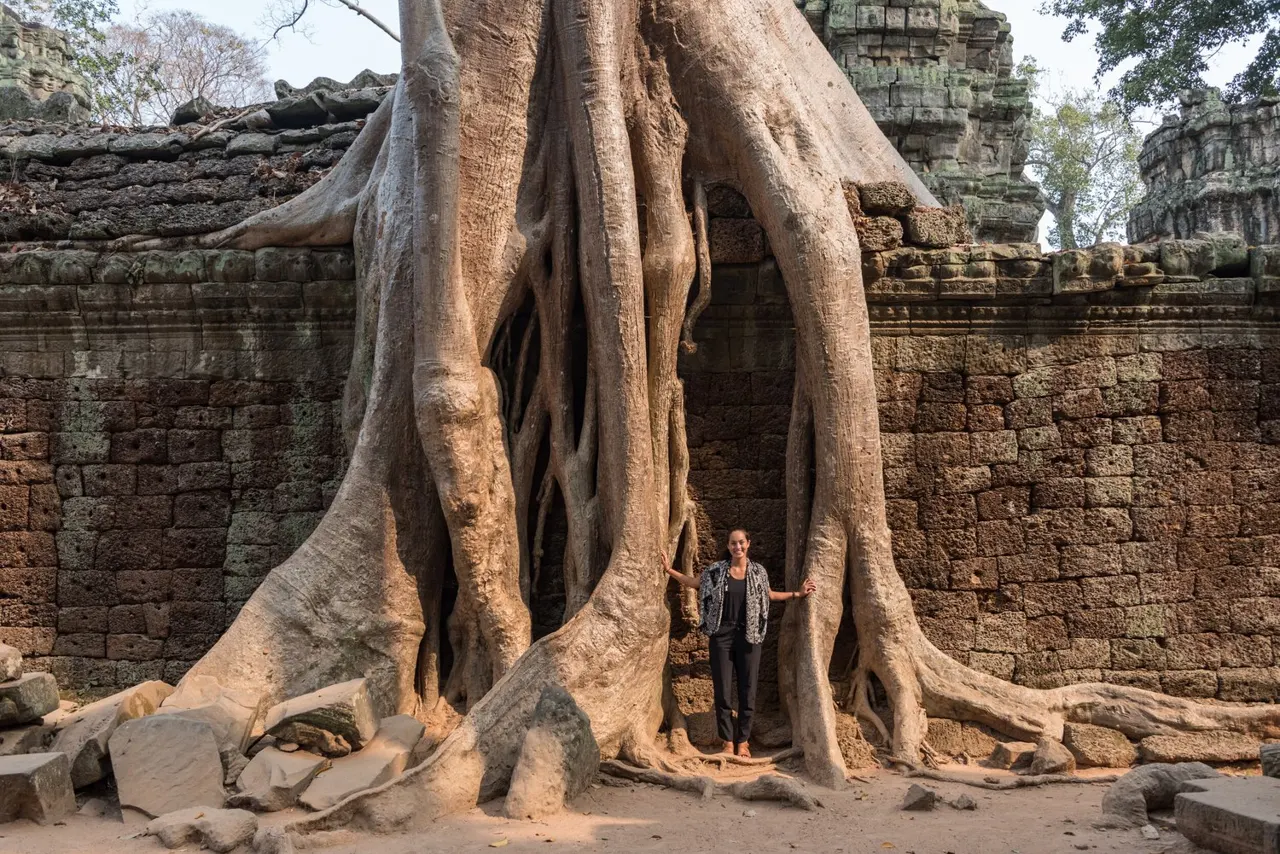
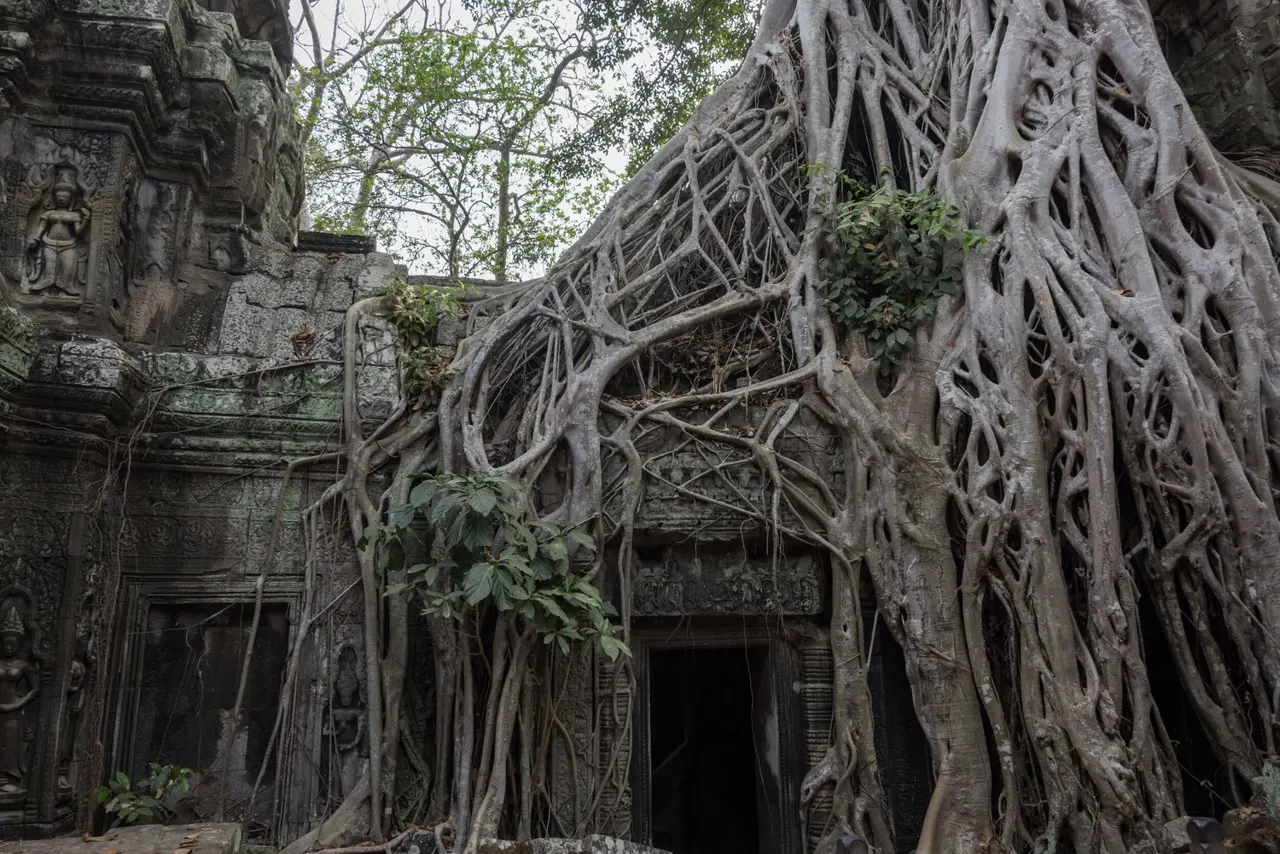
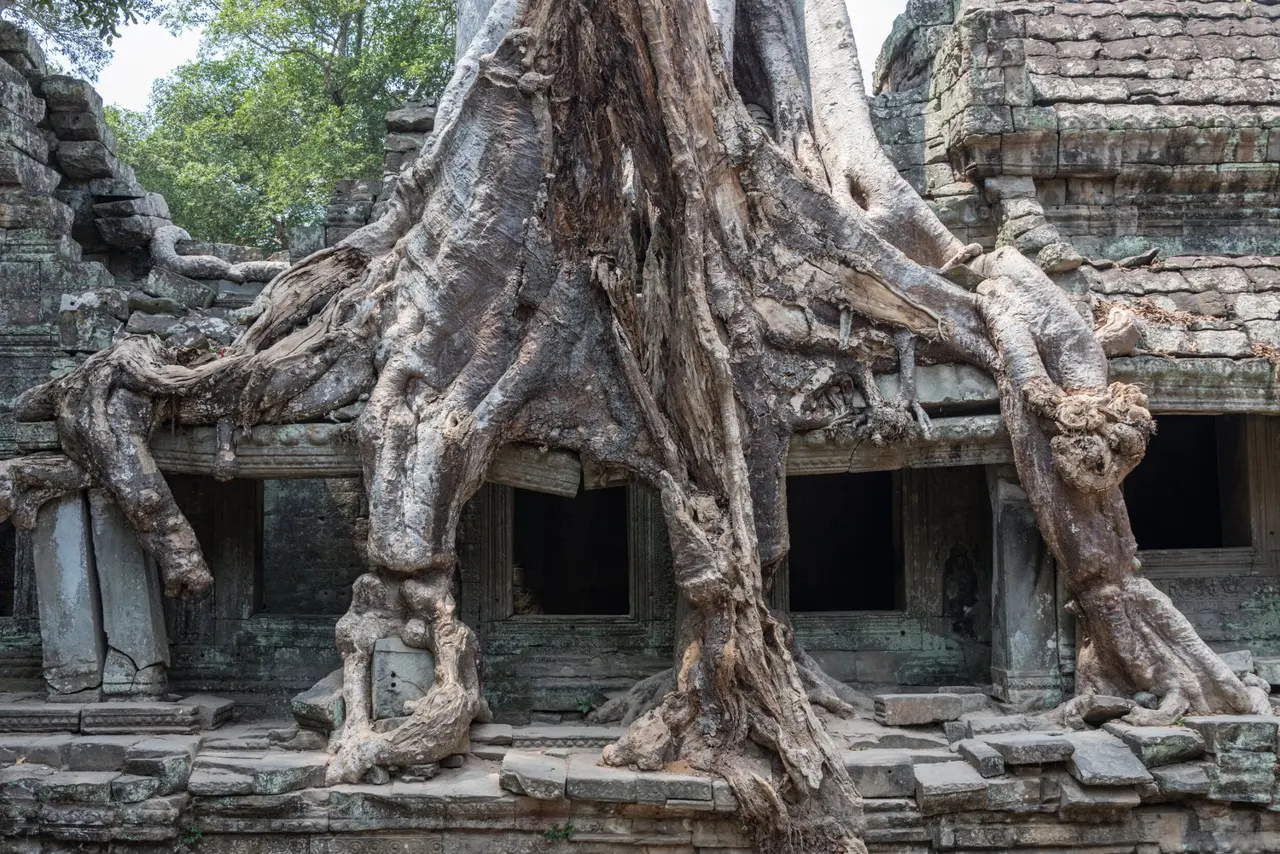
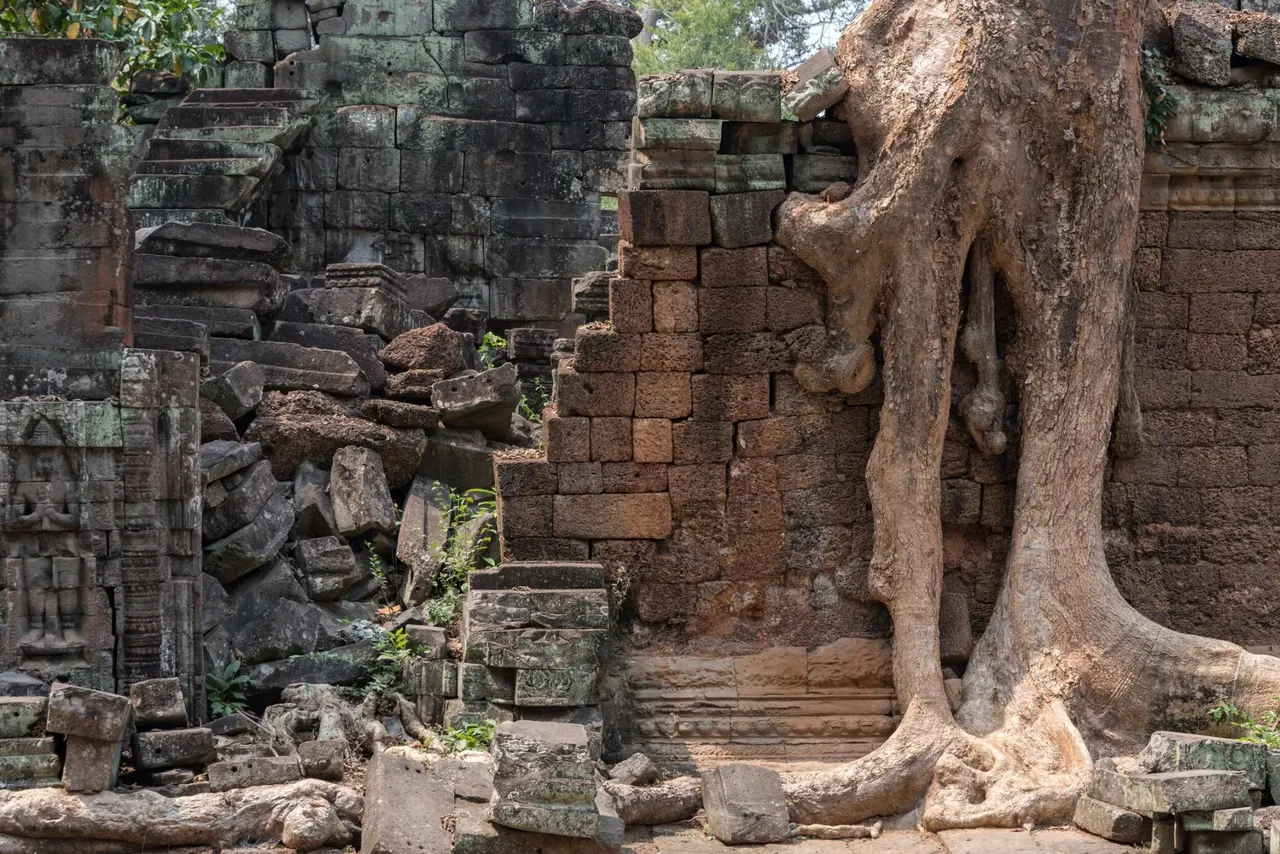
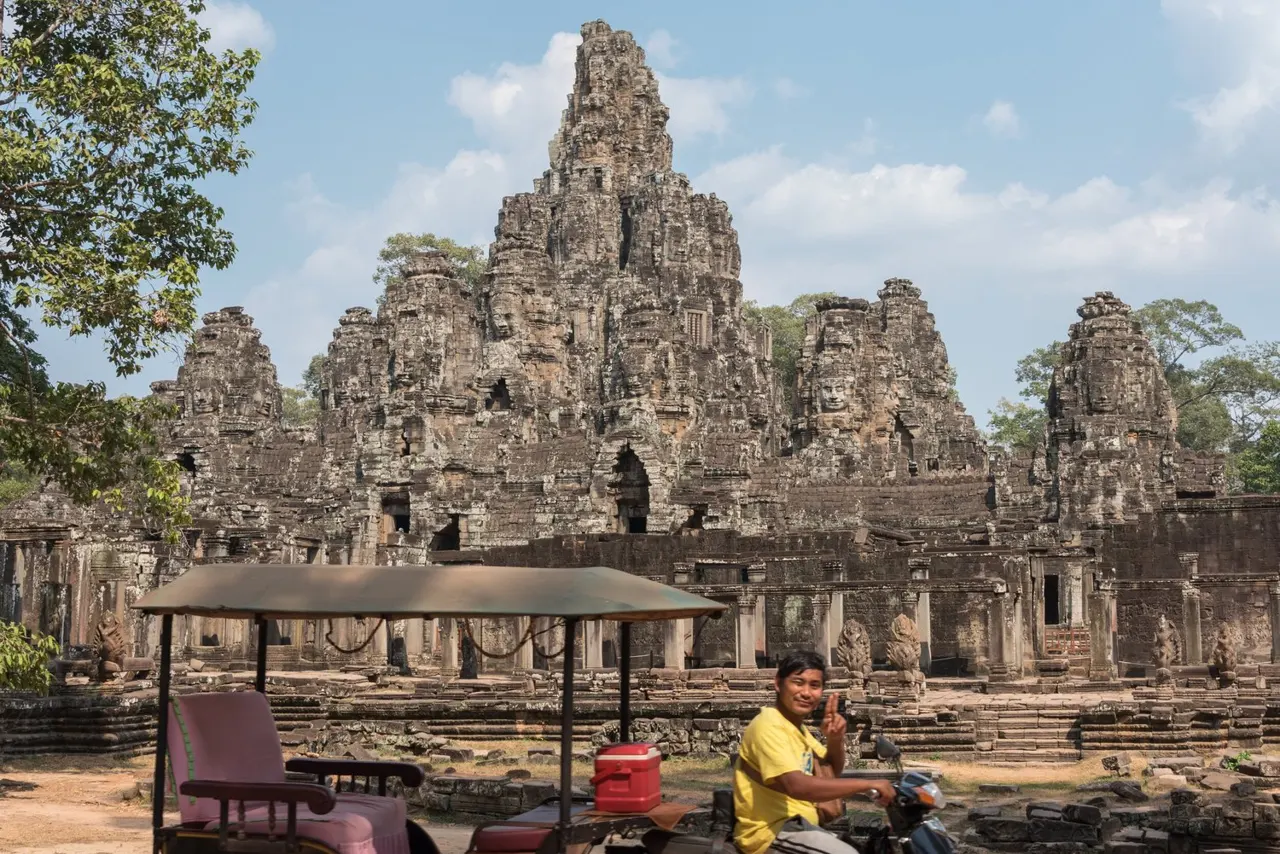
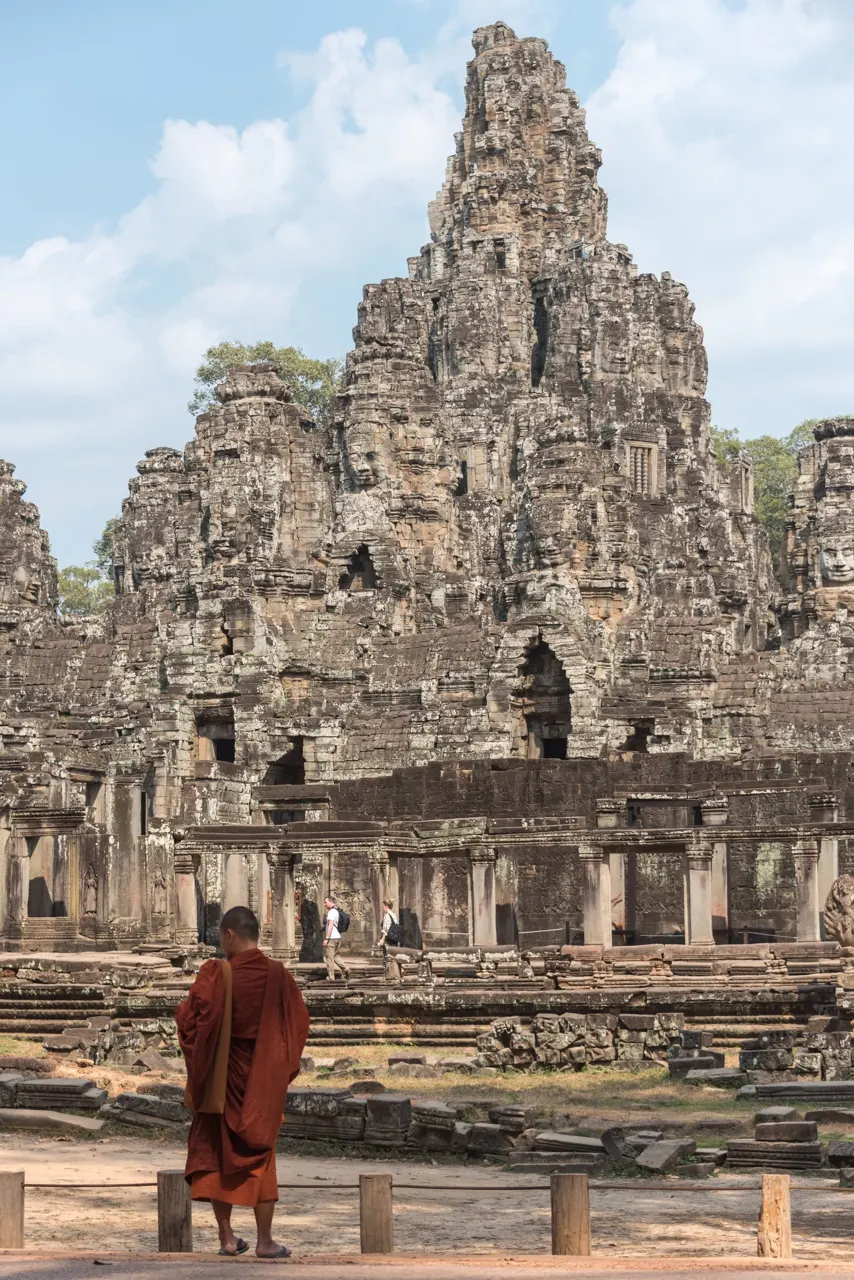
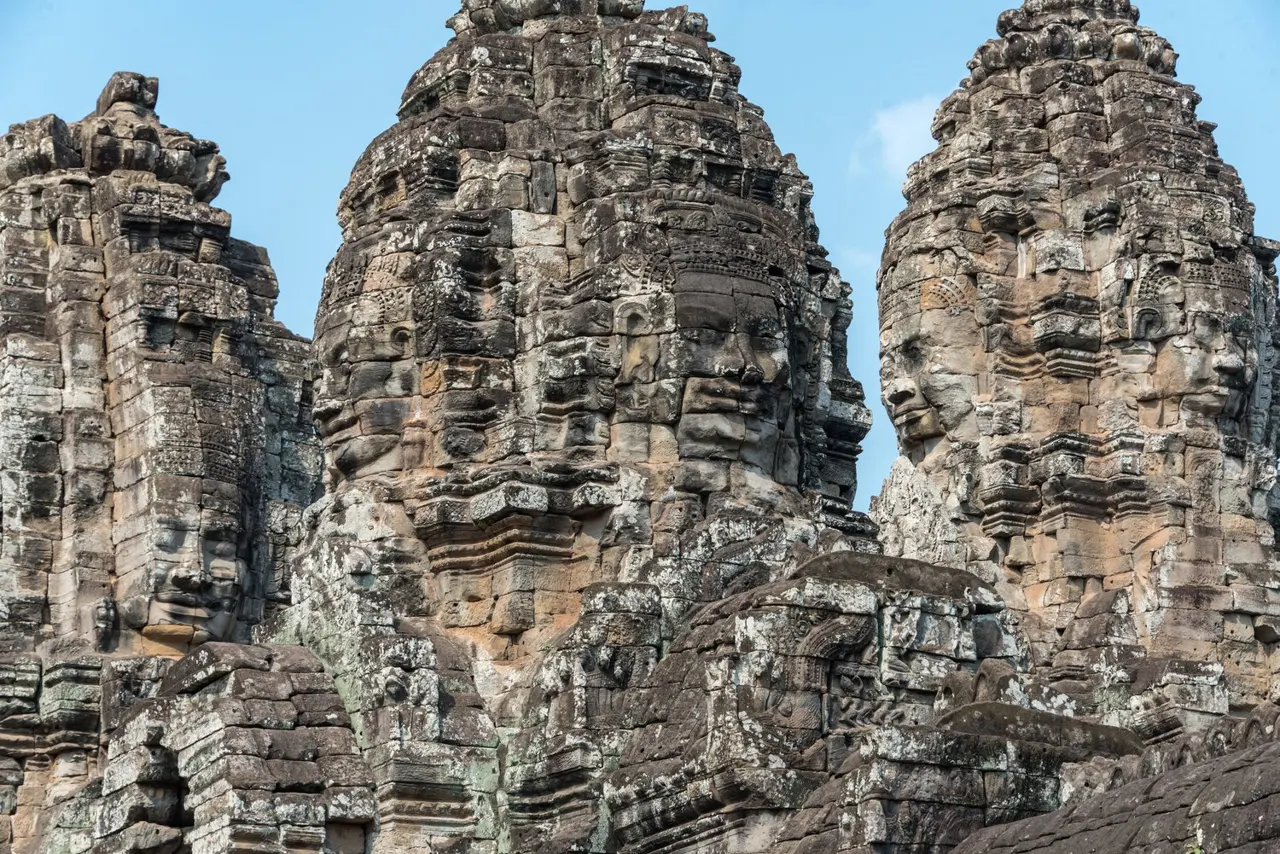
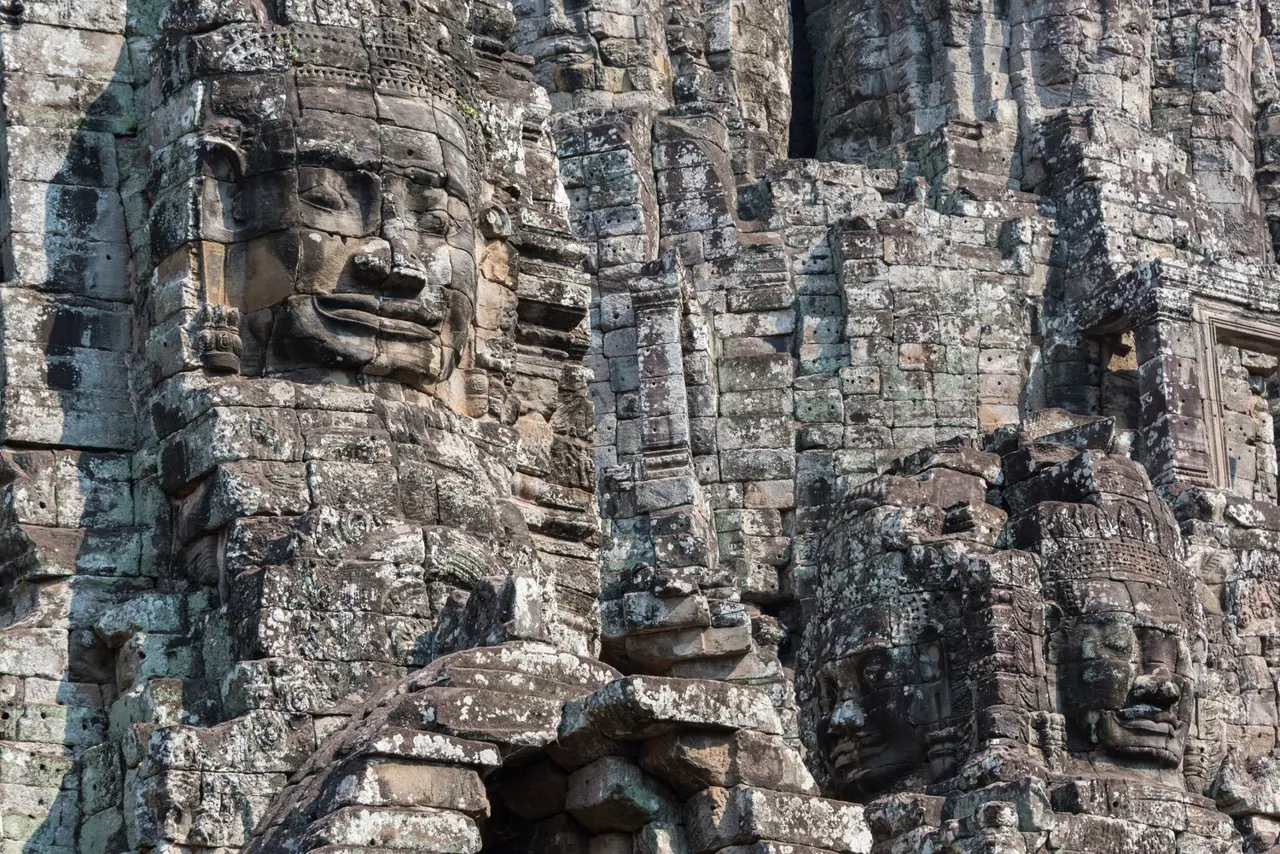
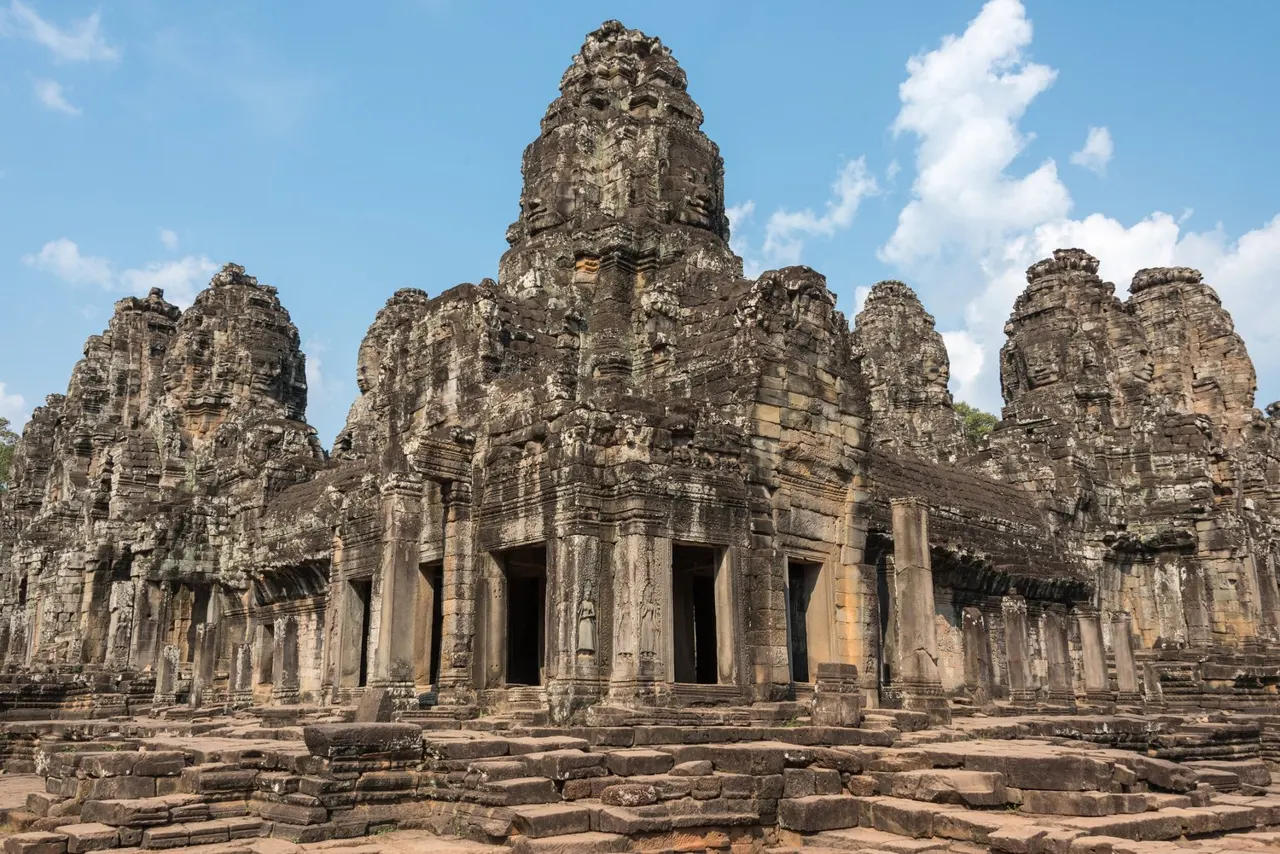
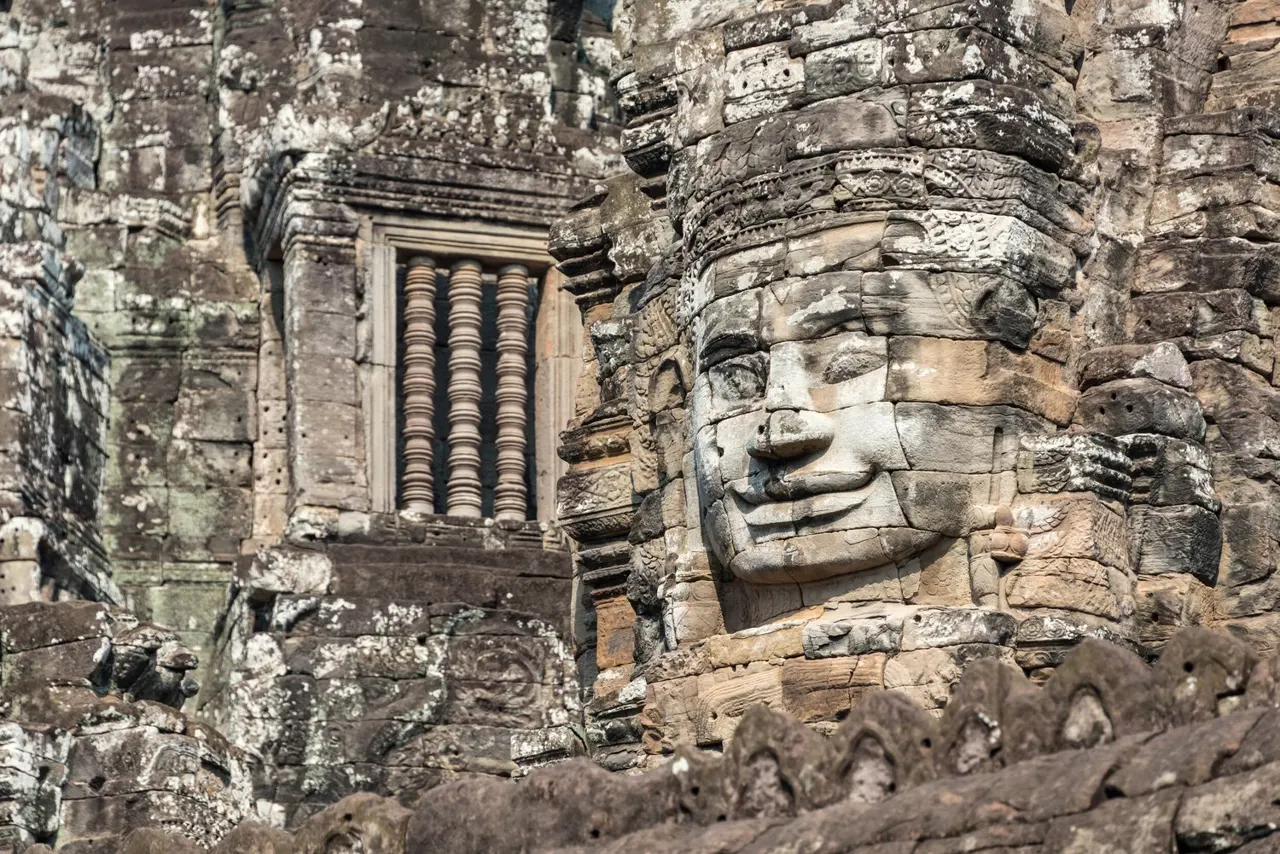
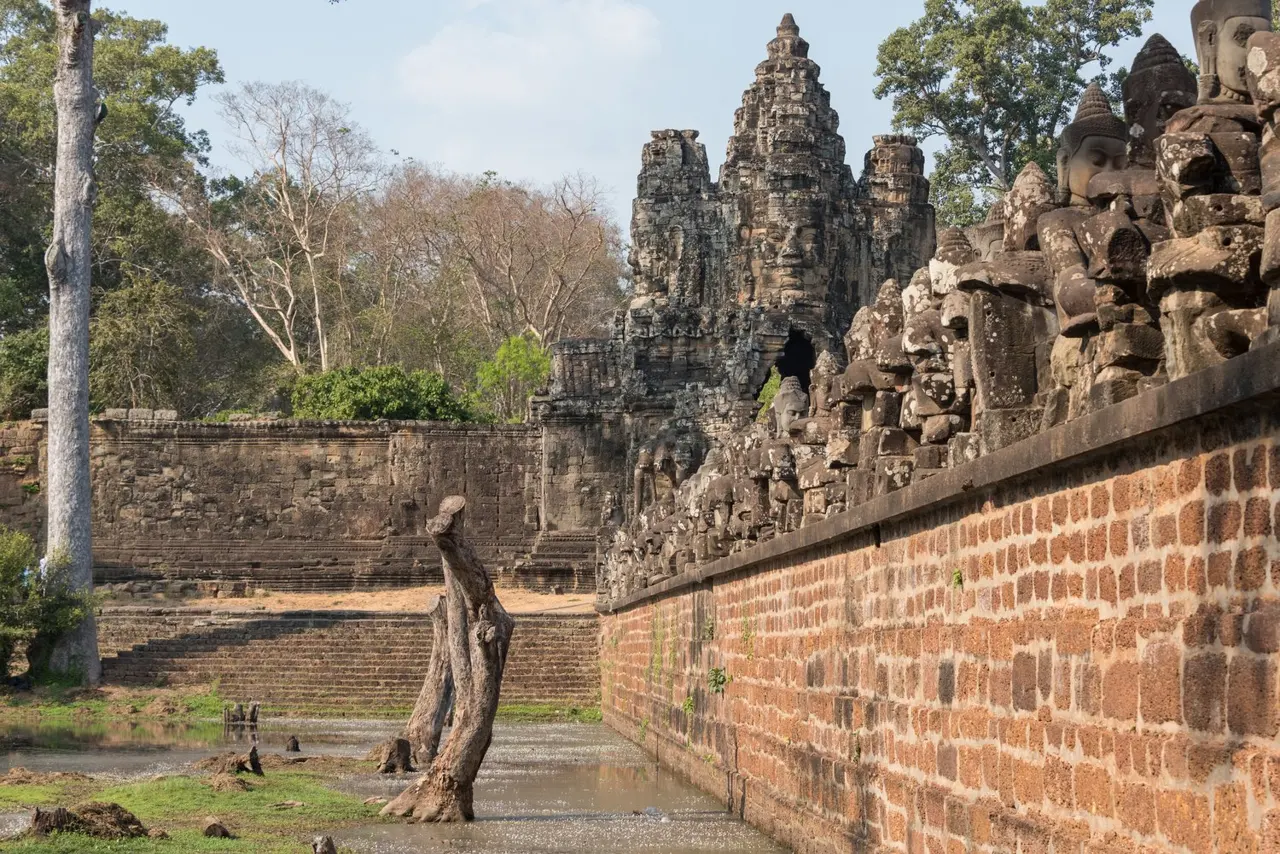
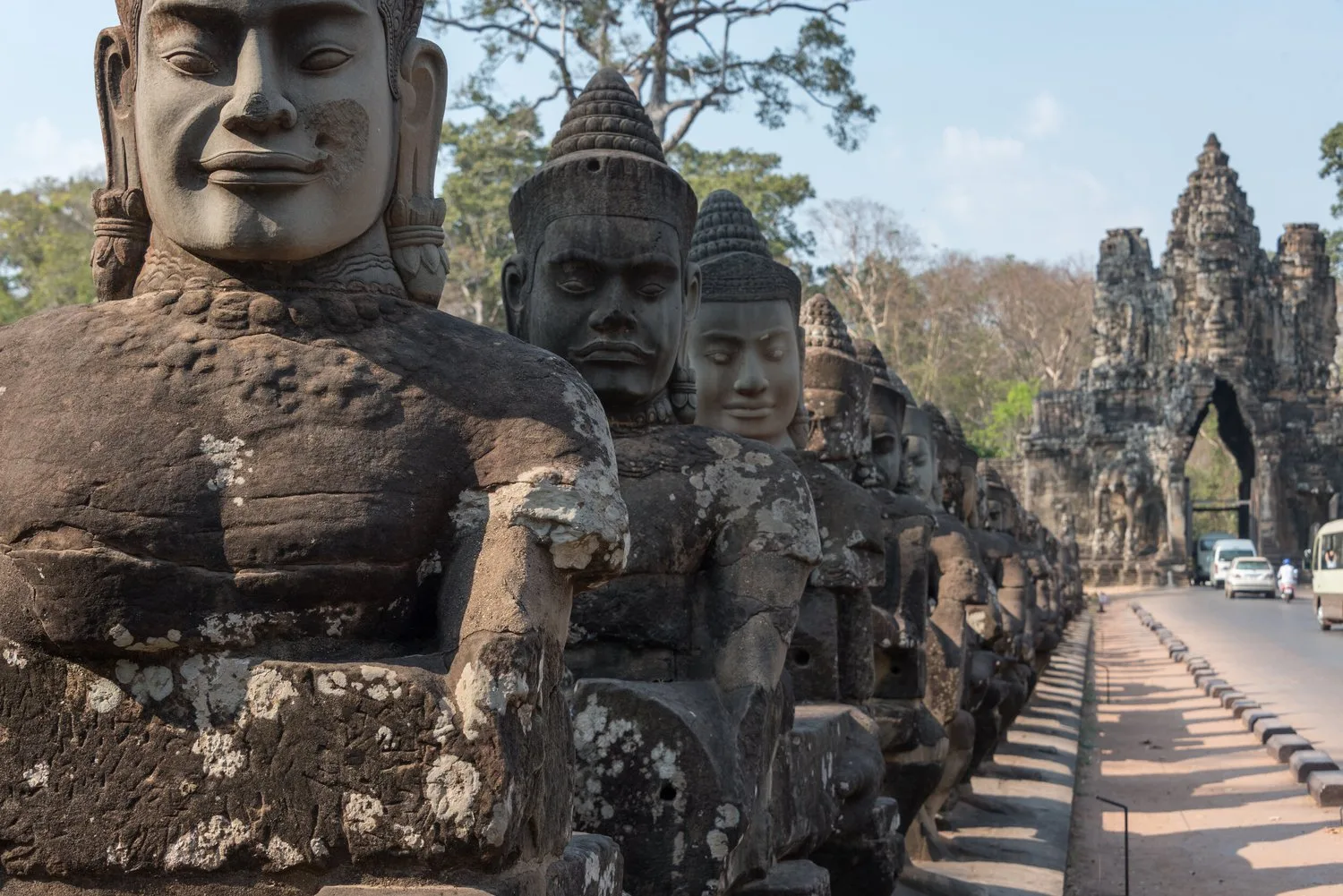
The main temple of Angkor would be a sufficient sight in and of itself, but, thankfully for us, it’s just the beginning. The entire complex is enormous, covering over 400 acres and containing 70+ temple complexes and hundreds of smaller sites. The complexes were built by the Khmer people in the 12th century, and contain a mix of Buddhist and Hindu temples. When the temples were rediscovered in the 1860s, nature had run roughshod on the place for a few hundred years. What’s left is a mix of beautiful architecture ominously shrouded in horror-movie-esque root systems growing in, around, and on top of temple walls and rooftops. Cycling around the various complexes made for quite the day, but any fatigue was suppressed by the seemingly endless ruins to discover, often times all by ourselves. While the iconic scenes are quite the spectacle, particularly Ta Prohm (Tomb Raider Temple) and the many faces of Bayon, it’s the random bulbous root wrapped around an enormous rubble pile, or the small chamber with a beam of light shining through the hole in the roof that you stumble upon at just the right time of day that really makes Angkor Wat and its temples a joy to explore. Every visit will yield new scenes, every time of day a new shadow that accentuates the ongoing battle between man’s creations and mother nature. Making our way in and out of the city walls felt like we were storming some kind of ancient castle, with giant faces staring down at us as if to warn us not to enter lest we dare tempt our fates. Enter we did, however, perhaps with some chills, a product of some curse sent down from the ominous onlooker perched in stone above the gates.

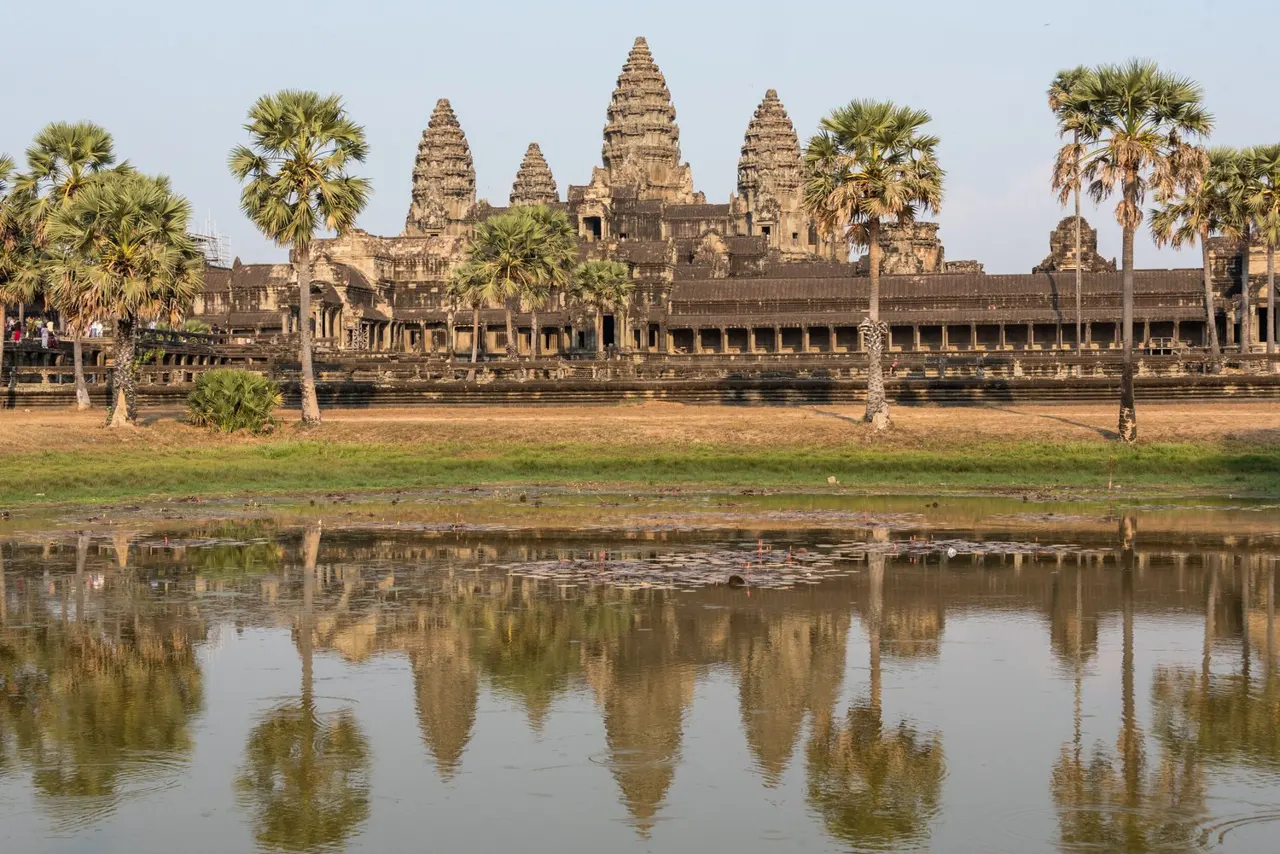
Twelve hours in, we abandoned our two wheels and kicked our feet up in front of the main temple of Angkor again, basking in the afternoon air as golden hour had begun on the mighty temple’s spires. We watched tourists of all kinds begin to slowly scatter, leaving us alone to enjoy a peaceful end to an adventurous day discovering as many of the hidden and not so hidden secrets of a true marvel of both man and nature. Crossing back across the giant moat to make our way back into town, we walked down to the water, finding that the greenery we’d seen below was actually clovers. Peculiarly, every single clover was of the 4-leaf variety, which seemed quite fitting to find after months and months of experiencing so much of the very best this earth and its inhabitants have to offer.

Lucky us…  
The Killing Fields

1 / 4

Cambodia is hard. This post may be the same for you, due to both its graphic nature and strong opinions. You’ve been warned.

***

Heat. Dirt. Trash. Crowds. Scams. Thieves. Poverty. Death.

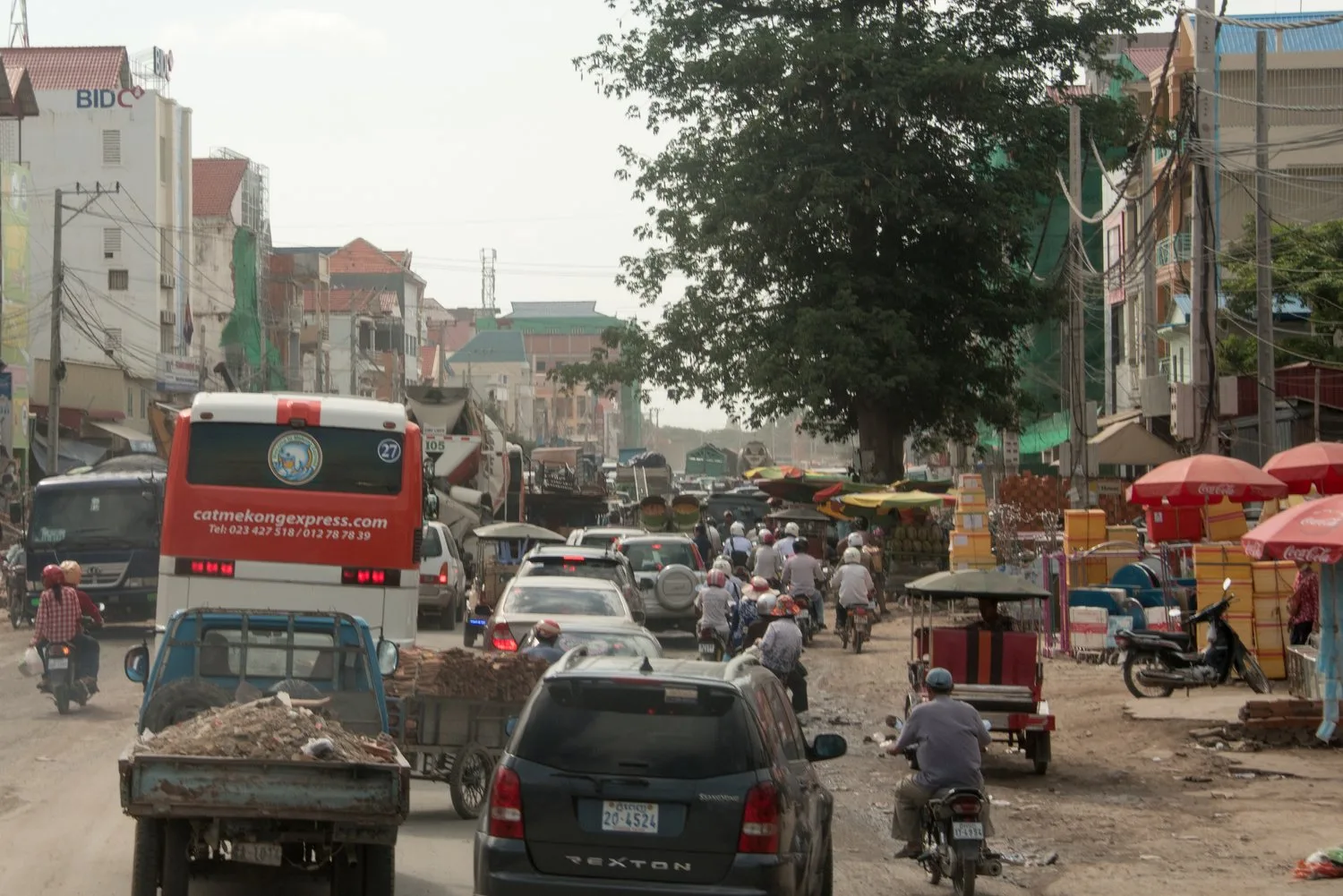
Arriving in Phnom Penh, the capital city of Cambodia, after an all-day bus ride from Siem Reap and the temples of Angkor Wat, I was battling stomach issues that would see zero chance of improvement in the environment in which I was unknowingly arriving. Aside from the heat, which apparently is a product of a record hot summer in Southeast Asia, the city of Phnom Penh is a microcosm of the self-induced destruction of Cambodia’s past. The smells can be absolutely nauseating, and I’ve smelled some shit, literally, on my escapades throughout Asia thus far. The trash abounds, and gets even worse as you venture out of the city, where I witnessed children and families playing and/or scavenging through festering garbage dumps while emaciated cows followed suit. The filth is palpable, as exhaust fumes, dirt, and trash join forces in the overcrowded streets to satiate your face and body. Even my merino wool absorbed the stench. Thankfully, I didn’t fall victim to bag snatching, though it sounded quite scary, as skilled thieves on motorbikes are known to slices bag straps and take off before you know it.

All this pales in comparison, however, to the atrocities that tarnish the city and country’s very recent history. The Khmer Rouge was an oppressive regime in the 1970’s that came to power on the coattails of the U.S. destruction of rural Cambodia during the Vietnam War. I was both disappointed in myself and upset with our education system that I had no idea that the United States had dropped more bombs on Cambodia than had been dropped during the entirety of World War II. That my country ran these rural dwellers into the cities, where the Khmer Rouge was a beacon of hope in escaping the terror raining down from above.

If they only knew.

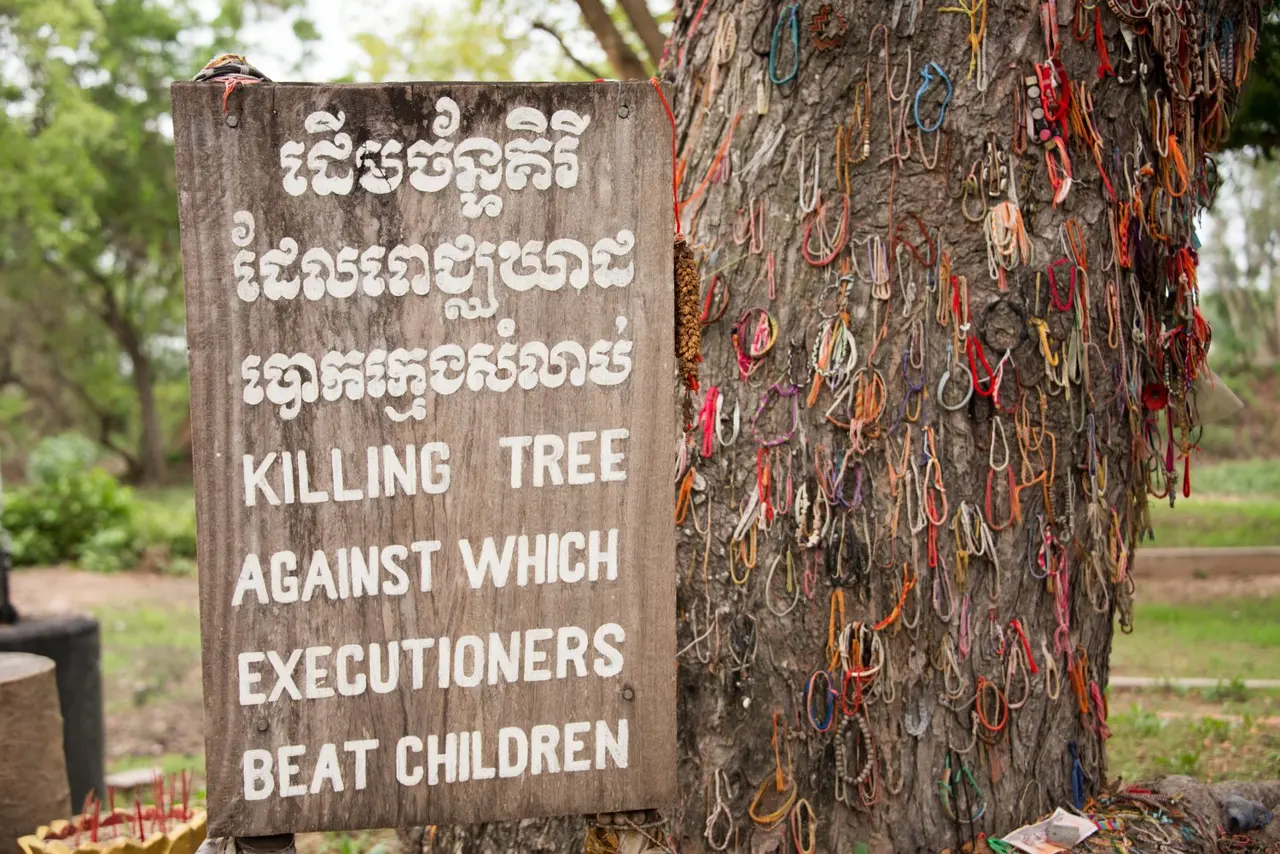
Pol Pot and his Khmer Rouge regime systematically annihilated those living within the city of Phnom Penh and throughout Cambodia. Any sense of distrust resulted in coerced confessions, false accusations of treason, and forced divulgence of information that none of these souls ever had. Doctors, Engineers, Farmers, Mothers, Children, Murdered. In all, one quarter of the entire population of Cambodia was exterminated. One quarter of a generation, gone. Prisons were set up around the country, where torture and coercion were on the daily fixed agenda. We got the chance to visit S-21, at the Tuol Sleng museum. Once a schoolyard, the classrooms were turned into cells, the playground equipment mechanisms for torture. After false confessions of treason or the like were confirmed, prisoners were taken by the truckload outside the city to the Killing Fields, where loudspeakers and diesel engines drowned out the screams of individuals murdered one by one, more often than not by blunt force trauma to the head, as bullets were too precious to be wasted. Especially sickening was the mass murder of innocent children, taken by the legs from their mothers and beaten against the killing tree until they stopped breathing. Fragments of bone, teeth, and skin have been found deep in the tree bark.

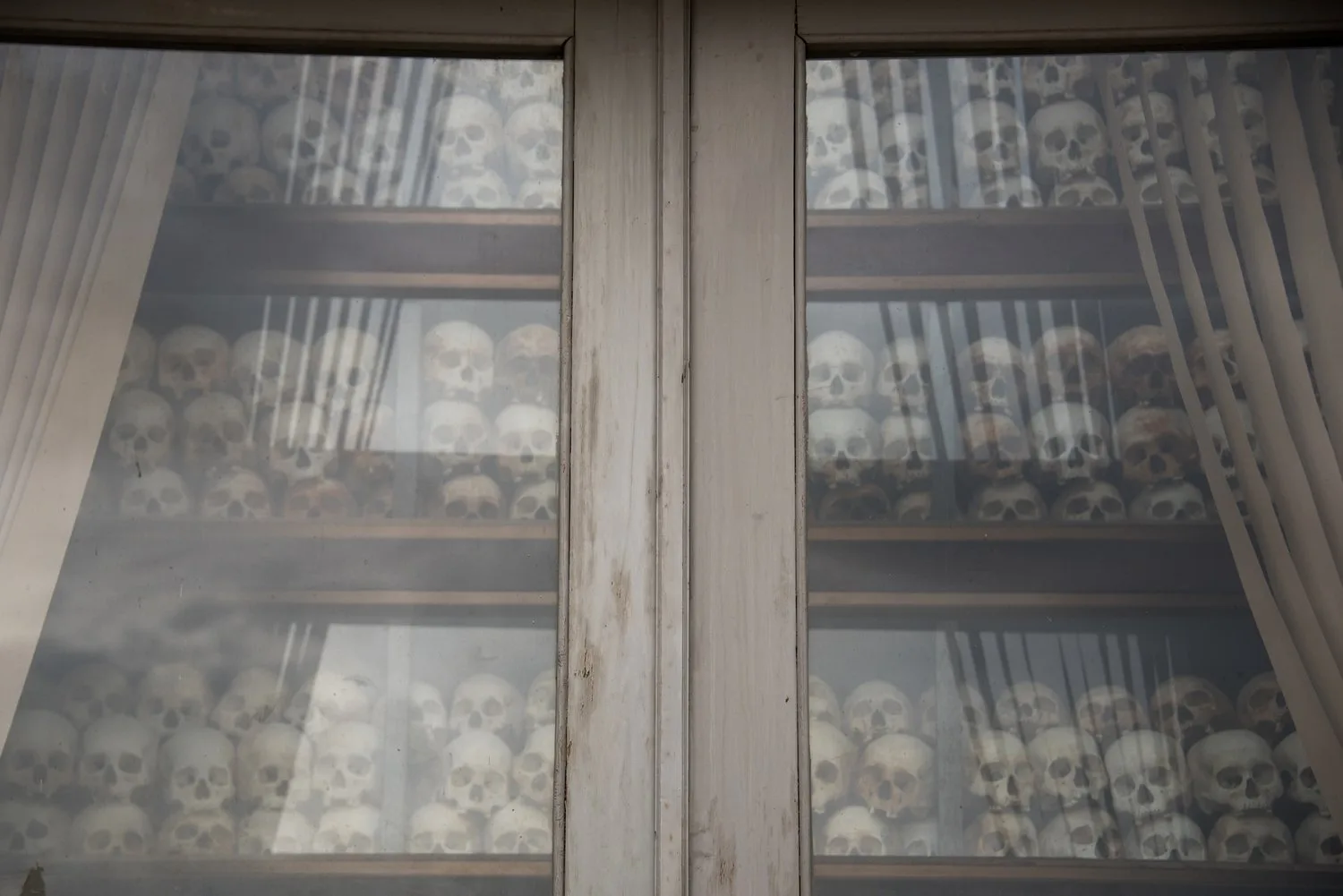
Walking around the killing fields today is a somber, numbing experience. A large memorial stands in the center, filled to the top with skulls, each marked with the cause of death near their respective cracks and holes. Pits of mass graves lay scattered about, where clothing and bone fragments make their way to the surface with each rainy season. Glass cases contain the remnants picked up by the workers once the garments are fully unearthed by nature. Peering into the glass, blouses lay next to shorts meant for no older than a 3-year old. The killing tree leans in the center of the fields, covered in bracelets meant for remembrance. It's all very disturbing.

As is the case will all museums of this sort, we keep the remnants intact so as to educate the world, so this may never happen again. Similar to my reaction at the Dachau concentration camp outside Munich 5 years ago, I can’t help but have feelings of indignation that the world’s declarations of Never Again are bullshit. Repression and senseless murder continue to run rampant in our world. The scariest part of it all is that we are a part of the destruction, whether we realize it or not. Just as I was shocked to learn the U.S. role in the destruction of Cambodia and ultimate rise of the Khmer Rouge, you may also be shocked to learn just how much of a presence we currently have in Yemen, or at least above it. I encourage you to read up on our drone campaign there, and the impact on the innocent citizens, yes women and children, whose lives we’ve destroyed or ended. Or choose to ignore it, as it doesn’t quite fit the narrative that only the bad guys kill the innocent. Or that anything bad the country has ever done in the Middle East is George W. Bush’s fault. It’s imperative to realize that Cambodia wasn’t an aberration, Agent Orange wasn’t a one-off misstep. History repeats itself over and over again. Perhaps my children will go to a museum someday in Yemen or elsewhere in the Middle East and be disgusted by their country’s actions and impacts on faceless, indefensible victims, and the horror of daily life anticipating fire raining down from the heavens. I love my country and my fellow countrymen, but there comes a time when we all must look in the mirror and question whether actions that make sense today won’t be classified in the future as clearly misguided and detrimental.

I understand war is multifaceted, with no right answers. I won’t sit here and pretend like I could even begin to craft the right strategies, even with hindsight. The aftermath of such wars, though, as was the case with the Khmer Rouge, are so regularly accepted as inherently evil and deplorable that it goes without saying that exterminating 25% of a population for no other reason other than they were simply unwanted can in no way be viewed with a different lens and found to be justified. I challenge you, then, as an American, to look inward at what we’ve accepted as the norm in our society, in the name of freedom, rights, and choice. As a rule, the trauma of the killing tree is not all that different than that of a terminated pregnancy inside the womb. Depending on which statistics you trust, the current rate of pregnancies that end in abortion is around 20%. That is to say that we are currently missing around 20% of the people that at one time had the potential to live and breathe and prosper in our free society. It confuses me when I watch the country celebrate the ability to produce such a statistic. I speak not of celebrating the act of abortion itself, but rather the right to choose who lives and who dies, for the betterment of an individual. Is this something to celebrate, to fight for? The right to exterminate a human that is unwanted or that we feel cannot be taken care of? This isn’t an argument for being Pro-Life or Pro-Choice, but rather a plead for an introspection and realization that we can we can do better as a country, especially with the support of our own people, the marginalized, the ones that have no voice for themselves, and especially the ones that feel they are left with no other options.

Perhaps one day the world will recognize even more lost generations, and Never Again may be more than just a feeble catch-phrase to make us feel better about our feigned vows to open our eyes during the next atrocity.

Angkor Wat

1 / 7

Speckled throughout this itinerary-less escapade of mine are a handful of locations, sights, and experiences that were non-negotiable stops along the way. Angkor Wat may have been at the top of that list.

Spread out over 400 acres outside the Cambodian city of Siem Reap, the temple complexes of Angkor Wat pierce the sky in the otherwise flat terrain. What struck me most was the vastness and diversity of it all. Buddhist and Hindu temples merged into the same intricate edifices, some more well maintained than others, all quite strikingly raw as compared to similar ruin complexes such as Machu Picchu. Free to roam around just about anywhere with the temples, it wasn’t uncommon to stumble upon a Buddha with incense burning in front, tucked away behind a corner in a seemingly abandoned room within a ruined temple. Monks dotted the grounds inside and outside of the temples, their bright orange garments a stark contrast to the aged stone surroundings.

While it was quite a lot to process, we were able to cover 90% of the grounds in one, very long day. Starting before sunrise, the main temple of Angkor embraced the first rays of the sun, as its reflection began taking shape in the pond at its feet. While the scene may sound quite serene, the hordes of tourists and vendors unfortunately make it anything but. For the most part, however, we successfully dodged the masses throughout the day, timing our visits to stagger with the large groups, thanks to our trusty tuk tuk driver. $20 each was a small price to pay for 15 hours-worth of a private chauffeur and tour guide, leather seats included.

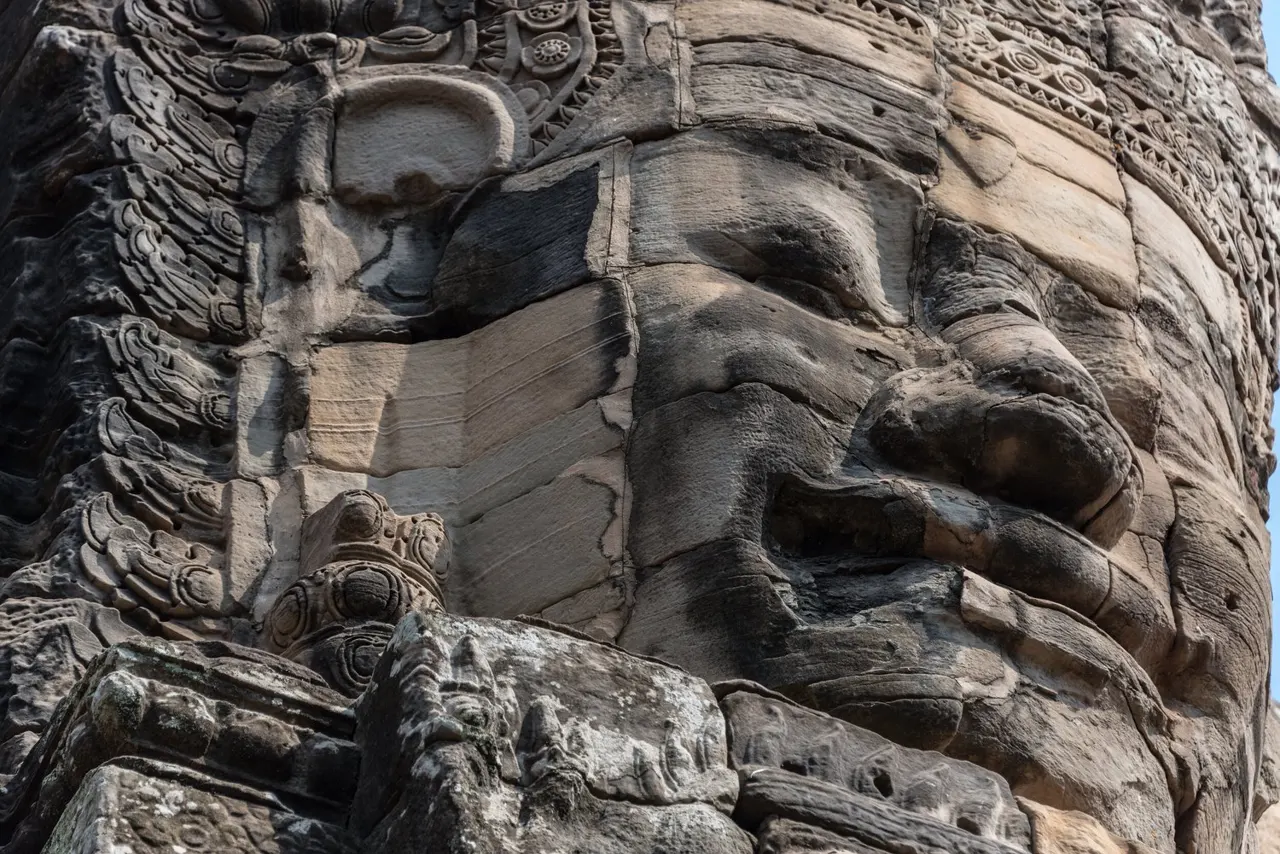
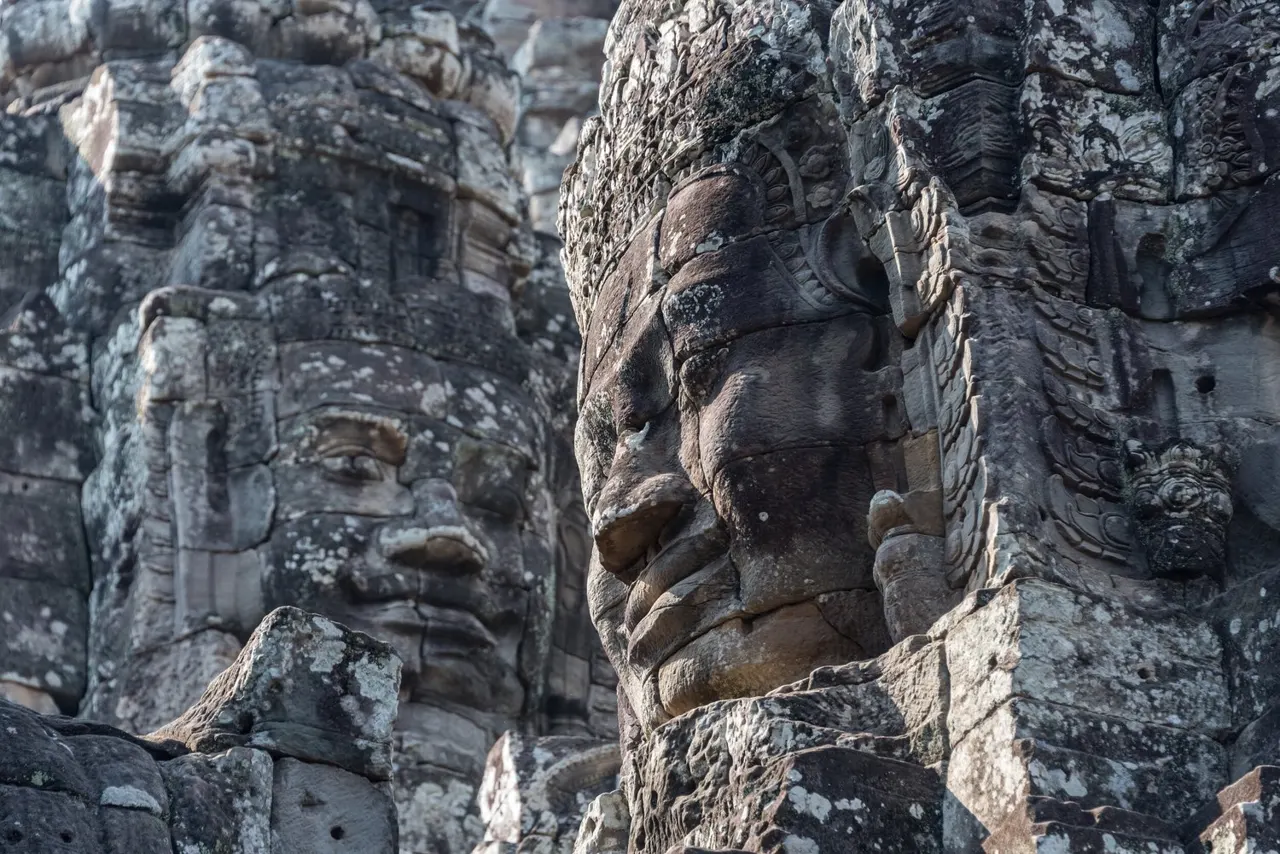
The highlights of the grounds include Ta Prohm, better known as the Tomb Raider temple, where massive trees coexist with the stonework of the temple, each at the whim of the other for remaining upright and stable. The intricacy of the root systems was fascinating, stretching along temple walls, through divisions in the stone, and on top of the temples themselves, reaching dozens of feet into the air. My personal favorite was Bayon, a temple complex containing countless enigmatic faces on all sides of pillars and centerpieces throughout. A smug smile, apparently reminiscent of the reigning King, was a reminder of who was in charge at the time. I personally felt like I was finally living my dream of being a contestant on Legends of the Hidden Temple, an adventure gameshow with the stone face of Olmec as the center point of the action. Surrounded my Olmecs and equipped with a camera, I took more photos than I care to divulge, even while battling the elements of an afternoon rain shower.

Doing my best to soak in not just the rain but the grandness of it all, I channeled some of my prior memories of Machu Picchu, alone in the fog atop a mysterious mountain oasis. What Angkor lacks in setting, it more than makes up for in both size, diversity, and peculiarity. And while I wasn’t able to channel quite the same sense of mystery and wonder that I did up in the Andes with the Incas, I walked away from Angkor Wat with a deep appreciation for the details and old-world grandeur held within its grounds, and perhaps a new favorite place for an adult game of hide and seek…