Laos

Si Phan Don, Laos

1 / 20

Often overlooked on many Southeast Asian travel itineraries in favor of Thailand or Vietnam, Laos is sandwiched between the two countries, along with Cambodia, its neighbor to the south. While every aspect of travel in Thailand comes with ease, there was no shortage of situations in Laos in which I found myself simply shaking my head and laughing it off because, well, what else could I do?

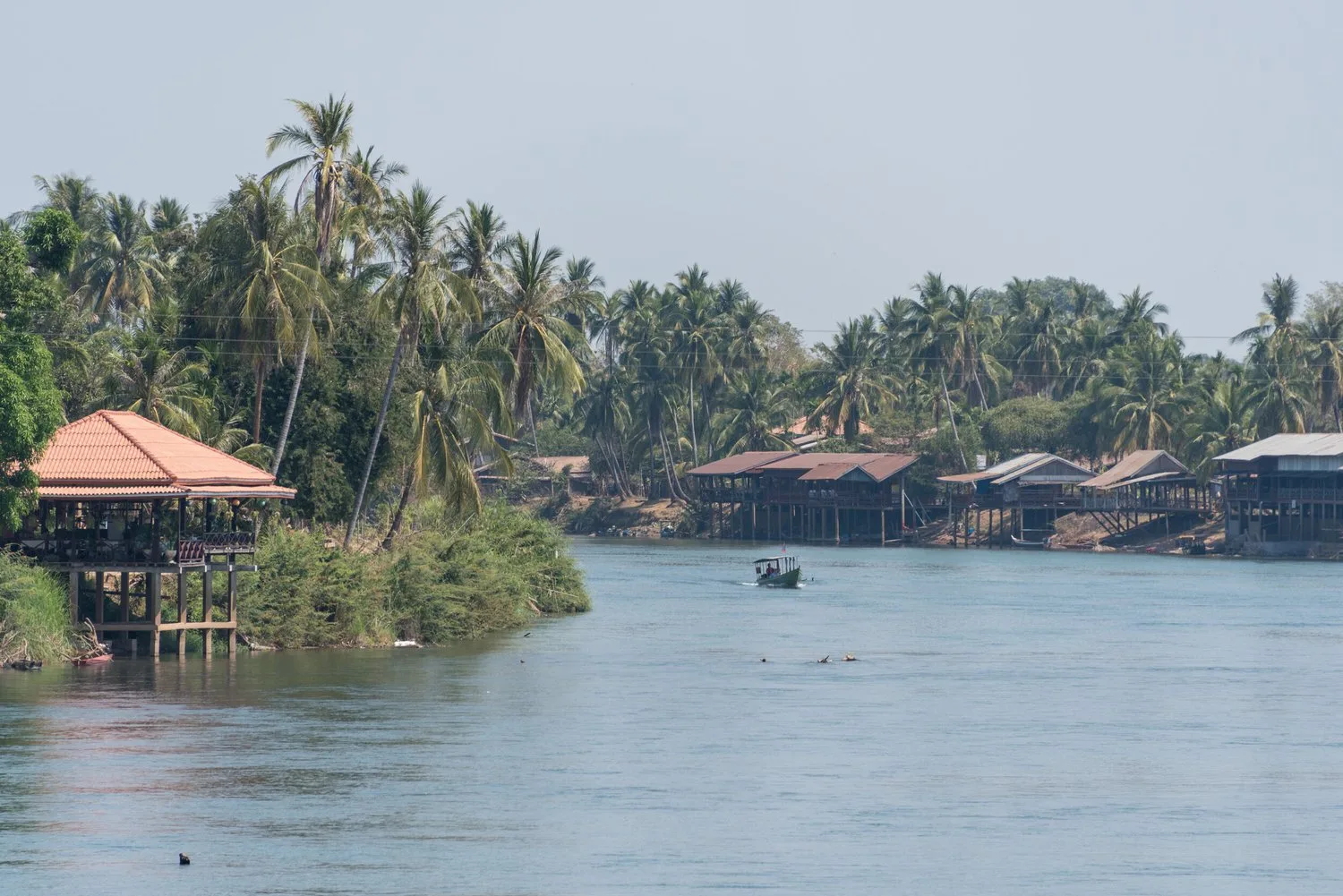
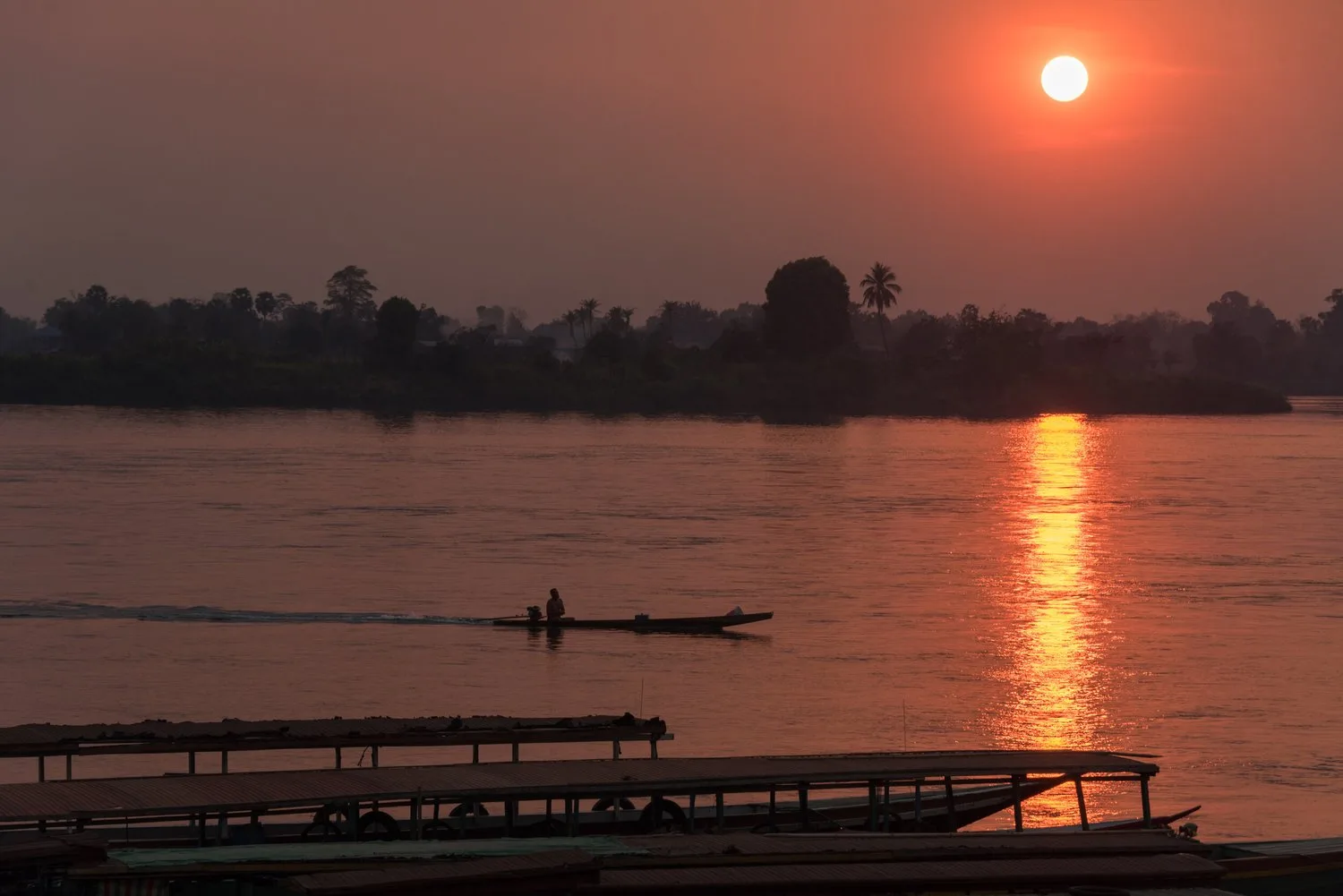
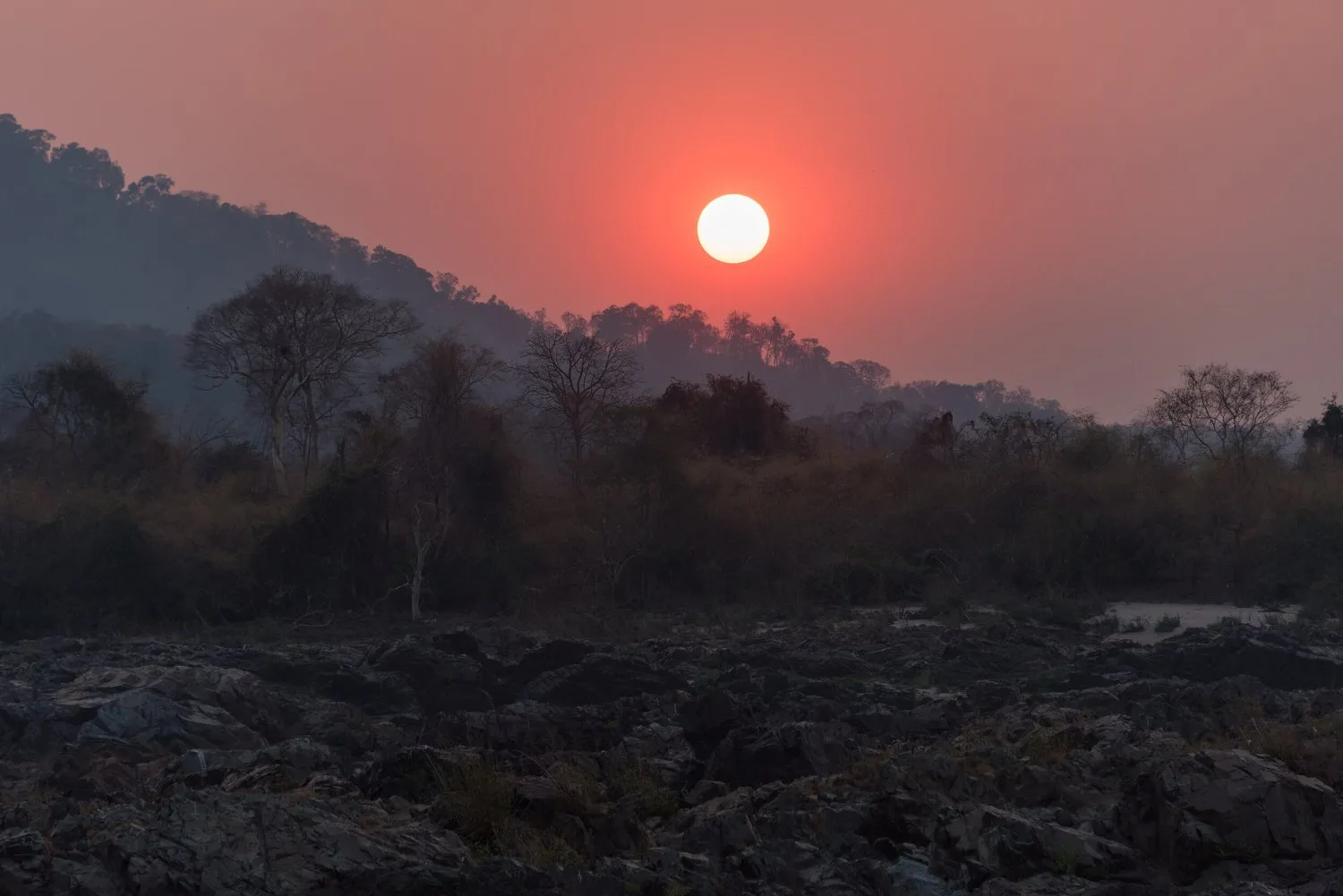
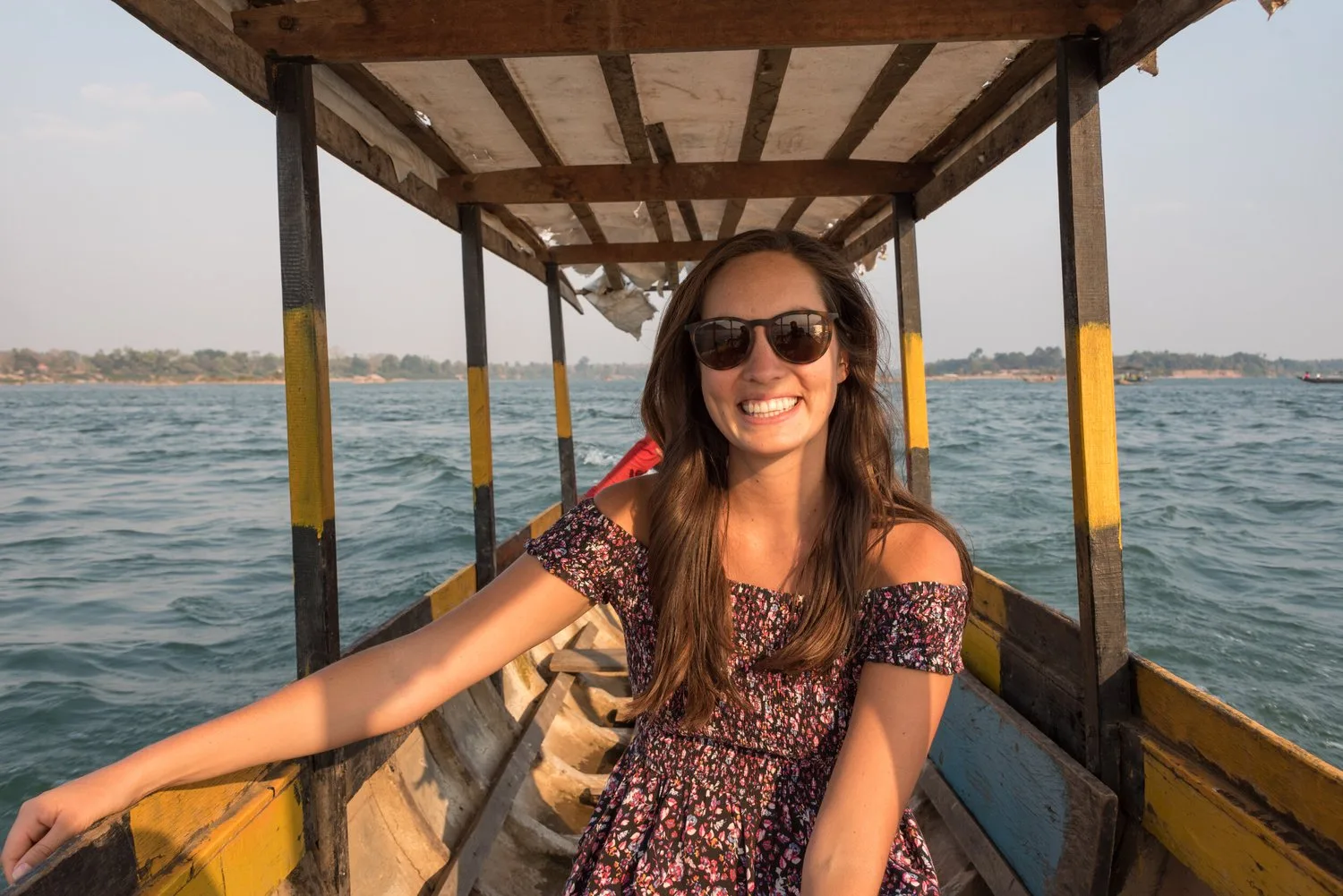
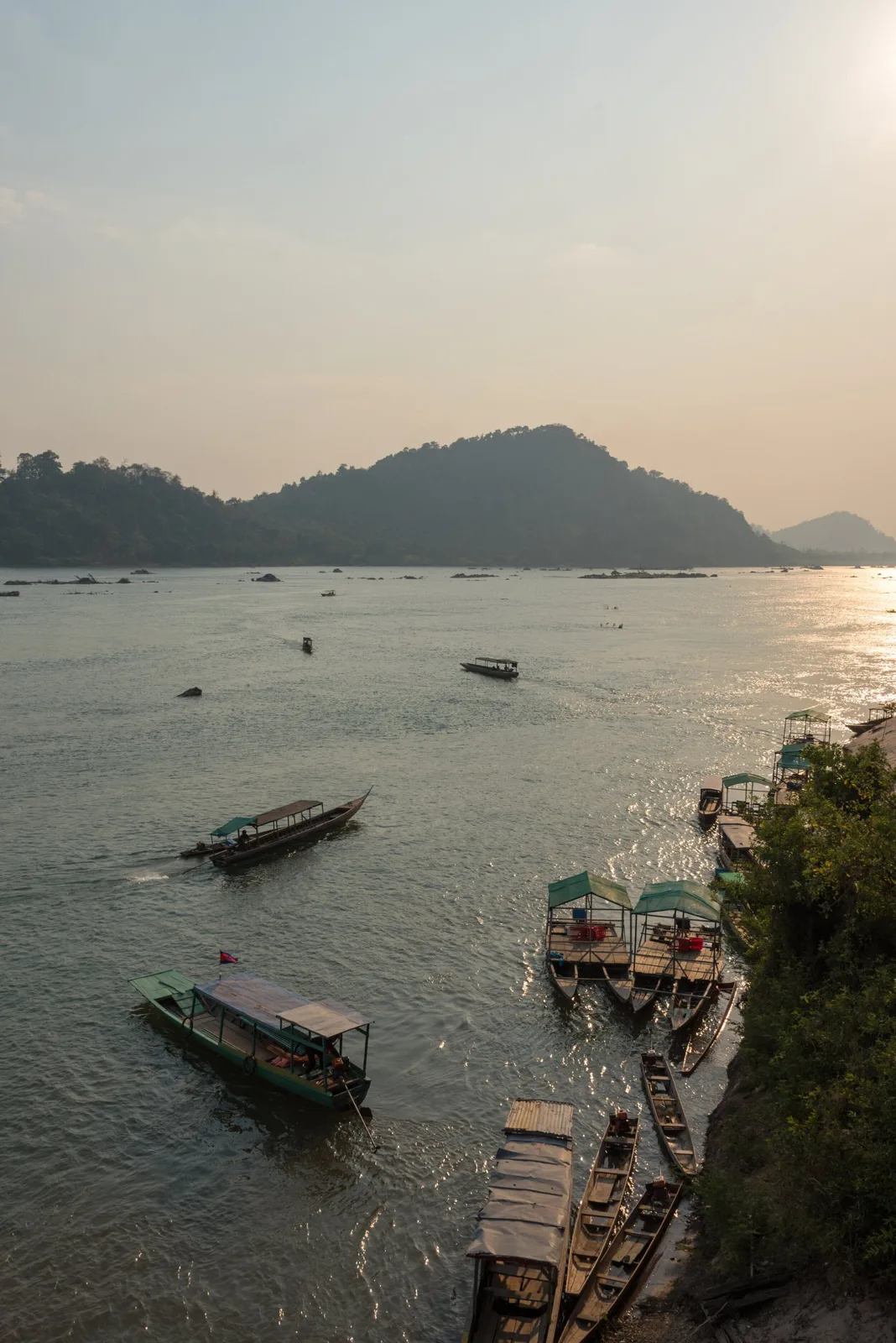
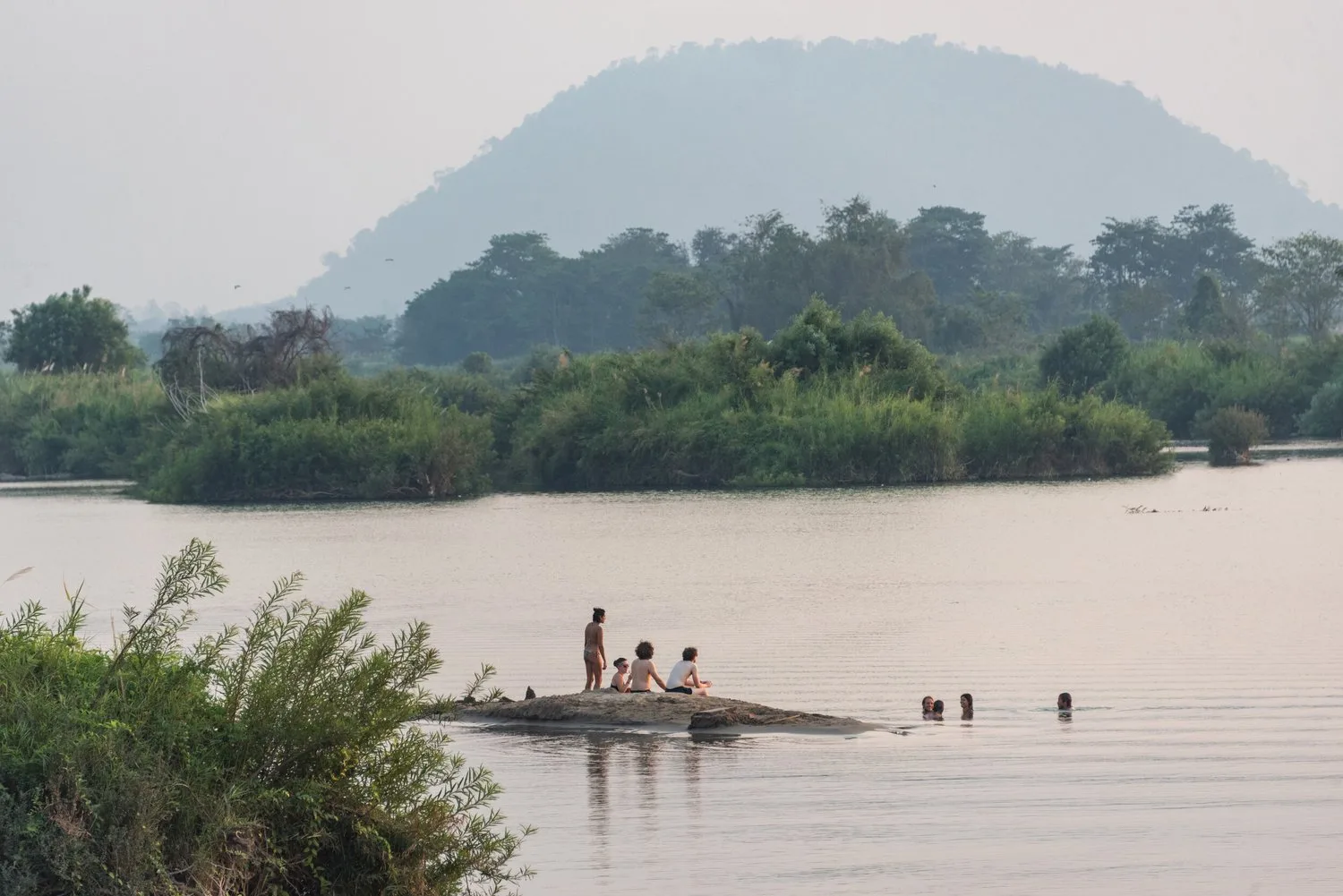
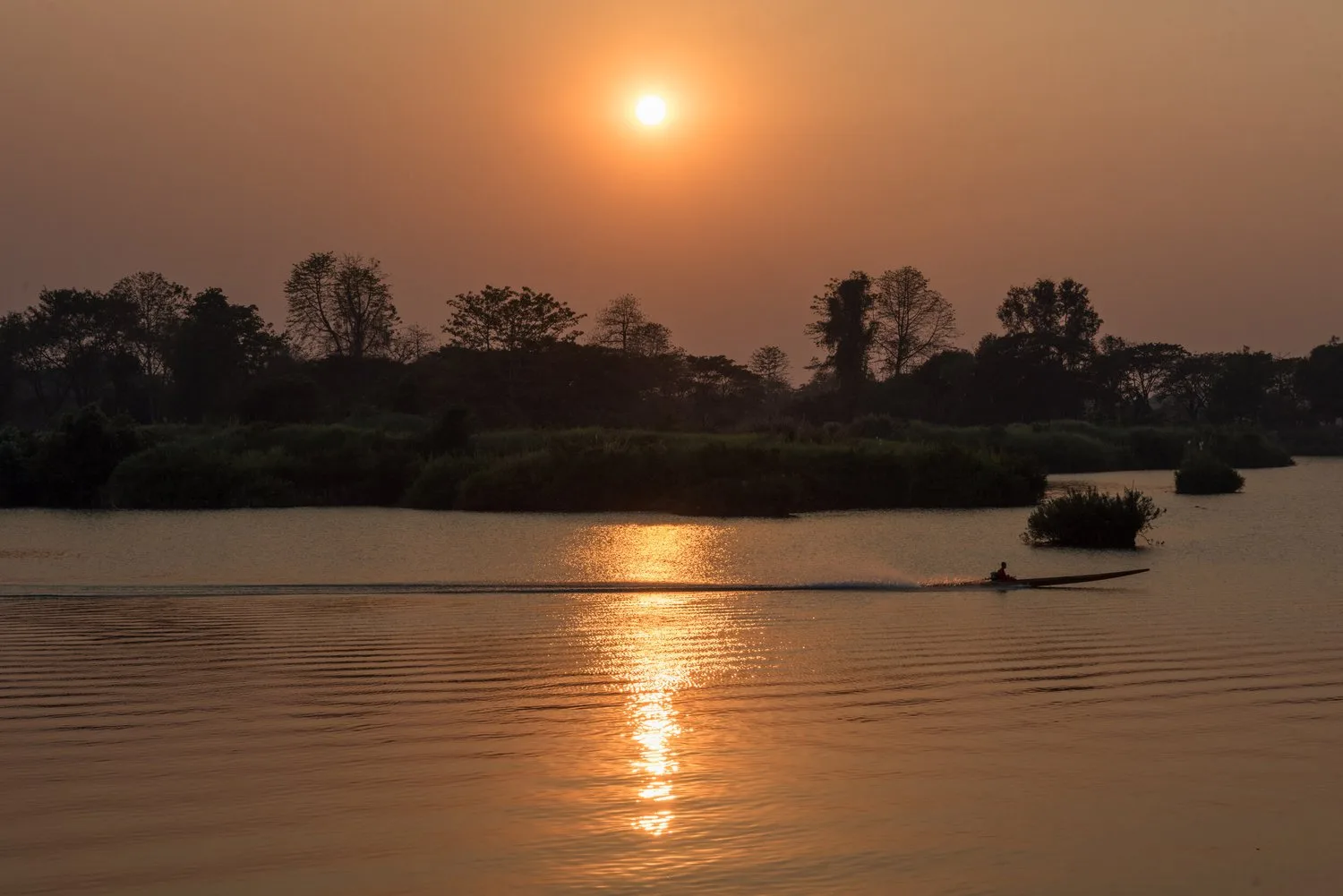
The adventures started with our arrangements from Siem Reap, Cambodia, the jumping off point for Angkor Wat. We were meant to take one bus to the remote Laos border, then another from the border to the edge of the Mekong River, where we’d cross by boat to Don Det, a backpacker-filled island within the region of Si Phan Don (translated to Four Thousand Islands). What really happened was we took one van, one bus, one 2-hour rest stop, one kilometer-long walk across the border, one covered truck-bed crammed with 15 backpackers and backpacks, and finally, one rickety boat across the river to reach our island home for the next 3 days. The trip became progressively less comfortable, capped off by the 30-minute walk in the dark along the dirt path to our accommodation. While the road was rigorous, we reached the beach / boat dock just in time to watch a blood-red sun sink into the river behind the hazy skies of the remote paradise of four thousand islands, a reminder that the trip was well worth the trouble.

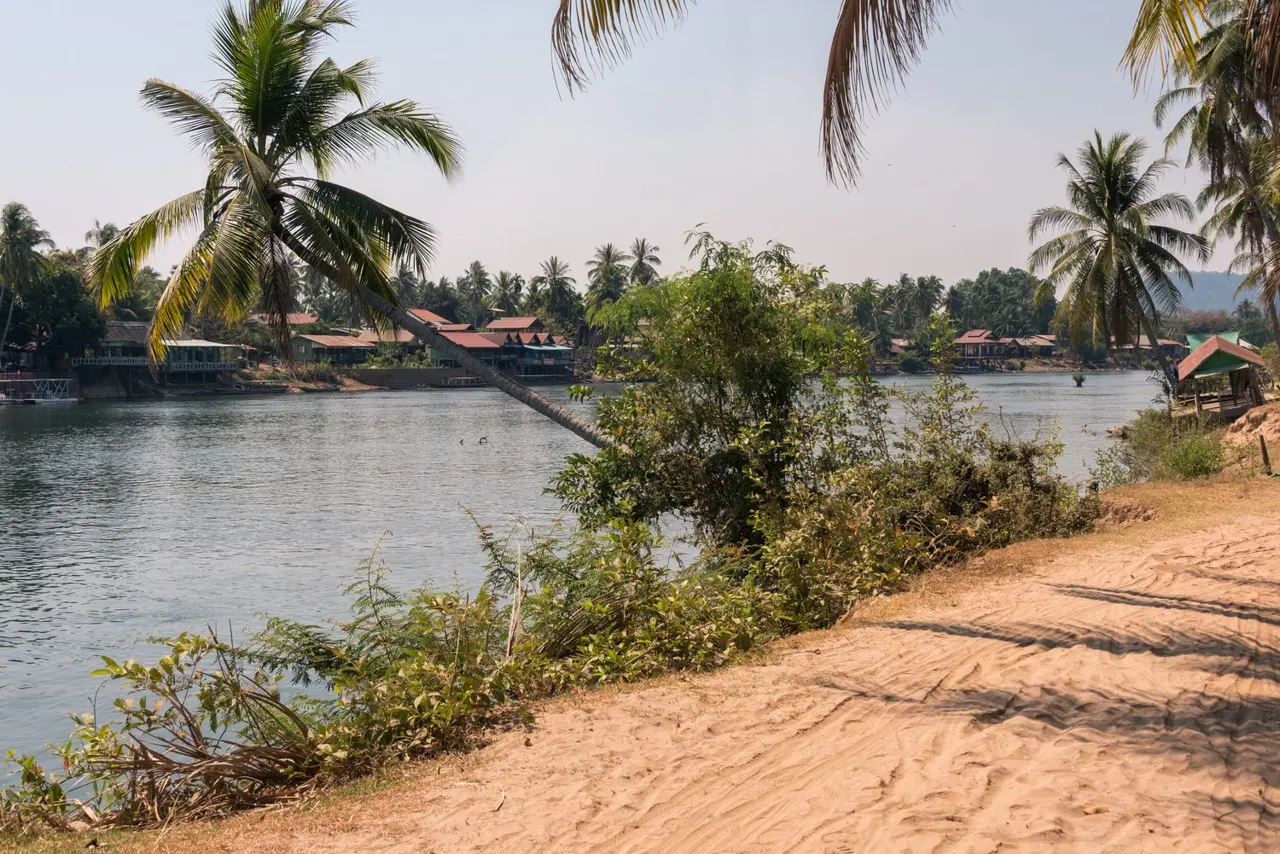
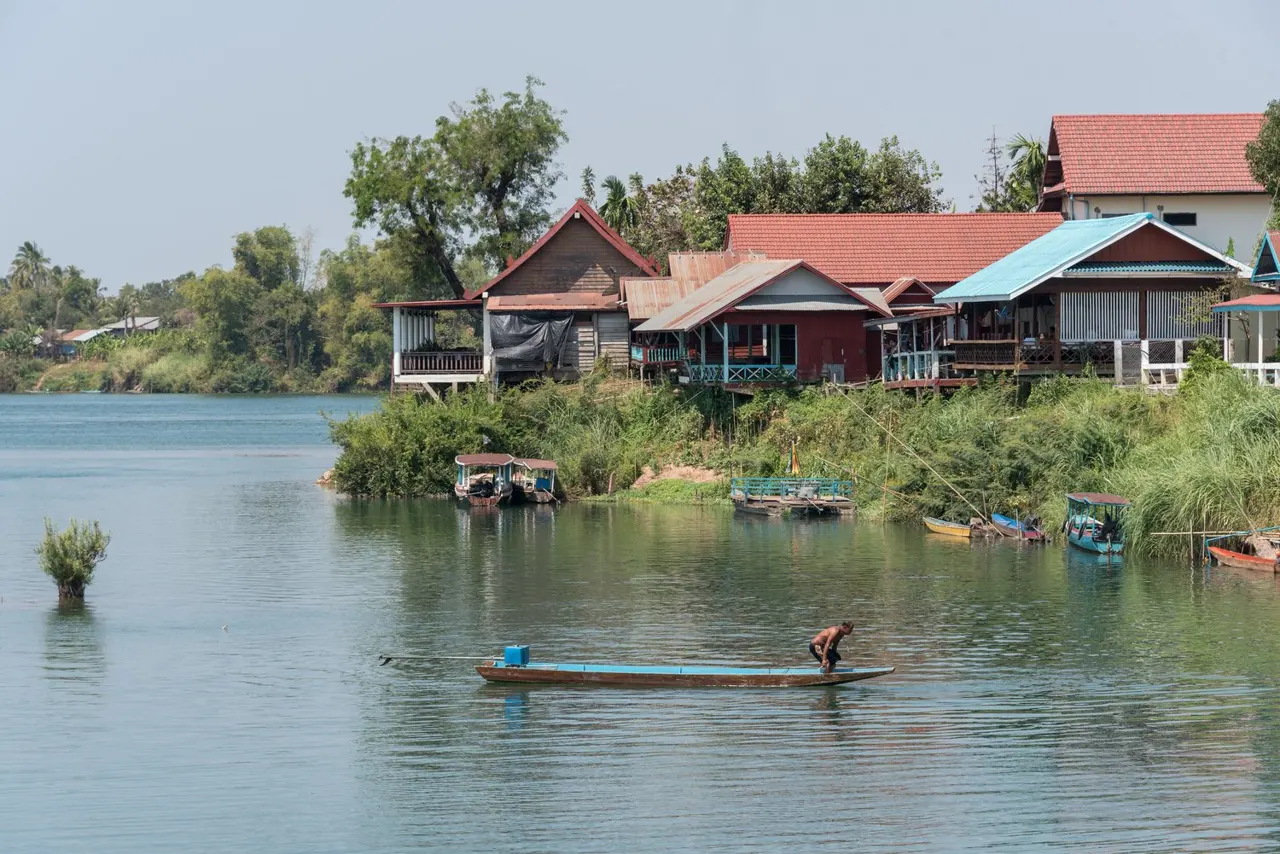
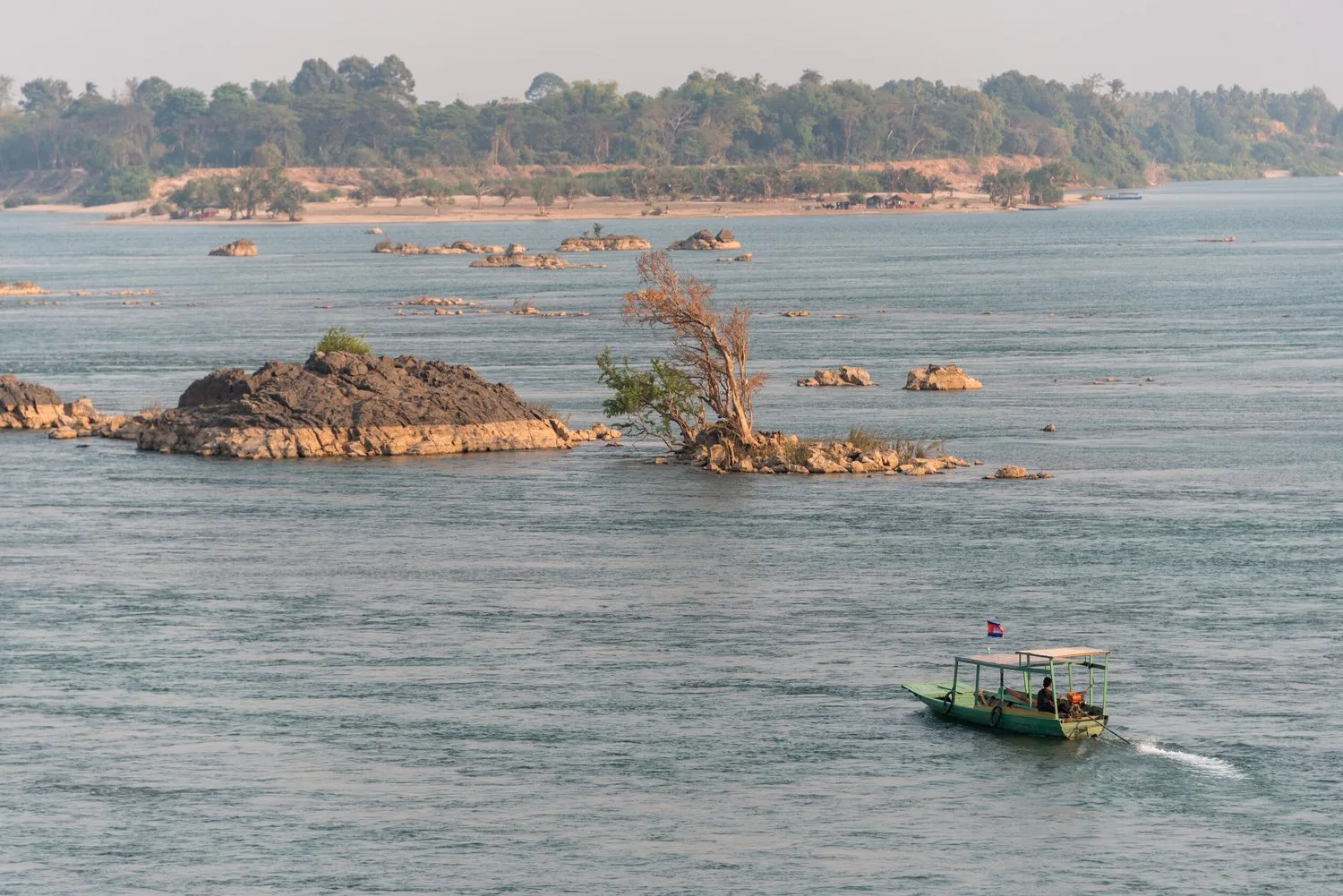
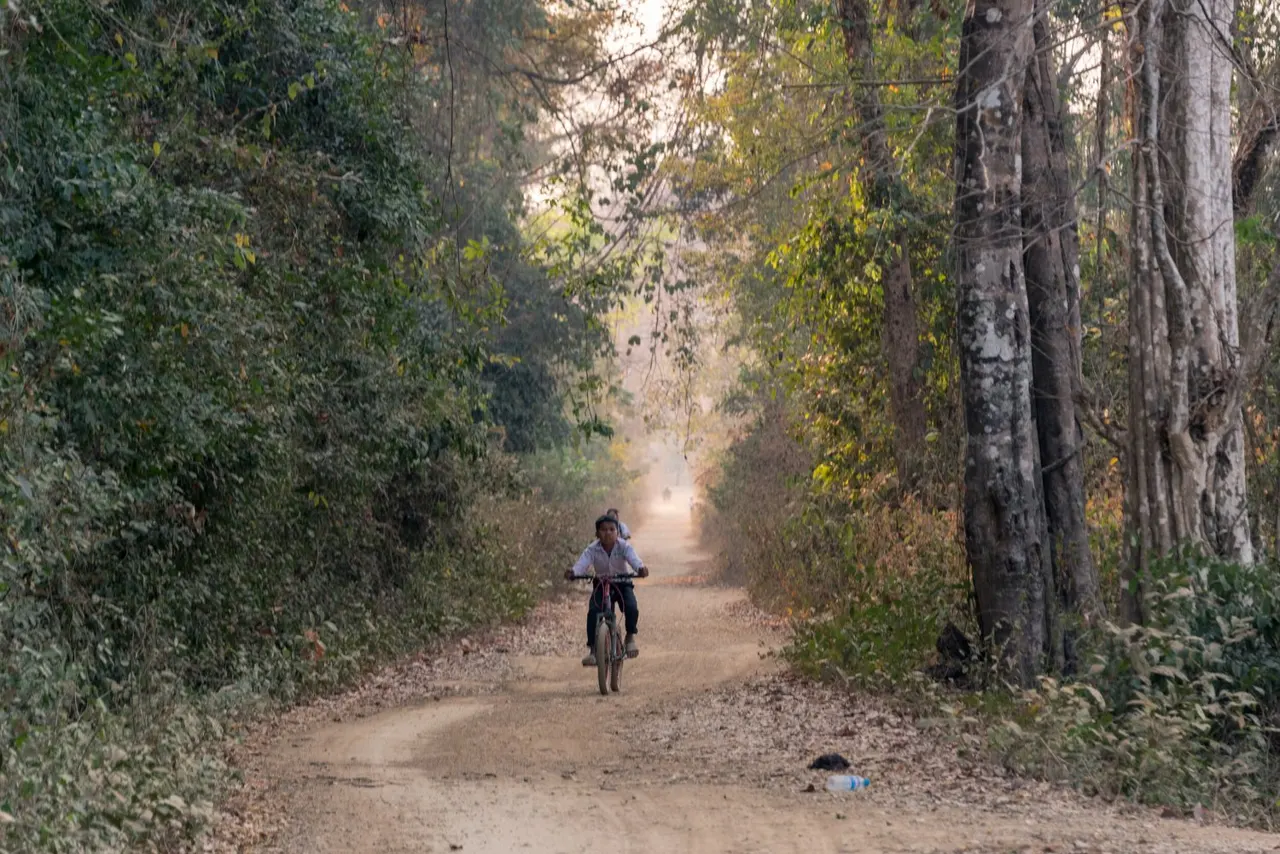
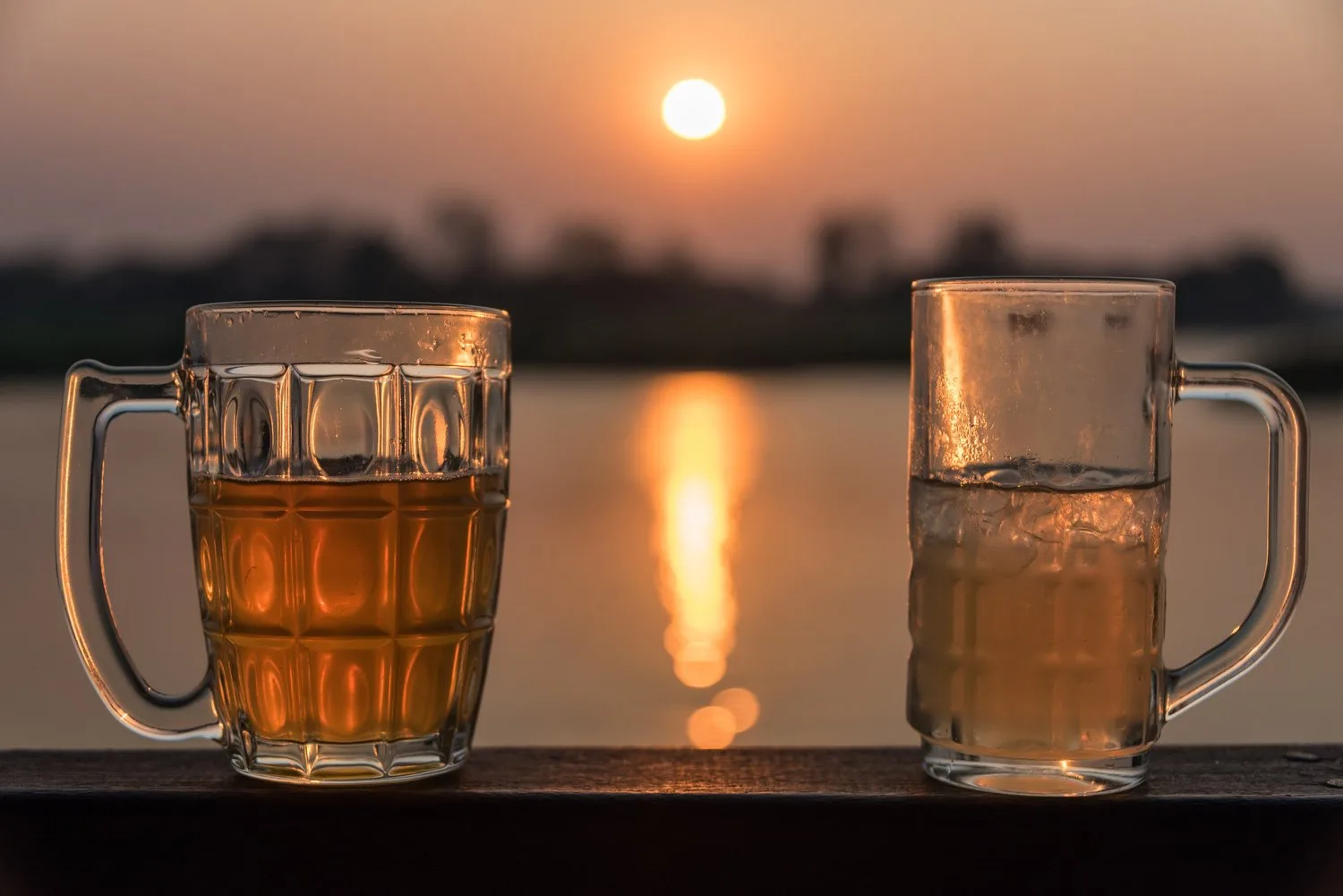
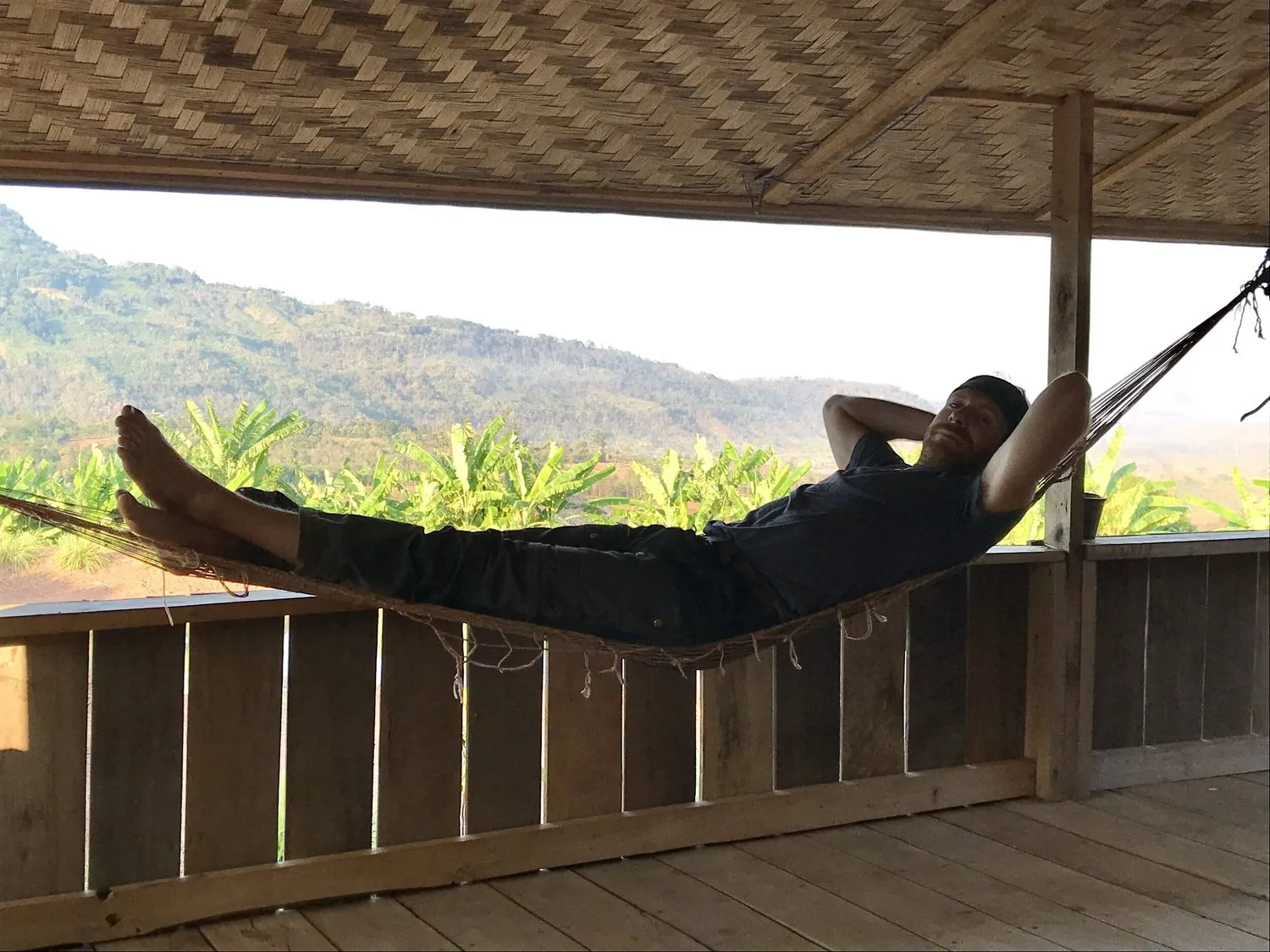
There’s not much to do on Don Det, with no cars or other transport options, bicycles become the preferred mode of transportation, assuming you can navigate through the soft sands and potholes around. Simple guesthouses line the shores, each with their own small restaurants and coffee shops and hammocks. There’s a sunrise and a sunset side of the island, best enjoyed with a coffee or a beer, depending on which side you find yourself. While there is a small amount of debauchery and hippy-ish life going on, the island is very mellow compared to many of the party islands in Thailand. We spent our days cycling around Don Det and the neighboring island, enjoying the calm river views, the small hikes to waterfalls, and the overall sleepy vibe of an oasis in the middle of nowhere.

Si Phan Don’s famous residents are the Irrawaddy dolphins, who live in the waters of the Mekong River between Laos and Cambodia. While quite shy compared to other dolphins, and with their populations currently on the decline, we were fortunate enough to be able to catch a glimpse of a small group while in the area. They proved to be too quick for the camera lens, however. It takes no more than a day to check off all the must-dos in the region, leaving plenty of time for watching the sun make its way from one side of the island to the other, hammock hopping between riverside restaurants and juice shacks, and reflecting on the simplicity of a so-called travel adventure.

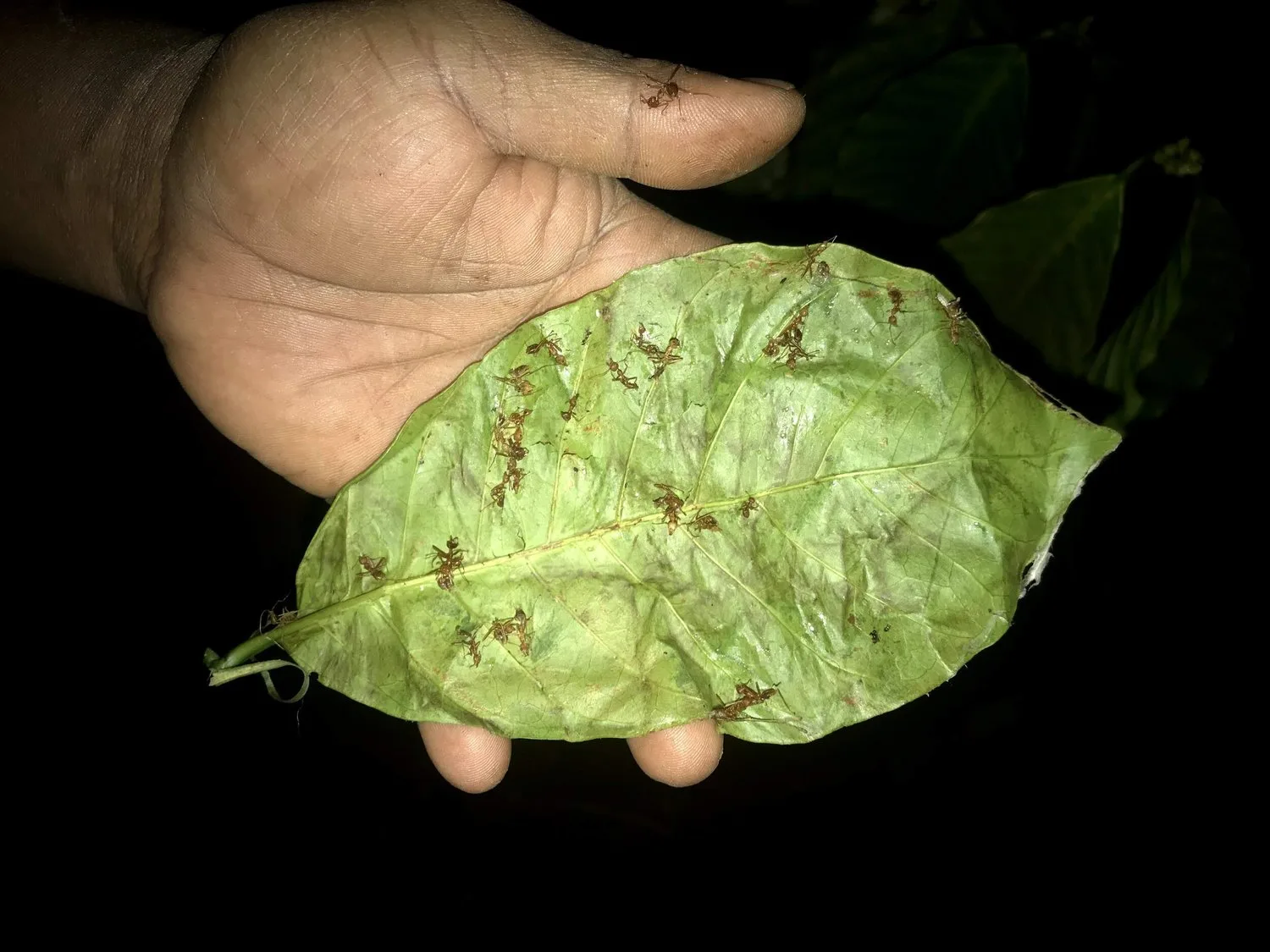
Once bicycles could no longer cut it, we traded pedals for gears and found ourselves atop a motorbike once again, this time headed for the Bolaven plateau, the coffee growing region of Laos, where homestays and coffee plantations are nestled between waterfalls and roaring rivers, for another few days of getting lost off the tourist trail. Our first stop, after passing by quite possibly the longest string of watermelon stalls on earth, was at a local coffee plantation turned homestay, where we received a makeshift tour of the crops and coffee processing facilities by Mr. Vieng. We were also treated to a tasty appetizer of tree ants smashed between the leaves of the coffee trees. They actually tasted delicious, just the right amount of zest! We enjoyed a home-cooked meal under a thatched roof that Mr. Vieng had slowly built up from a roadside stop to a full-blown compound, basic bungalows and all. We walked the roads, admiring the adolescent’s skills while they played a game that looked like volleyball, with the use of feet instead of hands, and the thousands of cassava roots drying out in the evening sun after a hard day’s processing. We awoke to fresh roasted coffee from the plantation, and stocked up for future brewing before heading out to our next homestay, the infamous Captain Hook’s.

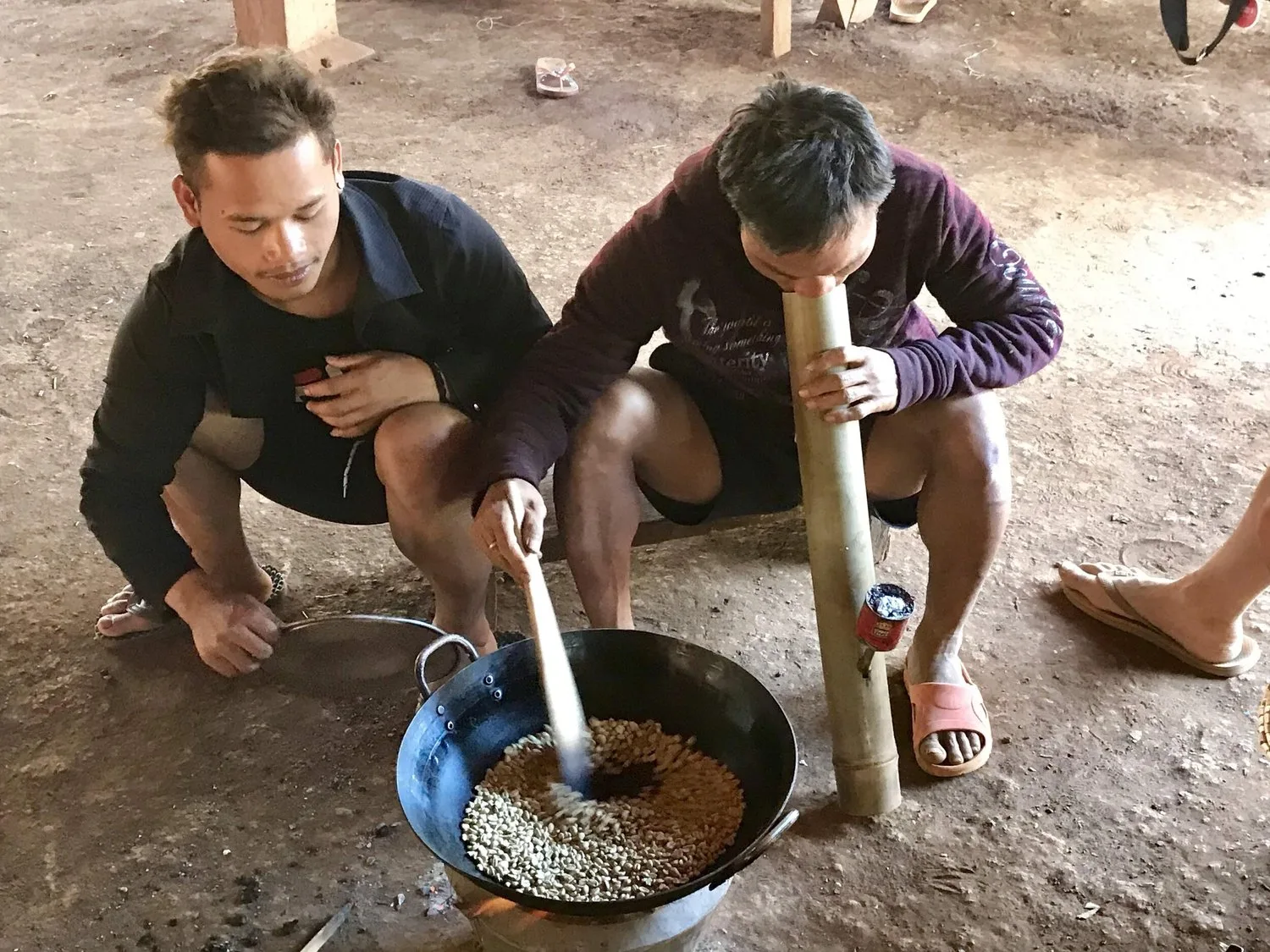
Captain Hook’s homestay was an eye-opener, in both the best and worst way. The small village consists of a few hundred people, and since Hook wasn’t keen on the normal agricultural duties that make up life in the village, he began taking in tourists a few years back, giving them tours of the village and coffee plantation, and offering affordable homestays along with home cooked meals. What we soon found out, though, was that we were about to receive a whole lot more than we bargained for. Upon arriving to Hook’s home, we gathered in area underneath the stilted house, home to 20+ of Hook’s relatives. Hook was roasting fresh coffee beans, while his young helper was smoking out of 3-foot long bamboo bong, eyes glazed and bloodshot. The tour started simply enough, as Hook walked us through the coffee plantation, telling us all about the origins of coffee that he’d Wikipedia-d over the years. Most of the information seemed legitimate, but after 45 minutes without much walking, we were ready to move on. Meandering through the village surrounds, we found many foreign plants used for medicinal purposes, and even a leaf and nectar we used to blow bubbles. Throughout the walk, we saw many locals picking coffee beans, large bamboo bongs by their side. We learned many a disturbing fact about the village along the way, ranging from 5-year old smokers to unattended forest births, from child marriage to family banishment into the jungle whenever accidents occurred. The most disturbing were the animal mutilation and sacrifices, too graphic to mention here. The animist beliefs and practices of the village were enlightening, if not disturbing. There’s a dance the governments are forced to play with many of the indigenous groups, a balance between allowing traditions to remain, while ensuring everyone is playing somewhat by the rules when it comes to health and safety, particularly for the children.

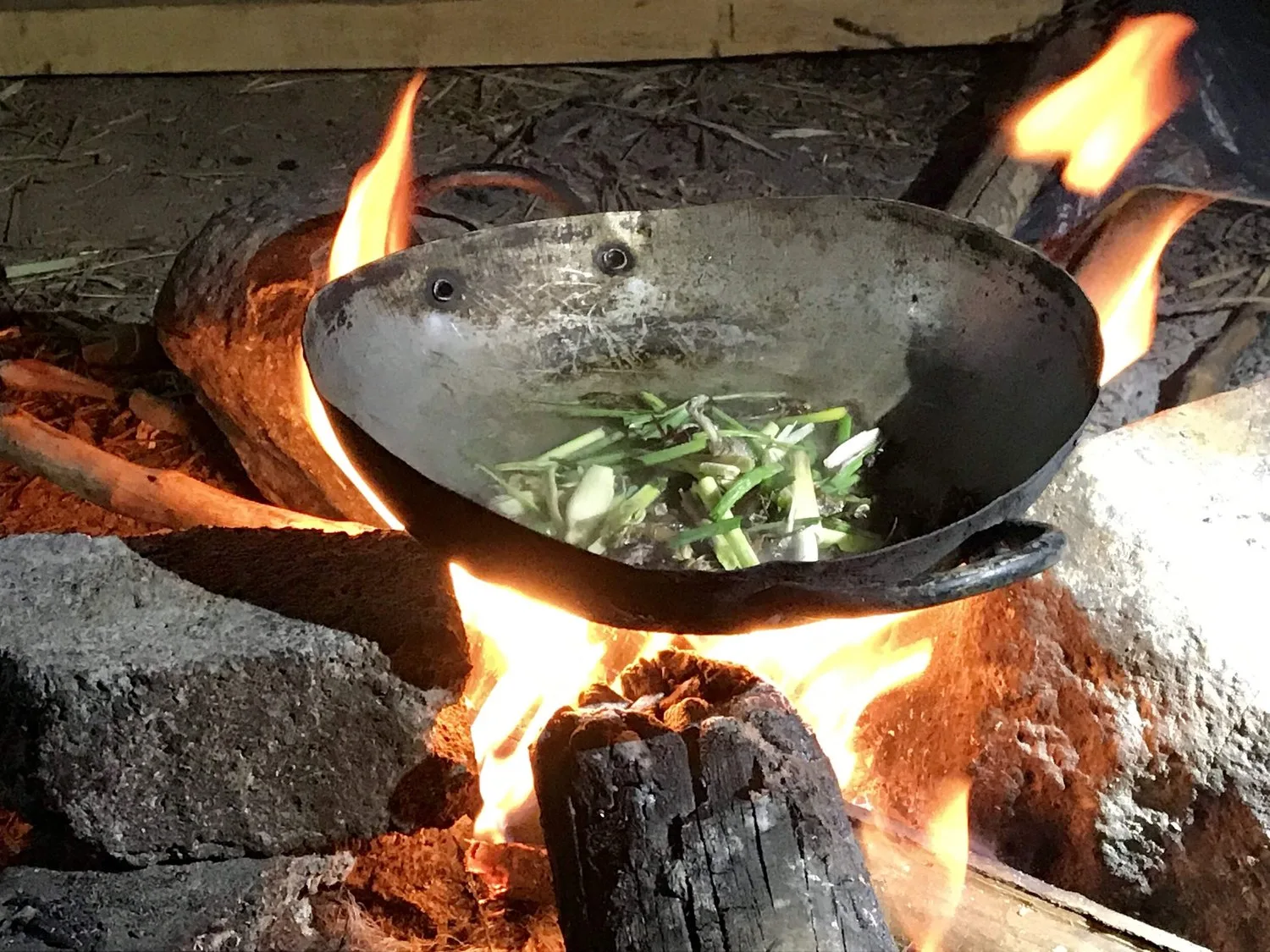
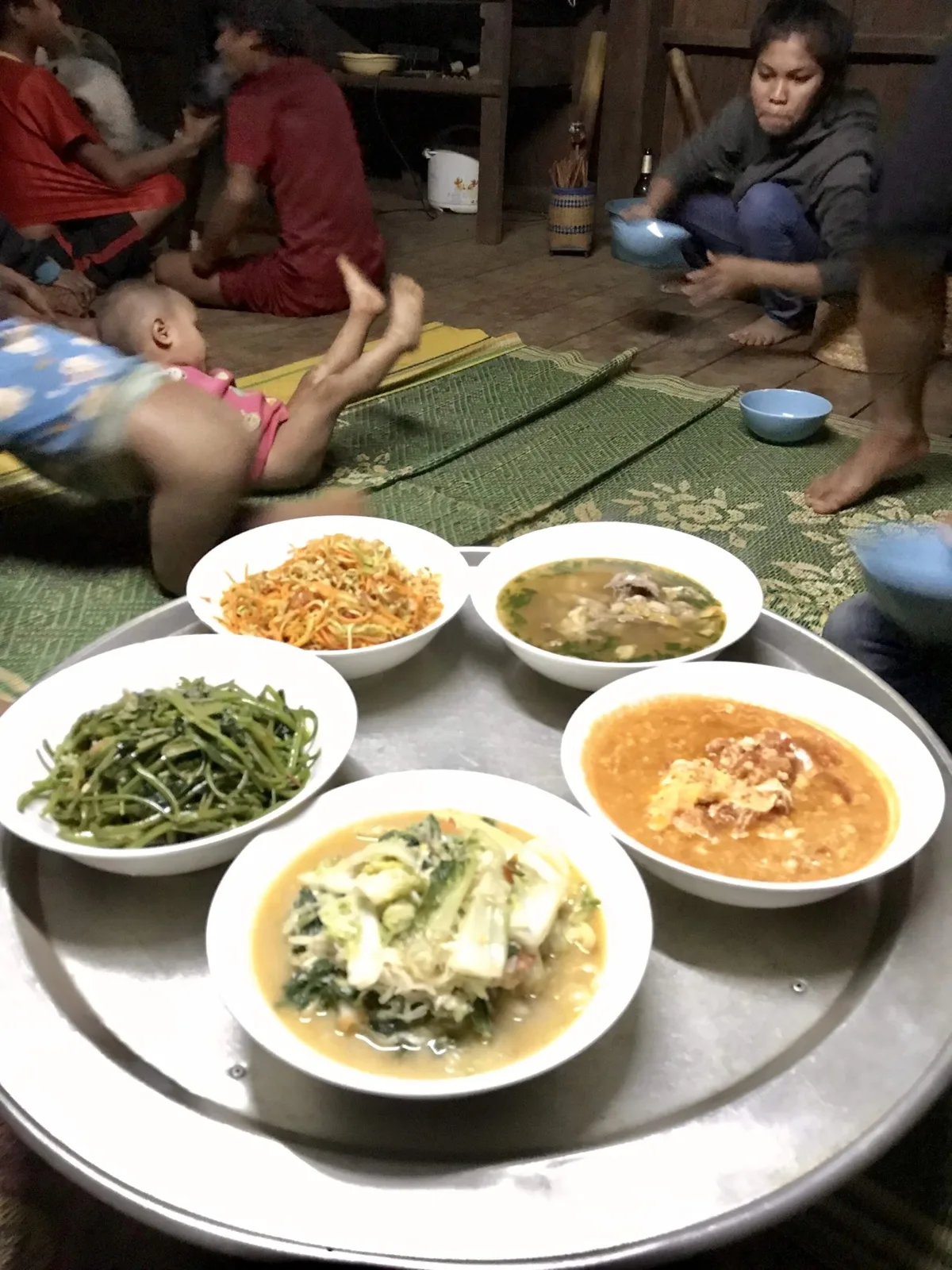
It became apparent that the villagers don’t exactly take too kindly to Hook, as we were not introduced to anyone outside his family members, and our lodging for the evening was far outside the village. I imagine they allow him to continue the tours solely because it brings a steady stream of income to the village. Nevertheless, the basic bungalows proved to be a peaceful place to reflect on all the craziness we’d experienced during the tour, as we watched another blood red sun fall behind the mountains and valley below. When the time for dinner came, we gathered in the large family room while naked babies ran around, kids smoked from the bongs, and the rest of the family gathered around the small television to watch Muay Thai fights. We traded stories with the English-speaking young adults, and chowed down on some delicious dishes, family style. Following dinner, we went dessert hunting, catching as many crickets, grasshoppers, frogs, and even catfish as we could. It was hilariously awkward, as I think our young guides waited anxiously every evening for this event. We ended up with quite the haul, and watched them clean and cook our findings with some lemongrass and chiles, another surprisingly delicious treat that we hadn’t planned on partaking in earlier. We sat around the campfire and watched the family interact joyfully with each other, smoking their bongs and laughing away as if we weren’t even there.

I can’t decide whether the whole experience at Captain Hook’s homestay was a positive one, or worth recommending. I often found myself conflicted, which, when on a short vacation isn’t necessarily a positive thing, but is something I embrace during these long escapades of adventure and reflection. I found myself full of both joy and disgust for what I saw and experienced in the middle of absolutely nowhere, geographically and on the moral compass as well.

Leaving Hook’s homestay, we completed the loop, stopping along the way to visit more waterfalls, farmhouses serving passionfruit jams and fresh coffee, passing village after village in between the green jungles of the surrounds, asking if the last week had really happened or if it was all just a strange dream.

With no real way of knowing, we shook our heads, laughed, and made our move to Vietnam…
Watch Out for that Tree!

1 / 3

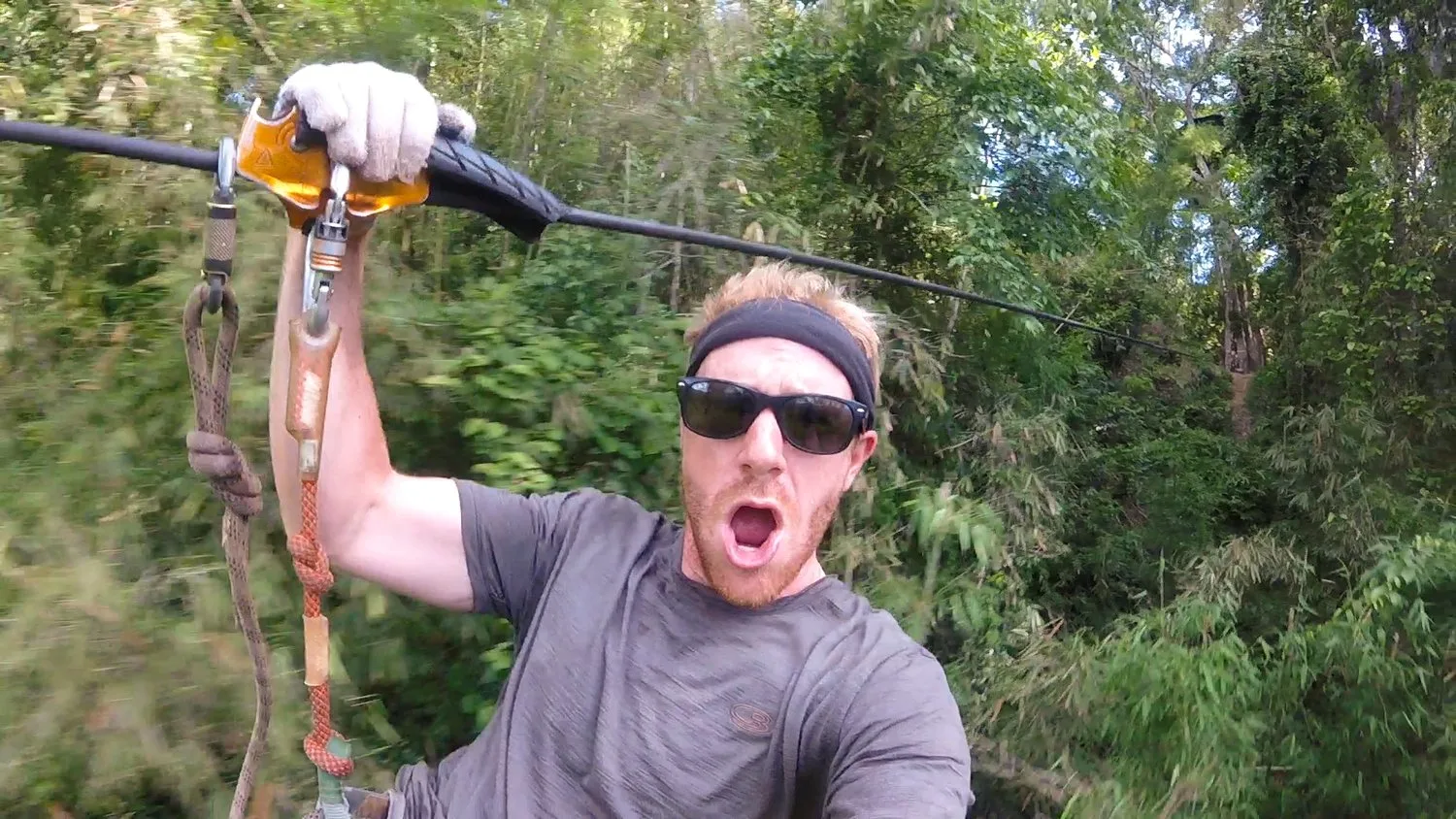
My final adventure in Laos was a doozy. I’d heard about the Gibbon Experience all the way back in New Zealand, and made sure that it was on my somewhat small list of must-sees in Southeast Asia. Ziplining over jungle canopies tucked far away from and sign of civilization, sleeping in tree-houses 150 feet off the jungle floor? Count me in.

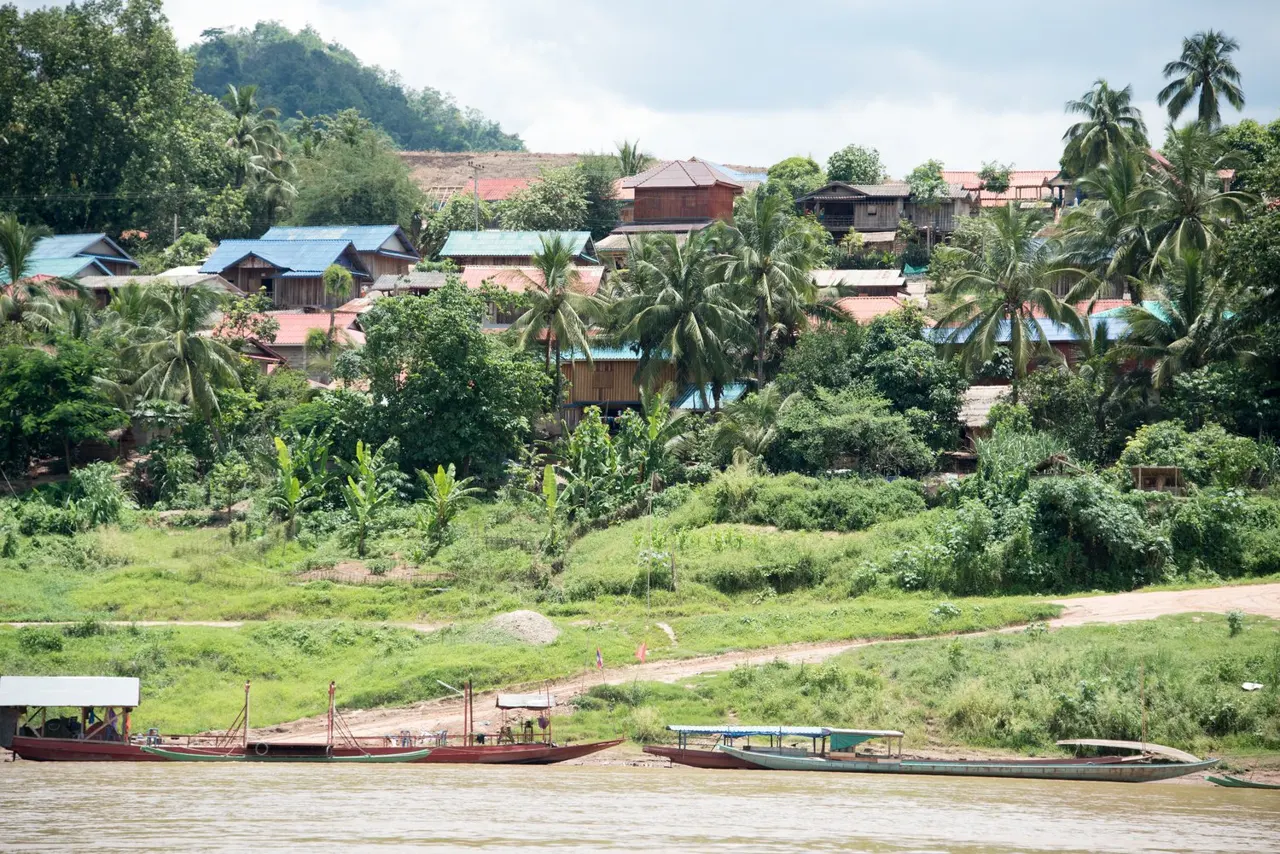
Getting to the Gibbon Experience, headquartered in Huay Xai, Laos, was an experience in itself. From Luang Prabang, a 2-day slowboat up the Mekong river was required, unless I wanted to brave a 16 hour (at least) bus ride through questionable mountain roads. The boat ride, split up by a night in a remote village somewhere in the middle of nowhere, brought us through rolling hills of dense jungle, the brown waters of the Mekong swirling in all different directions as we gradually moved upstream. We’d pass villages of a dozen shacks, with no other entry points aside from the river itself, miles and miles away from any semblance of a city. Children ran about naked on the beaches, soaking up the sun and waving (and mooning) the boat as we passed. It was a simplistic beauty, and I thoroughly enjoyed it – for about 3 hours. The other 15 hours spent on the boat had me more than relieved to finally reach dry land and get ready for my adventure.

The ride into the jungle, in the back of pickup, lasted almost 3 hours, 1 of which was spent crossing rivers, climbing steep hills, and descending slippery slopes on a backroad that thankfully we completed before the steady rain washed it away. After arriving at the main village, an hour-long hike through hot, sweaty, thick jungles brought the group to the first zipline. Hopping up to go first, I whisked down the line, popping out into pristine jungle, the first bit of cool air I’d felt in a while screaming past my face. I was higher than I anticipated, slightly startled by the tops of tall trees I watched pass by below me. As I arrived at the makeshift platform at the other end, I knew the next couple days were going to be not only thrilling, but a bit mesmerizing as well.

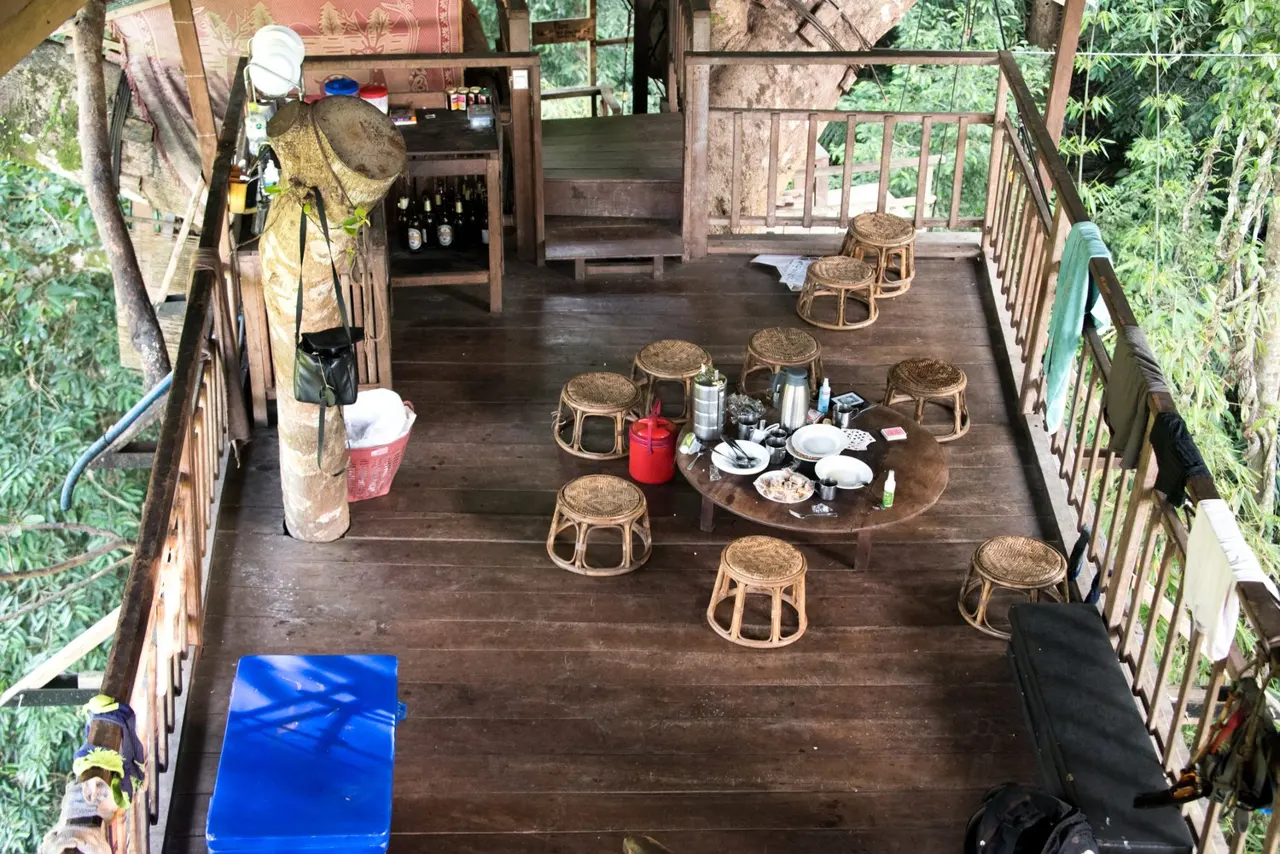
We hiked and zipped, making our way through the jungle to various checkpoints, until we finally reached our last line of the day, one that led straight into our accommodation, 150 feet off the jungle floor. The view zipping in was a bit surreal. Endless jungle to the right, straight ahead a striking house in the middle of a tree. Like a lighthouse on the coast, an unmistakable inconsistency in the setting, yet at the same time, completely natural, almost poetic. The treehouse was basic accommodation by any standards, but the mattress and mosquito net were really all that was needed. The view from the bathroom was just an added bonus. While there were no Gibbon sightings, there was plenty of wildlife waiting for us in the treehouse, as tree-rats and hand-sized spiders were just a little startling each time I got up in the night to relieve my intensifying stomach pains. The jungle awoke us in the wee hours of the morning with what it knows best, a deafening thunder storm, its roars only challenged by the incessant chatter of the hundreds of creatures held within, and hovering above, its canopy. It felt as if I’d turned on one of those dream sound machines, set it to thunderstorm and jungle sounds, then turned it up to max volume.

The following day was filled with more zipping, this time slightly less supervised, as our guide decided we were expert enough to go exploring on our own through the network of lines. Never mind that platforms were missing wood, or that some required precarious maneuvering a hundred feet off the ground. Safety first! The views continued to impress, and the exhilaration with each run never seemed to cease. Popping out over the canopy from the depths of the tree cover had me giving my best Tarzan yells, for all the jungle to hear. Some runs seemed endless, as the longest neared 500 meters in length, where stopping in the middle to soak in the view would require some serious monkey climbing to get to the other side.

Accommodation on the second night came in the form of a 3-story treehouse, the afternoon heat made tolerable only by more ziplining and a cold shower. More than just a room with a view, we were the view, smack dab in the middle of a jungle, doing our best to blend in to the panorama before us. Sure, the comforts were lacking, the bedding wasn’t the cleanest, the bugs never let up, the spiders and rats did spider and rat things, and my insides contorted in ways I never thought possible, but what a rush the whole experience was. Capped off my another morning thunderstorm, the final zips and hike back to town had me filled with both relief it was over and a longing for more.

I’d felt truly a part of the jungle, in all the best and worst ways imaginable. 

Floatin'

1 / 2

Growing up in a small, rural, foothill town with lakes, rivers, and scorching summers, some activities come pretty natural. One of the more enjoyable and ingenious of such activities requires the purchase of an inner tube and a fair amount of beer. The only other requirement is some swimming shorts, and you’ve got yourself some prime entertainment. Many summers were spent floating down the river on an inner tube, multiple times a week. Sometimes multiple times a day, but who’s counting? The best way to escape the heat was to pack a few cold ones and plunge into the icy river, letting it take you to the edge of town, where a pickup was (usually) available. I look back fondly on these days when a beer shower may have been the only one some of us had for days.

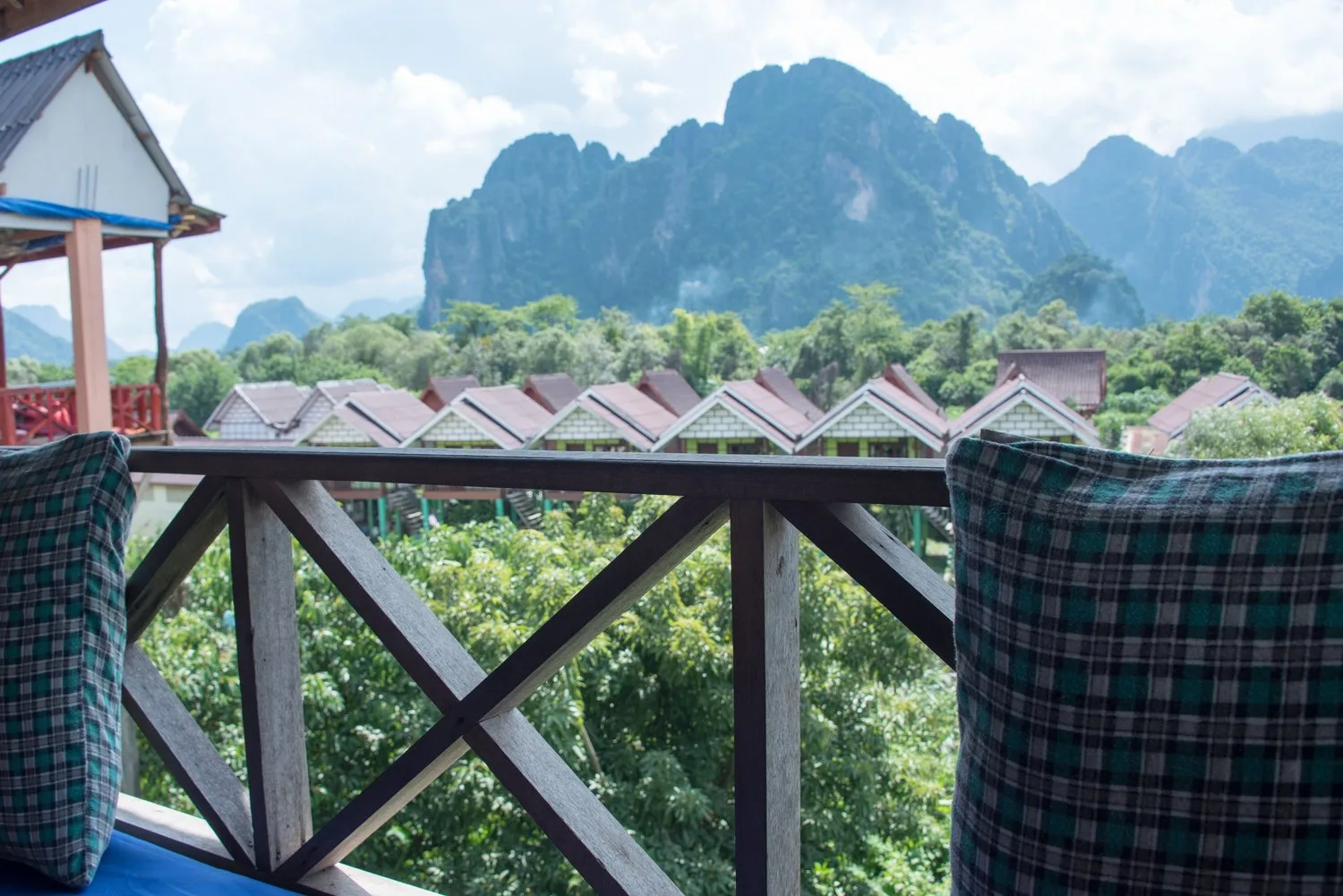
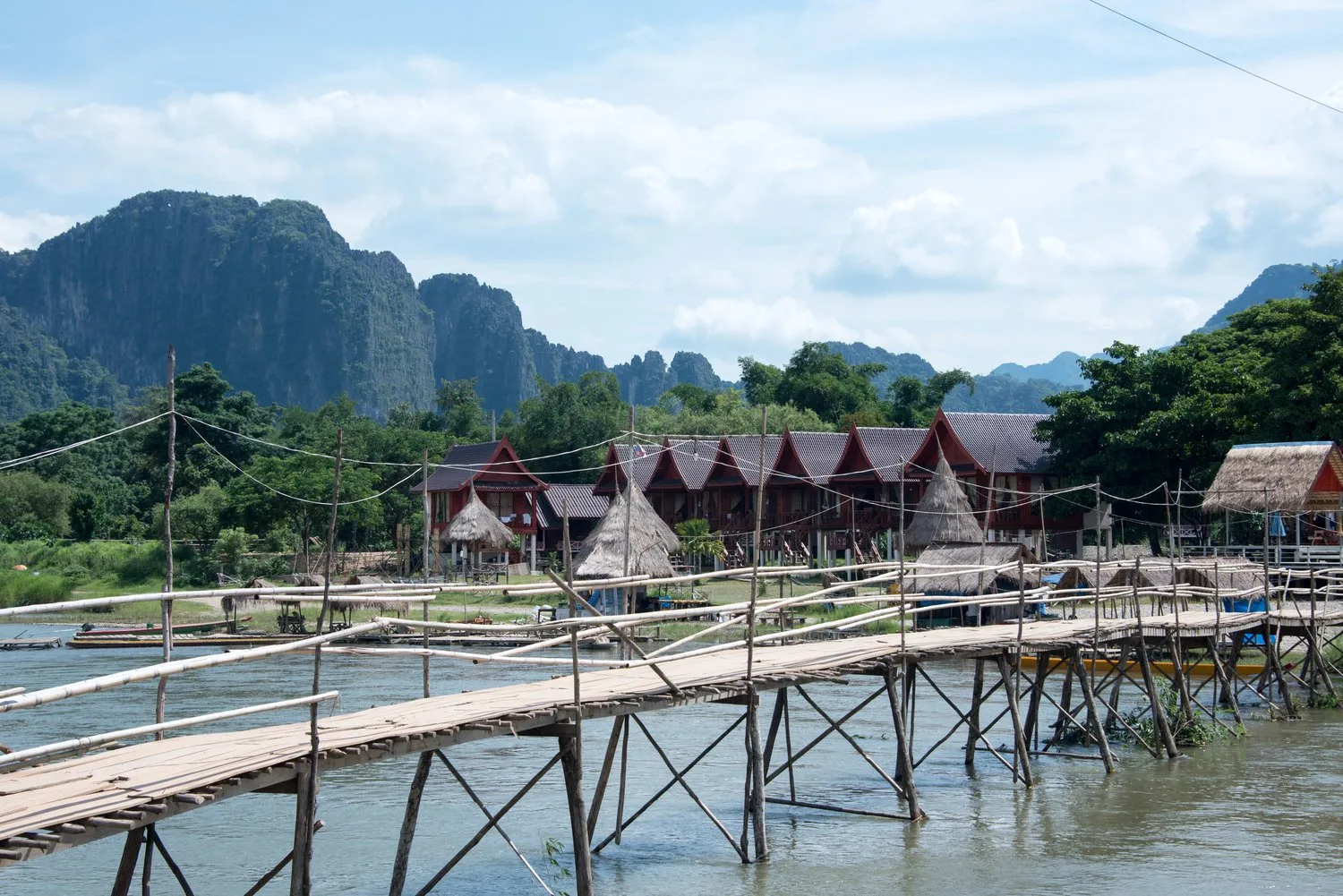
When I learned that one of the main tourist draws of Vang Vieng, Laos involved floating down a river on an inner tube, stopping at riverside bars along the way, I couldn’t help but laugh to myself at how this seemed like such a novel concept to many from around the world. Firmly in my element, I grabbed a couple roadies and a tube and hopped in the back of a tuk tuk to be dropped off upriver. Apparently the scene in Vang Vieng used to be much more wild, as hard drugs sold at all the bars contributed to upwards of 20 deaths a year. The scene has been cleaned up for the most part, as only 2 bars are open on any given day, and stick to (mostly) serving alcohol only. The scene was as you’d expect, with 20-somethings grabbing on to ropes thrown out into the middle of the river by the bartenders on shore, trying desperately to pull themselves up an onto the makeshift platforms that made up each bar. Bar competitions only barely interrupted the complete state of relaxation experienced by all participants. Out of the river, the vibe was as worry free as can be. For some though, once the plunge was made back into the water, the struggle was real. Flipped tubes, bridge collisions, rock avoidance (or lack thereof) were just a few of the many adventures that await in the water. Me? I was cruising, fully entrenched in my comfort zone, enjoying the striking view of mountains surrounding me and in the distance, a relaxing front row seat to enjoy the present and reminisce about the past. Just as Kenny Chesney sang,

I went back to a two-tone, short-bed Chevy, driving (my boys) out to the levy, living life with no sense of time.

Probably as far away from home as I’ve ever been, it all came back around. I think I’ve decided what’s first on the agenda when I return…

Luang Prabang, Laos

1 / 4

After having spent what seemed like months in Vietnam, I’d forgotten the sense of anticipation accompanied by the arrival in a brand new country. Flying down into Luang Prabang, Laos, I was struck by the lush jungles that surround the Mekong River as its brown waters flow through most of the country. Signs of deforestation exist, but you kind of get the feeling of being very deep into untouched territory.

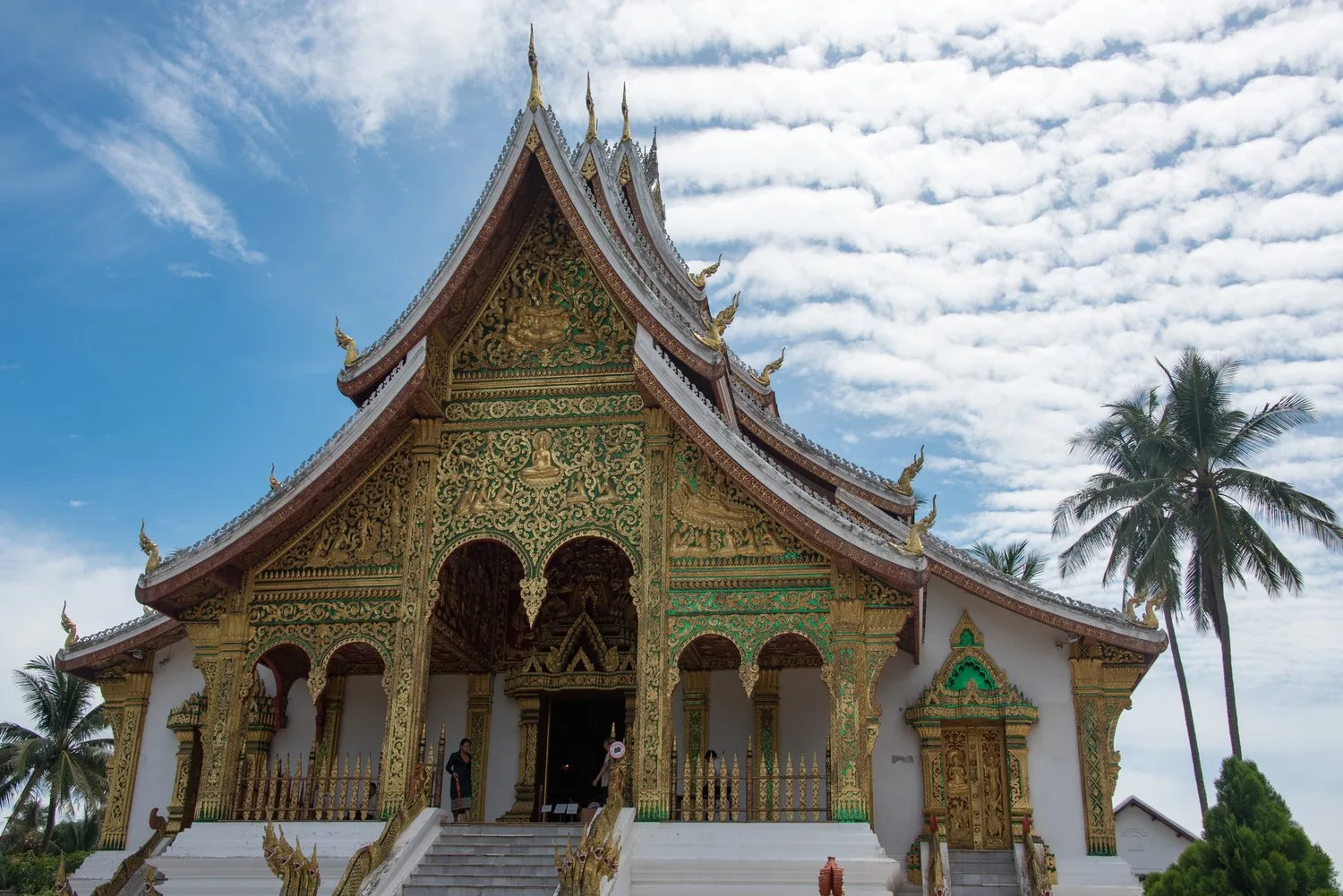
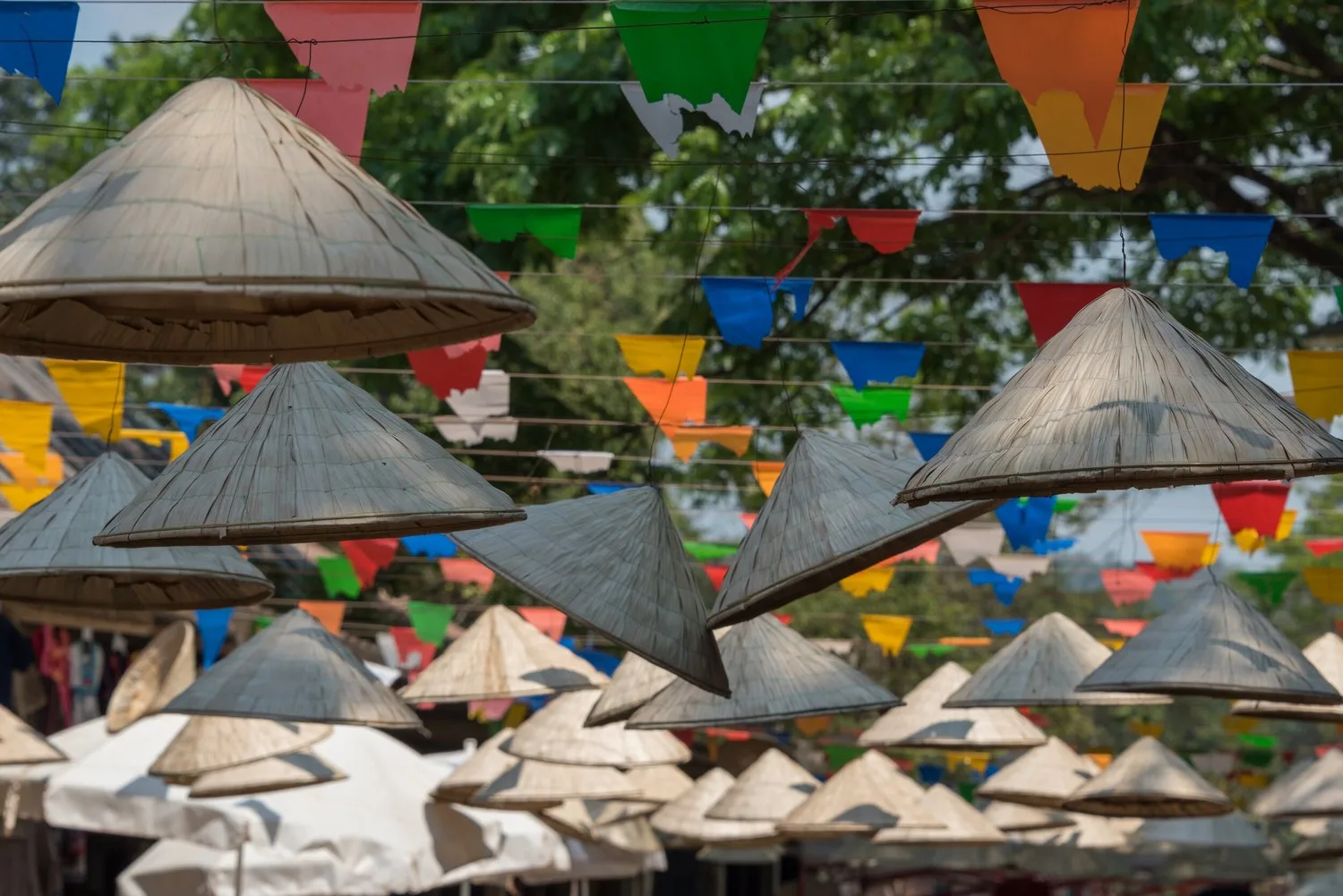
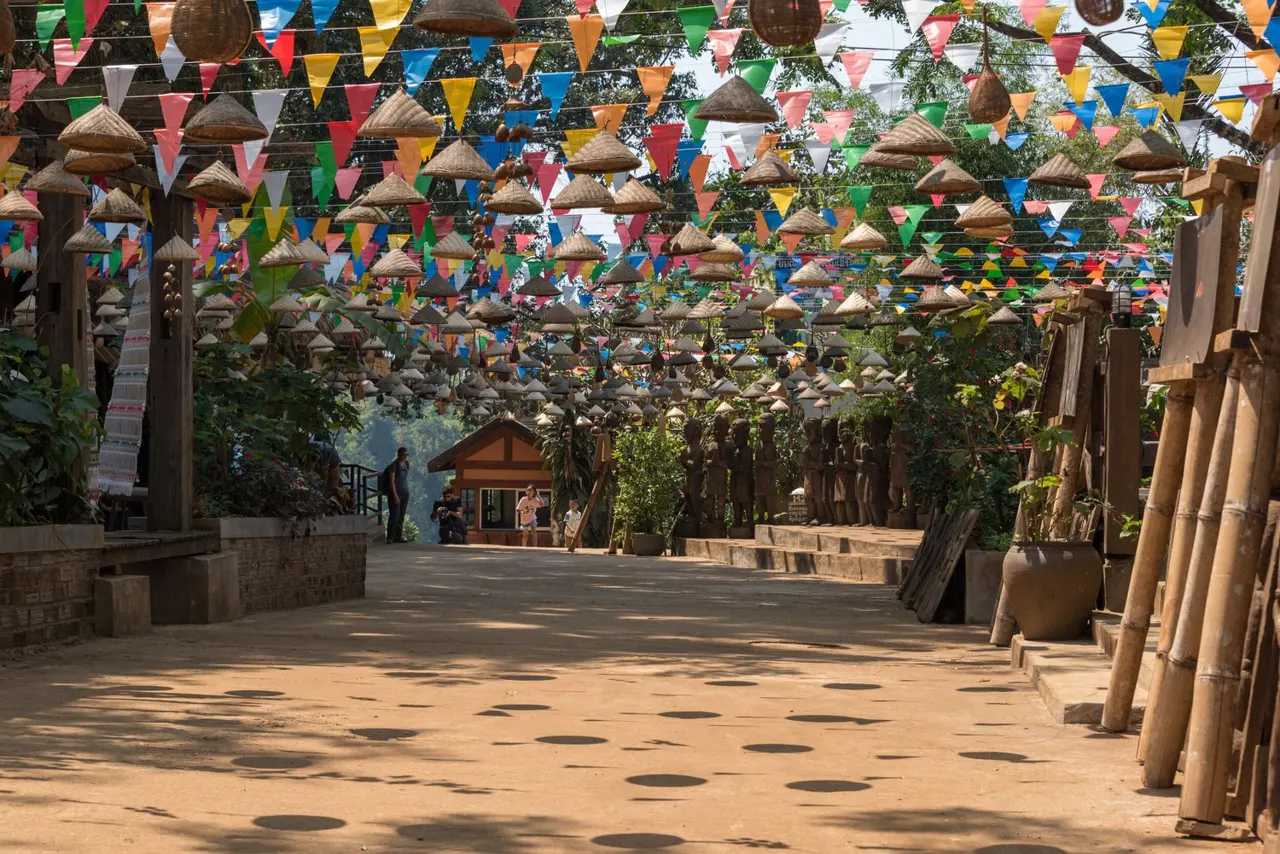
Aside from the small city, there’s really not much in the surrounding areas, save for more pronounced mountains and remote jungles. The city itself has a sense of charm similar to Hoi An, though far more steeped in religious calm and peace than any other place I’ve visited on this trip. The sleepiness resonates. Streets are full of shops and restaurants, yet quiet. The touristic temples and monasteries are busy, but filled with more whispers than shouts. The restaurants along the Mekong were very nearly empty, with a suspiciously low number of encouraging hostesses by Asia standards. Honking horns are few and far between, as I soon learned after mistakenly taking my motorbike etiquette with me from Vietnam. Even the night market is quiet, as vendors allow would-be buyers to parous at their leisure, no beckoning required.

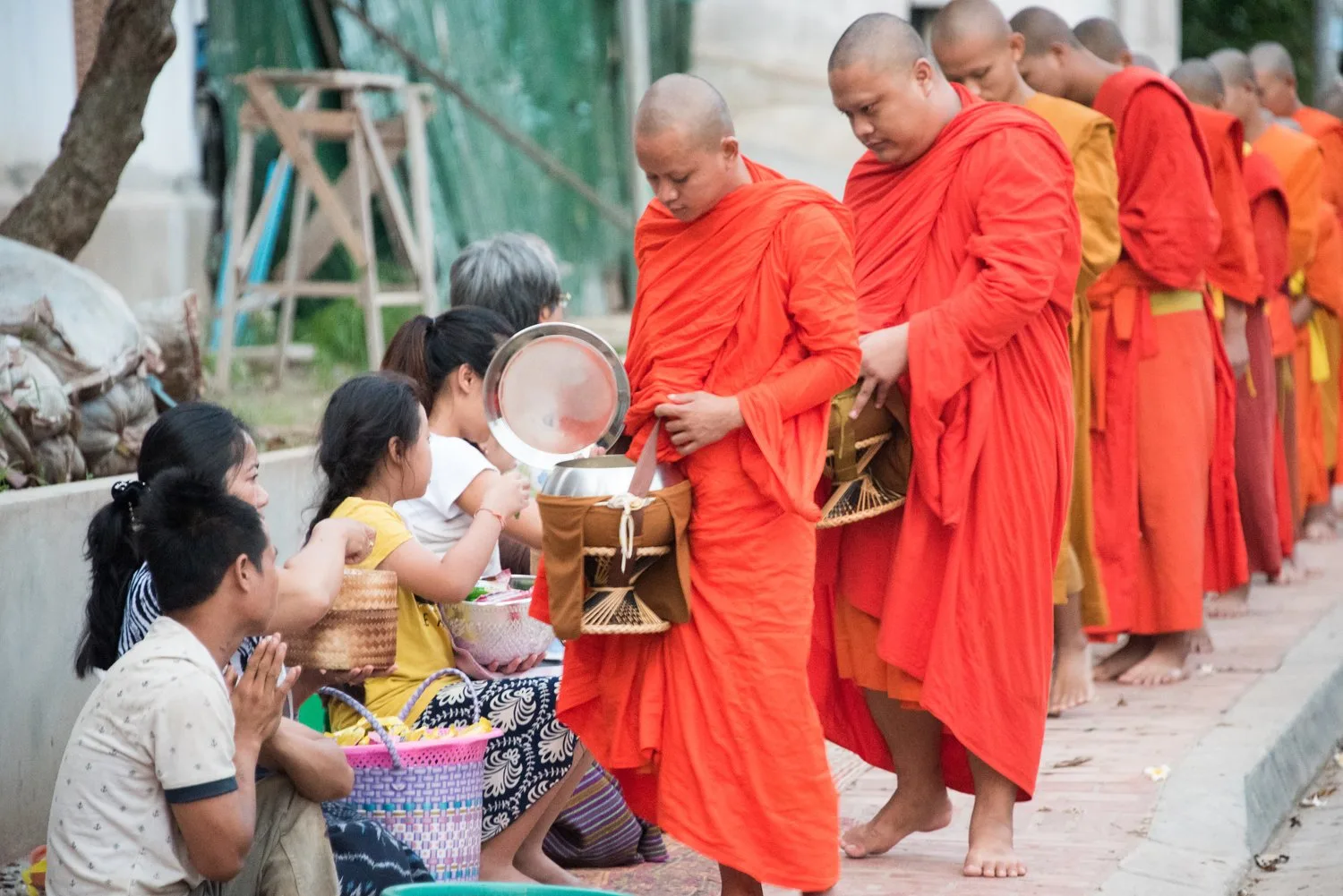
Dawn marks the daily procession of Monks through the town, collecting morning alms, their lone source of food for the day. While tourists have begun to get in on the action, it was inspiring to watch locals set up shop on the sidewalk as they awaited each set of passing monks, scooping sticky rice into their bowls. Afternoons can be whiled away at riverside cafes and yoga studios, where pads strewn about on the decks serve as a reading chair, lunch seat, and napping bed.

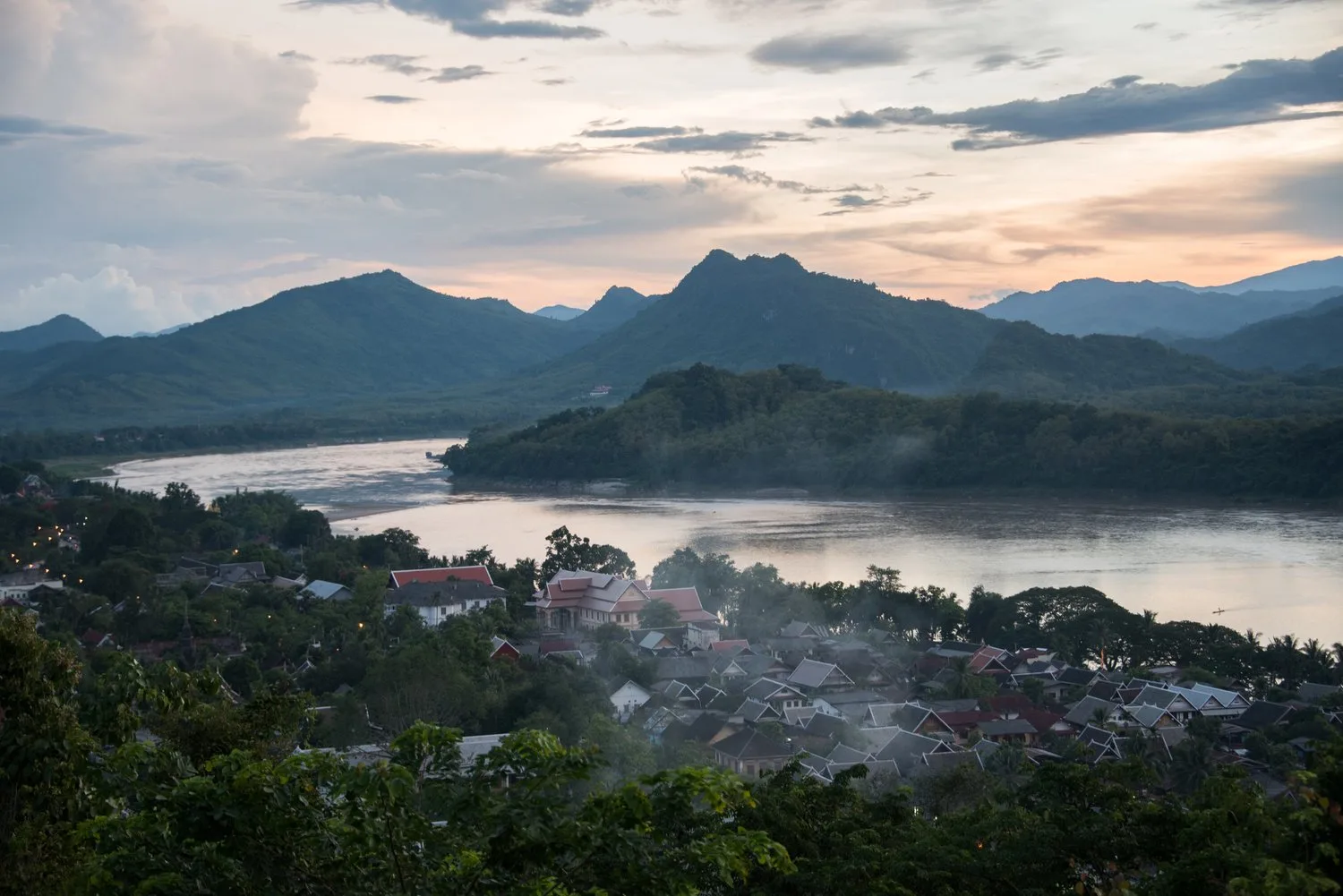
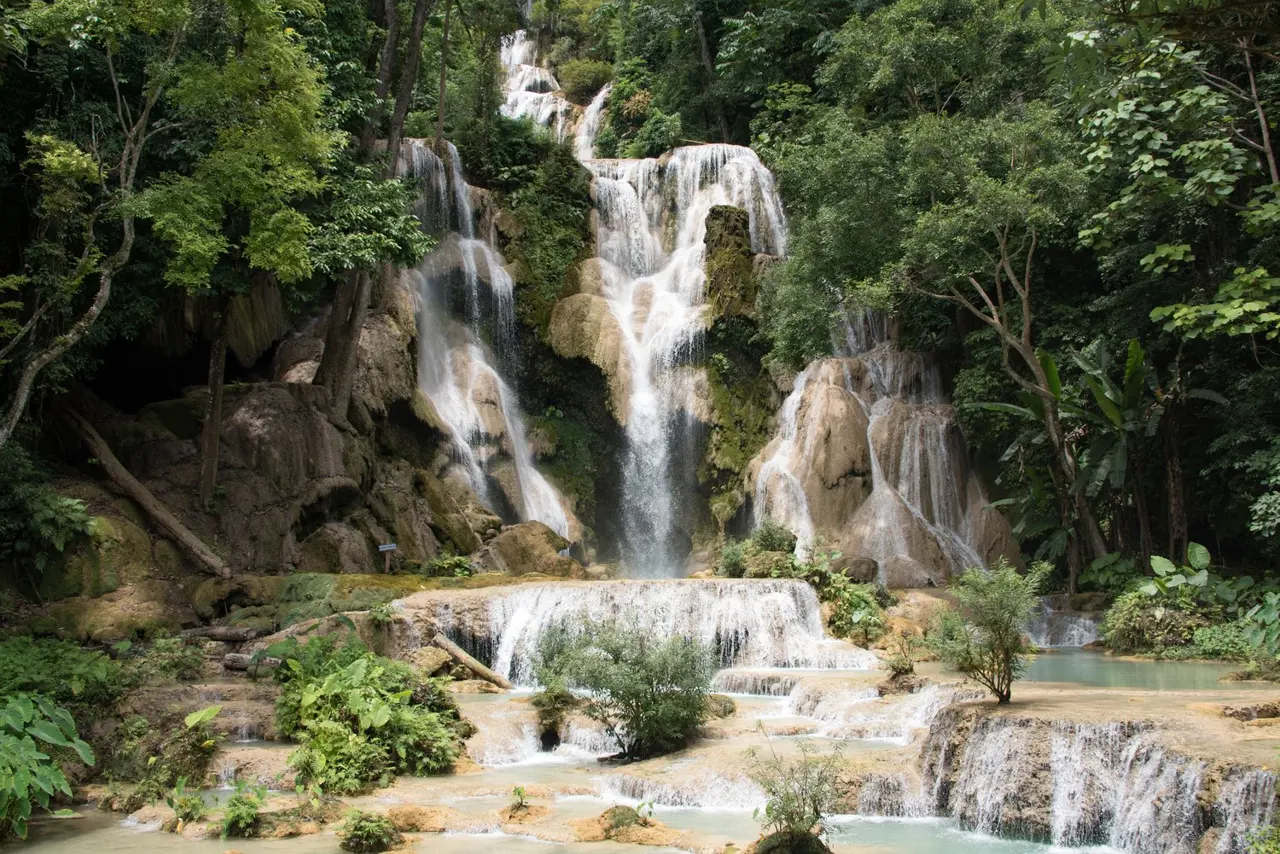
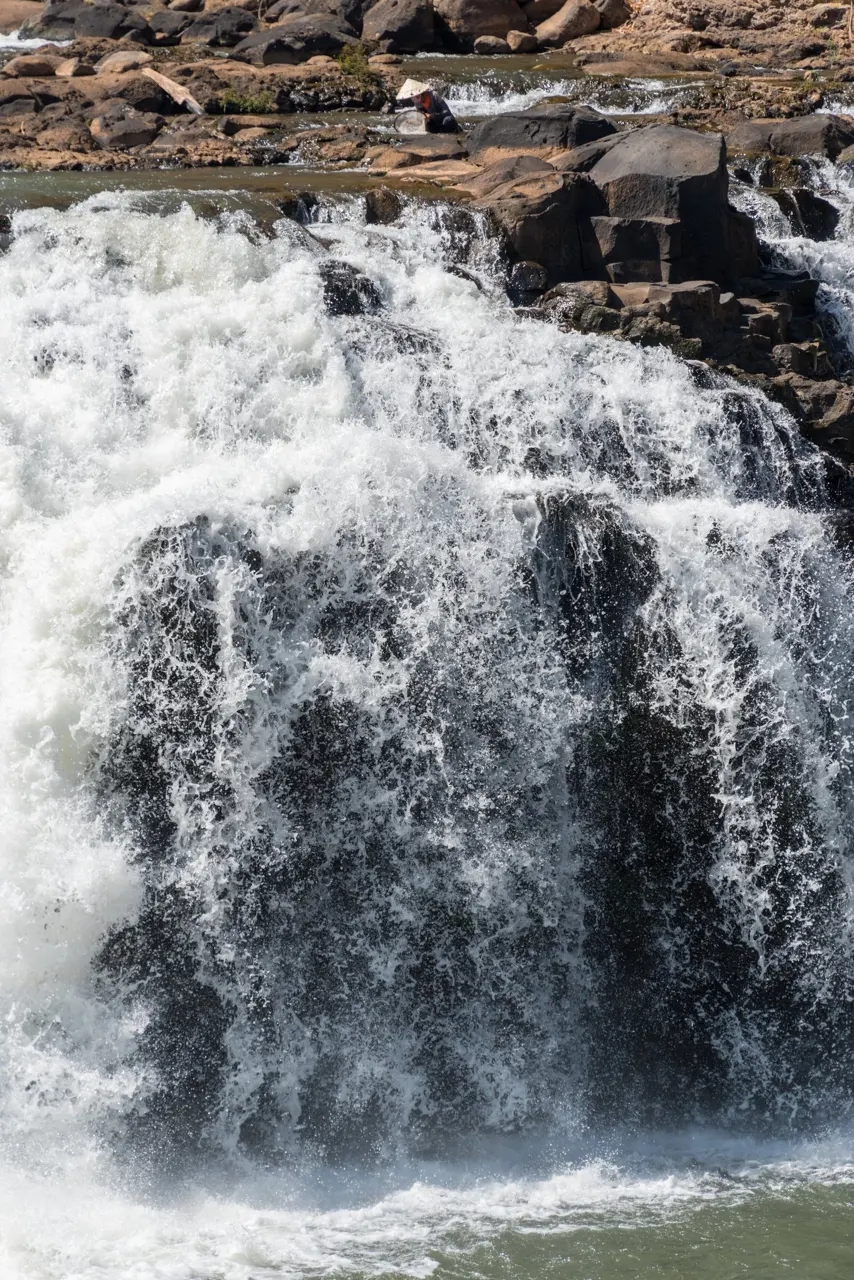
Outside of town, a multi-tiered waterfall provides a respite from the heat, with many pools scattered in its wake. The ride out to the falls showed just how remote the small city is, with no more than a few huts here and there throughout the 25 miles out and back. My suspicions were confirmed as I climbed the town mountain for sunset. As expected, temples dot the hill, as well as the surrounding mountains in all directions. That’s about all that dot the mountains, though. No sprawling houses, no development, simply a river and jungles, for as far as the eye can see.

Luang Prabang is truly a gem, tucked away among the shroud of the jungle. There’s little wonder as to how it’s become such a holy, peaceful oasis.